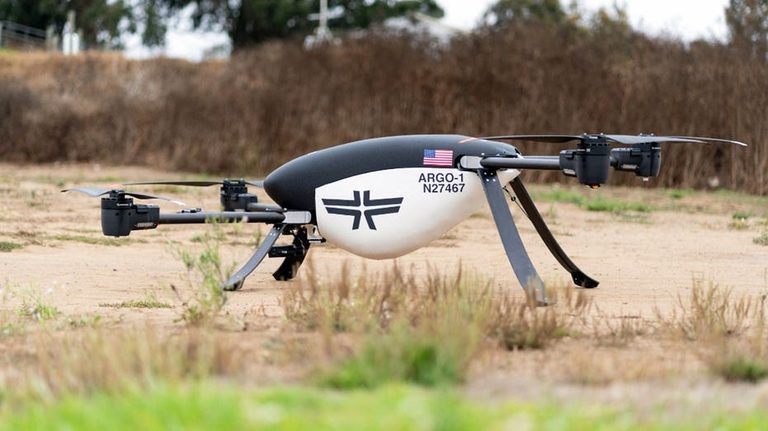
State fire agencies are experimenting with autonomous drones that use artificial intelligence to locate and suppress early‑stage wildfires. The goal is to shrink the critical response window before a small ignition grows into a large, dangerous blaze.
California field test
On July 15, CAL FIRE partnered with the nonprofit FireWERX and engineers from Seneca to demonstrate five autonomous suppression drones. Deputy Chief Jack Worden said the system could assist crews who currently rely on backpack pumps and hand tools for vegetation fires. Seneca’s drones carry onboard sensors, AI‑driven computer vision and a delivery system for aerated Class A foam. A full strike team of four to six drones can transport between 500 and 1,000 pounds of suppression capacity per sortie.
While the payload is far smaller than that of CAL FIRE’s 70 fixed‑wing and rotary‑wing airtankers, the drones are designed for rapid deployment from utility vehicles or mobile bases, making them useful for hard‑to‑reach terrain and nighttime attacks.
Alaska XPRIZE competition
During June 2026 finals near Nenana, Alaska, the $11 million XPRIZE Wildfire competition evaluated three finalist teams on autonomous detection and suppression. German firm Dryad Networks showcased its Silvanet sensor network and Silvaguard drones. Silvanet’s solar‑powered forest sensors monitor combustion gases and particulates, triggering an observation drone that confirms a fire with infrared and optical imaging. A separate suppression drone then delivers up to 100 liters (about 26 gallons) of fire suppressant, extinguishing a test fire in under 12 minutes without human input.
Colorado deployment plan
The Aspen Fire Protection District in Colorado has signed a five‑year, multimillion‑dollar agreement with Seneca for a five‑aircraft Strike Team and a mobile operations base. The system is expected to deliver roughly 500 gallons of finished foam per sortie, with a single pilot overseeing multiple drones thanks to the autonomy features. Delivery is slated for summer 2026, and Aspen firefighters will receive training before the drones become operational.
Broader context
National weather agencies warn that human‑induced warming is lengthening wildfire seasons and increasing fire intensity across the western United States. Existing detection networks, such as CAL FIRE’s partnership with UC San Diego’s ALERTCalifornia program and the satellite‑based FireSat project, already identify thousands of ignitions each season. Integrating AI‑driven drones with these early‑warning systems could provide a layered response, though the limited payloads mean drones will complement, not replace, larger airtankers.
For residents of fire‑prone regions, autonomous drones represent an emerging tool that may help protect homes and families by attacking fires at the moment they spark, while preserving the essential role of human firefighters on the ground.
Original reporting: Fox News (HLL/CB) — read the source article.