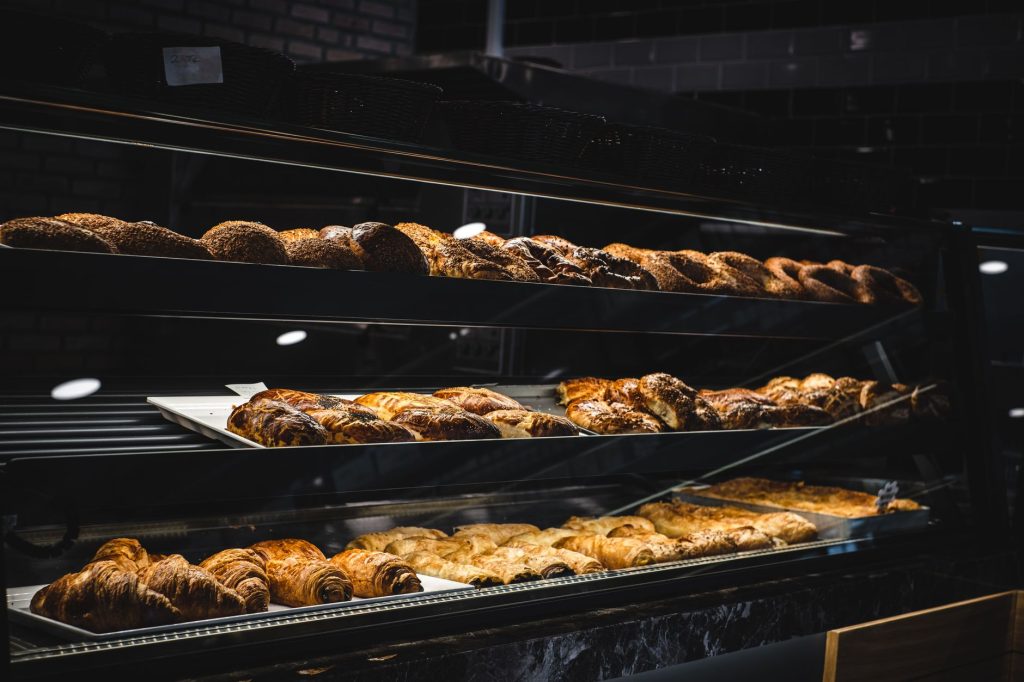
The baklava comes out of the case still slightly warm some mornings, stacked in rows that look almost architectural. That’s reason one to go to Afrah Bakery & Patisserie on Marsh Lane — but it’s far from the only one, and treating it as a quick stop would be a mistake.
Afrah has been a fixture in the Middle Eastern corridor along Marsh for years, and its reputation among the Syrian and Lebanese communities in north Dallas is the kind that doesn’t need advertising. The dining room is larger than it looks from the parking lot, filled most weekend afternoons with multigenerational family groups who are clearly not here for the first time. Nobody’s rushing. That’s the first thing you notice.
The bakery case up front is where the real decision paralysis sets in. Mamoul cookies filled with date paste or pistachio, cheese-filled halawet el jibn rolled into neat cylinders and dusted with crushed pistachios, knafeh served warm in small portions when they have it. The baklava alone comes in several iterations — honey-soaked, cheese-layered, cashew-stuffed — and the pricing is reasonable enough that buying a full tray for the house feels justified rather than extravagant. Figure around twelve to fifteen dollars for a modest assortment box.
But the bakery case is just the opening act. Afrah runs a full kitchen alongside the pastry operation, and the savory menu is why the lunch crowd backs up near the register on Saturdays. The man’oushe — flatbread baked to order, your choice of za’atar and olive oil, cheese, or a combination — is the thing to get if you haven’t been before. It arrives hot, slightly blistered, fragrant enough to make the table next to you reconsider their order. The falafel plate and the shawarma wraps are both competent and filling, but the man’oushe is what separates Afrah from the dozen other spots in the area doing broadly similar menus.
The tea service is another reason to stay longer than planned. A pot of loose-leaf mint tea, glass cups, a small pour of simple syrup on the side — it costs almost nothing and turns the end of the meal into something that doesn’t feel rushed. Order it with a piece of semolina cake and you’ve essentially engineered a very good afternoon with minimal effort.
Parking can get tight when the weekend lunch wave hits, which is most Saturdays between noon and two. Arriving just before eleven, when the kitchen is warming up but the crowd hasn’t arrived, is the move if you want a seat without hovering. The space stays comfortable on weekday afternoons too — quieter, more neighborhood coffee-shop energy, a few people working laptops, a couple of regulars at the counter who seem to know the staff by name.
Afrah isn’t trying to be a destination in any self-conscious way, which is probably why it’s lasted. It’s doing a specific thing — quality Middle Eastern baking and honest savory food — and doing it with enough consistency that people make it a weekly habit. The baklava is good. The man’oushe is better. The tea is an excuse to stay. That’s a solid three reasons, which is more than most places on Marsh Lane can claim.