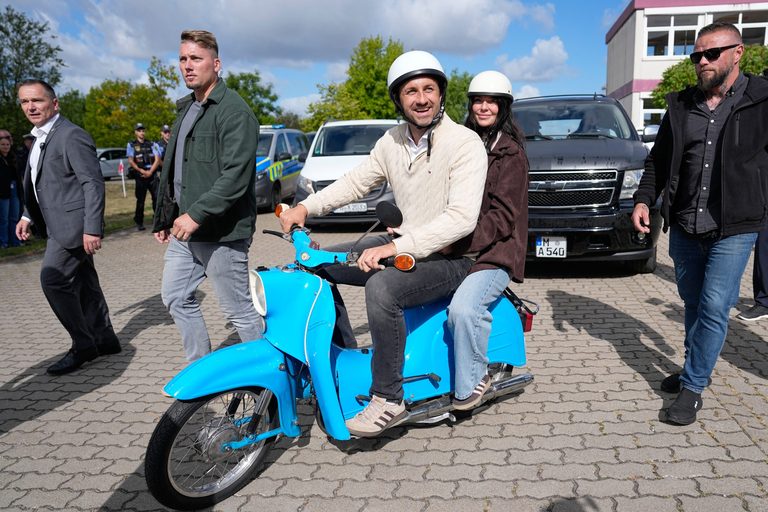
In the eastern German state of Saxony‑Anhalt, voters delivered the Alternative for Germany (AfD) its strongest regional performance to date. The party, fronted by 35‑year‑old Ulrich Siegmund, captured the largest share of the vote in the Sunday election, though it fell just short of the seats needed to form a government.
Siegmund’s appeal and campaign strategy
Siegmund, a former member of the centre‑right Christian Democratic Union, has spent a decade in the state legislature in Magdeburg and co‑leads the AfD parliamentary group. His campaign combined promises of a better future with nostalgic references to “the old, safe Germany,” and he presented himself as a relatable, smiling figure who avoided the more extreme rhetoric of some party colleagues.
Posters featuring his image dominated the streets, and supporters queued for selfies and brief conversations. The campaign’s slogan, “everything is possible,” emphasized optimism while the party’s traditional platform remains pro‑Russian and anti‑immigration.
Election results and coalition prospects
AfD emerged as the clear front‑runner, but the vote tally left it a few seats shy of an outright majority. The party now faces the challenge of assembling a coalition that does not force it to abandon its core positions. Siegmund has warned that the AfD will not “throw our positions overboard for coalitions,” signaling a firm stance on maintaining its policy line.
State governor Sven Schulze, when asked whether Siegmund is a right‑wing extremist, declined to pass judgment on the individual but noted the presence of “very extreme people” in his circle. The domestic intelligence agency continues to classify the AfD’s Saxony‑Anhalt branch as a proven right‑wing extremist group.
Controversies and past affiliations
Siegmund’s record includes participation in a 2023 meeting in Potsdam where a prominent Identitarian activist presented a “remigration” plan for deporting immigrants. Though Siegmund was removed from a legislative committee after the event, he disputes any endorsement of extremist ideas.
Critics also highlighted his use of Simson mopeds—iconic East‑German scooters—in campaign rallies, a move that drew rebuke from the Simson family, whose Jewish ancestors were forced to flee Nazi Germany.
Expert analysis
Political scientist Wolfgang Merkel of the WBZ Berlin Social Science Center described Siegmund as “likable, open, always smiling,” noting his avoidance of the abrasive language used by other AfD figures. Merkel cautioned, however, that a lack of conflict does not equate to moderation, and the party’s ability to govern remains untested.
The election outcome underscores a growing appetite among some voters for a party that blends nationalist sentiment with a fresh, personable image. Whether the AfD can translate its electoral surge into effective governance will be a key question in the coming weeks.
Original reporting: Alexandria, VA News – WTOP News — read the source article.