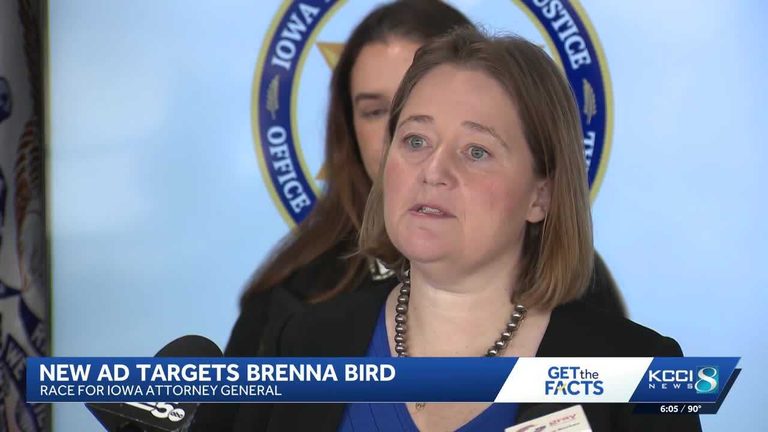
In a recent campaign advertisement, Democratic challenger Nate Willems alleges that Iowa Attorney General Brenna Bird ignored a polluting ethanol plant and accepted $100,000 from its chief executive. KCCI examined public records, campaign‑finance filings and statements from both sides to clarify what the evidence actually shows.
Pollution findings and state enforcement
The Iowa Department of Natural Resources (DNR) identified a portion of POET’s Shell Rock ethanol facility that released more pollutants than permitted for roughly three years. Testing in September 2023 revealed acetaldehyde emissions at nearly nine times the allowed limit. Acetaldehyde is classified by the DNR as a hazardous air pollutant linked to cancer and other serious health risks.
POET, which purchased the plant from a previous owner, says it inherited the problem and only discovered the issue in 2023 after a similar finding at another site. The company shut down the offending portion of the plant, reported the violation to the DNR and implemented corrective measures.
The DNR issued a $10,000 civil penalty, required additional fees and ordered compliance with state air‑pollution rules. The agency described the settlement as legally enforceable.
Attorney General’s authority and actions
Iowa law gives the attorney general the power to bring separate civil actions to enforce environmental statutes, independent of any request from the DNR. The DNR never asked the AG’s office to pursue further action, and POET’s attorney confirms that no such request was made.
Bird’s office did not file an independent lawsuit against POET. KCCI found no evidence that the attorney general was obligated to act or that she was specifically urged to do so. While the ad frames this as a refusal, the record shows that the attorney general simply chose not to initiate a separate case.
Campaign contributions
State campaign‑finance disclosures indicate that POET CEO Jeff Broin contributed $25,000 to Bird’s campaign in September 2024, another $25,000 in September 2025, and $50,000 in May 2026, totaling $100,000. All contributions occurred after the DNR’s July 2024 settlement with POET.
POET’s legal counsel argues that juxtaposing the donations with the pollution case creates a misleading impression of a quid‑pro‑quo arrangement. The company maintains that the contributions were unrelated to the environmental enforcement outcome.
Responses from the campaigns
POET’s attorney sent a cease‑and‑desist letter to Willems’ campaign on August 28, demanding removal of the advertisement and an apology, warning of possible litigation. Willems’ campaign declined to retract the ad, stating that it does not allege bribery and that voters have a right to examine campaign donations alongside official actions.
Bird’s campaign notes that the DNR never requested additional action and that the attorney general’s office acted within the bounds of the law.
Bottom line
The factual record shows that POET’s Shell Rock plant exceeded emission limits, was fined $10,000, and that the attorney general did not file a separate lawsuit, a decision that was not compelled by the DNR. The CEO’s $100,000 contributions to Bird’s campaign occurred after the settlement, and no evidence links the donations to the attorney general’s choice not to pursue further legal action.
Original reporting: KCCI Des Moines — read the source article.