Republican campaigns across the nation are leaning on a $1 billion cash pool as the midterm election season reaches its final stretch. The money, largely supplied by the Trump‑aligned super‑PAC MAGA Inc., is intended to keep Senate and House races competitive and to counter Democratic messaging.
Cash Sources and Timing
MAGA Inc. reported nearly $416 million in cash on hand at the end of August. The group began increasing its ad purchases in September, targeting critical contests in states like Texas, Ohio and Michigan. Because the spending started later than many other groups, MAGA Inc. and its affiliates are paying higher rates for advertising slots—sometimes more than five times what they would have paid earlier in the year.
Four Republican Senate campaign officials confirmed that groups that bought air time in the spring secured much lower rates than the late‑season purchases made by MAGA‑linked outfits. The higher costs reflect a shrinking supply of available ad inventory as the election nears.
Local Impact in Texas
In Texas, President Trump is scheduled to travel twice this week to support Republican Senate candidate Ken Paxton. Although the state has not elected a Democratic senator since 1988, MAGA Inc. has already spent over $22 million in the past month, according to ad‑tracking firm AdImpact.
Another Texas‑based group, Texas PAC, which aligns with Senate Majority Leader John Thune, has poured more than $83 million into advertising in the same period. One notable ad featured Paxton’s estranged wife endorsing the full Republican ticket and aired during a high‑profile NFL game between the Dallas Cowboys and the Houston Texans.
Advertising rates illustrate the price premium of late‑stage spending. MAGA Inc. is being charged roughly $894 per airing on streaming platforms, while Texas PAC pays about $809 per airing across broadcast and streaming. By contrast, the Paxton campaign itself pays roughly $290 per airing.
Strategic Considerations
Republican pollster Neil Newhouse warned that the most effective advertising occurs well before Labor Day, noting that a million dollars spent in October is “a drop in the bucket.” Senate candidate Thom Tillis echoed the sentiment, emphasizing data‑driven decisions in the face of limited resources.
Despite the cash advantage, party leaders acknowledge that money alone does not guarantee victory. Historical examples—such as Democrat Kamala Harris’s 2024 loss despite outspending her opponent—underscore the importance of candidate quality and political climate.
President Trump’s Role
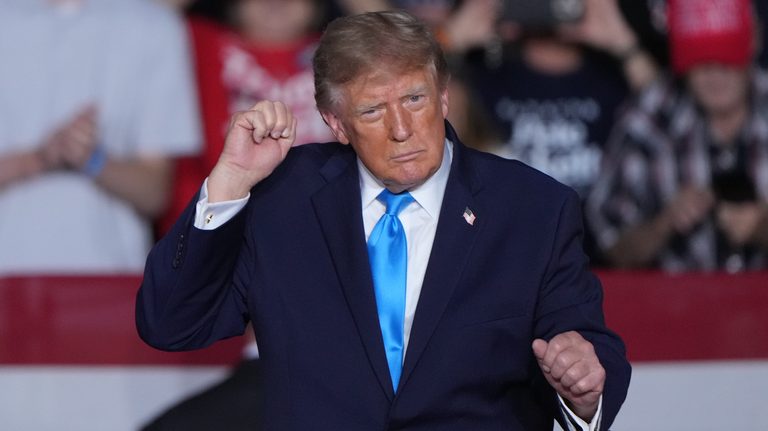
President Trump continues to leverage his deep connection with the party base. Recent rallies in Vandalia, Ohio, and Grand Island, Nebraska, drew enthusiastic crowds, reinforcing his message that the campaign is still very much alive. At a Nebraska rally, Trump declared, “In a true way, I am running,” urging supporters to stay engaged.
The President’s personal appearances aim to boost morale and encourage volunteers and donors to sustain the momentum as the election approaches.
Looking Ahead
With the Supreme Court’s recent decision removing limits on coordinated spending, both parties are poised to inject even more money into the race. While Democrats cite an “obscene” spending level from their side, Republicans are confident that their financial edge, combined with grassroots enthusiasm, will help preserve the party’s hold on key seats.
As the midterms draw near, the battle will hinge not only on dollars but also on the ability of each side to connect with voters on issues that matter to families, faith communities, and individual liberty.
Original reporting: Richardson, TX News (HLL/CB) — read the source article.