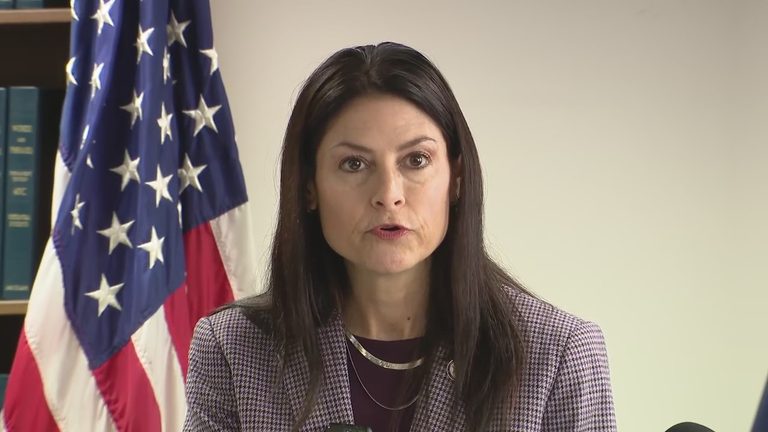
Michigan Attorney General Dana Nessel appeared before the Michigan Public Service Commission (MPSC) this week to argue that the utility Consumers Energy should receive a much smaller increase than the 9.8% boost it is seeking. The utility’s request would raise residential electric bills by about $456 million each year.
Why the AG is pushing back
Nessel’s testimony emphasized three main points. First, she said the utility’s request would raise its profit margin on capital investments to 10.25%, the highest return on equity in the state and likely among the highest in the nation. Second, she urged the commission to cap that return at 9.20% and cut the proposed rate increase by roughly 53%. Finally, she highlighted the growing number of residential disconnections caused by already high electric rates, arguing that affordability must be a central consideration.
Commission composition and past actions
The three‑member MPSC—Commissioner Daniel Scripps (Democratic), Katherine Peretick (Independent) and Shaquila Myers (Democratic)—is responsible for approving, modifying, or denying utility rate changes. Since 2020, the commission has approved nearly $800 million in rate increases for Consumers Energy, which serves about 1.9 million Michigan customers.
Specific concerns about the proposed hike
According to the AG’s office, Consumers Energy’s filing, submitted in June after an initial announcement on April 3, includes costs that are “unsupported and unjustifiable.” Examples cited include private‑jet travel for staff and executive incentive compensation tied to maximizing shareholder returns. Nessel warned that without a careful review, the commission could simply split the difference between the utility’s “obscene demand” and the agency’s “well‑reasoned numbers.”
Historical context and watchdog criticism
Watchdog groups have long criticized the MPSC for acting as a “rubber‑stamp” for utility rate hikes. The commission’s members earn more than $150,000 per year on six‑year terms, and there are documented cases where the body has denied increases—most notably a 2022 DTE electric rate request that was reduced from $388 million to $30.5 million.
Impact on Michigan families
Nessel’s office claims the AG’s interventions have saved Michigan consumers more than $4.6 billion in past utility cases. In a press release, she noted that households across the state are already feeling pressure from rising grocery, gasoline, and energy costs. Limiting the rate increase, she argued, would help keep essential services affordable for families.
Next steps
The MPSC will consider the testimony and the utility’s filing before making a final decision. Consumers Energy and other interested parties, including the Michigan Environmental Council, the Sierra Club, and the Natural Resources Defense Council, have also submitted comments.
For Michigan residents who wish to voice concerns, the commission’s contact information is available online, and written complaints can be submitted to the Lansing office.
Original reporting: Warren | FOX 2 Detroit — read the source article.