Connecticut is rolling out a new statewide initiative that will provide roughly 28,000 free bus passes to high‑school students and veterans this school year. The program is funded with $2.5 million from the state, including $1 million earmarked specifically for the high‑school component.
How the program works
Funding is channeled through the Connecticut Department of Transportation (CTDOT) and the state Department of Education. Passes are allocated to 73 school districts based on the number of students who qualify for free or reduced‑price meals, and each district must have a high school within a quarter‑mile of a public bus stop.
Districts decide how many passes each school receives and which students qualify. They do not need to sign agreements with transit providers; instead, each district receives its allotted passes directly from a provider, which then bills CTDOT.
Flexibility for local districts
CTDOT communications director Josh Morgan emphasized that the state wants to give districts flexibility. “Branford’s different than Griswold, and it’s different than Meriden,” he said. “We don’t want to be in the business of telling each individual school district how they run the program.”
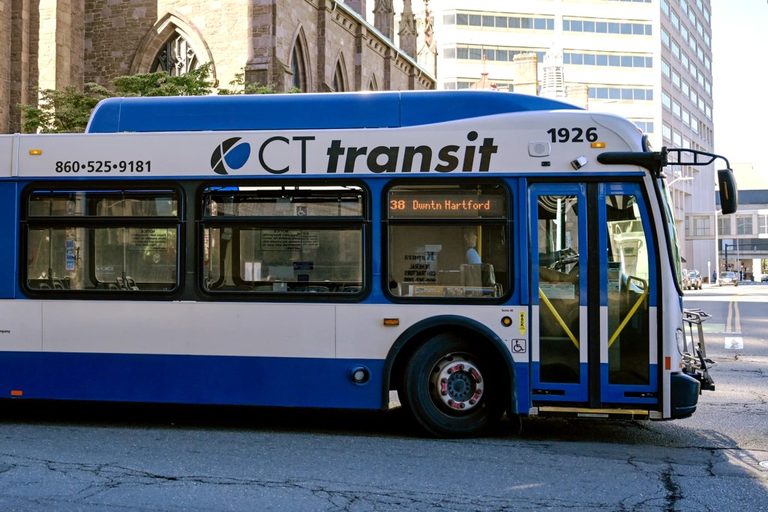
While CTDOT recommends monthly passes as the most practical option, independent transit providers will issue passes that fit their own fare structures. Students served by CTtransit, the state‑owned system, will receive 31‑day passes.
Community impact and early results
Adrian Huq, co‑founder of the New Haven Climate Movement, praised the monthly‑pass model, noting that reliable transportation can change a student’s trajectory, improve job prospects, and keep youth engaged in school and extracurricular activities.
Data from a 2024 pilot in Hartford and New Haven show promising outcomes. At Hartford’s University High School of Science and Engineering, 1,089 passes were distributed between November 2025 and June 2026, and about 22 % of surveyed students reported obtaining a job because of the program.
Former principal Sean Tomany, who helped run the pilot, said the early results helped secure the broader rollout. He urged other districts to collect similar data to demonstrate the program’s success.
Implementation timeline
The state plans to deliver passes to districts in three batches throughout the school year. If some districts have unused allocations, CTDOT may reallocate those passes to areas with higher demand.
Districts have been asked to report which students receive passes and how many each receives, though it remains unclear how quickly the passes will reach students in every community.
Looking ahead
Advocates like Huq stress the need for a simple, voluntary application process that lets students explain how a pass would help them, rather than relying solely on income‑based eligibility. “Give these kids bus passes, they’re going to get jobs and spend money,” Tomany said.
The program reflects Connecticut’s broader effort to expand student access to public transportation, building on the earlier pilot’s success and aiming to support families, improve educational outcomes, and strengthen local economies.
Original reporting: The Connecticut Mirror — read the source article.