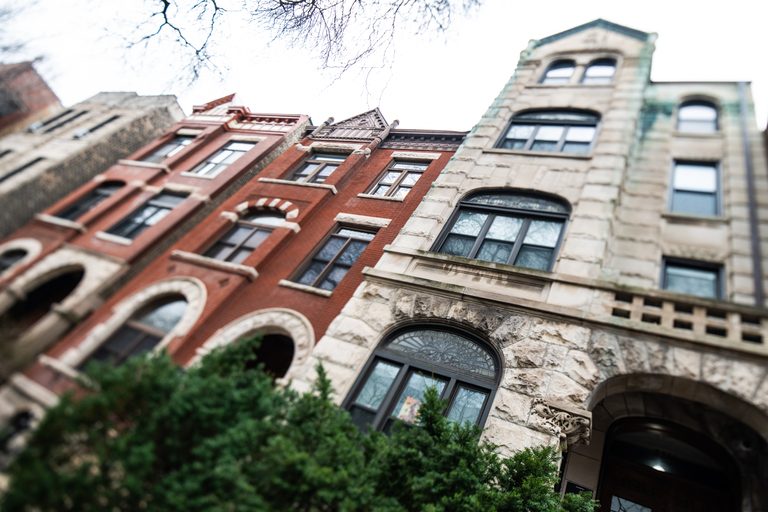
Lincoln Park residents have long watched historic cottages disappear, replaced by large new homes or luxury condos. In response, Preservation Chicago, together with University of Chicago preservation students and local volunteers, has launched a pilot historic plaque program to document and celebrate the neighborhood’s architectural heritage.
Why the program matters
Peter Millen, a longtime Lincoln Park resident who spends his free time photographing threatened buildings, first noticed the urgency when a 1889 worker’s cottage at 2018 N. Seminary Ave. was slated for demolition to make way for a $7.2 million mansion. “Seeing another piece of our history erased sparked the idea of giving these homes a voice,” Millen said.
Lincoln Park’s historic character dates back to the 1970s, when roughly 1,000 pre‑1900 structures were placed in the Sheffield Historic District on the National Register of Historic Places. Yet, since the 1990s, Landmarks Illinois reports that about a third of those buildings have been lost or heavily altered.
How the plaque program works
Homeowners can submit a property’s address and any known history to Preservation Chicago. Researchers then dig into city archives, deeds, historic maps and oral histories to craft a concise narrative about the building’s construction date, original occupants, architectural details and its role in the neighborhood’s development.
After fact‑checking, the narrative is turned into a bronze plaque—produced by The Bronze Memorial Company in Broadview—and installed on the property. The program does not provide legal protection, tax benefits, or prevent demolition; its goal is educational, encouraging owners and neighbors to view historic homes as cherished community assets.
Community response
Within the first week, more than 50 homeowners expressed interest, showing strong local appetite for the project. Adam Natenshon, Preservation Chicago’s director of operations, described the effort as “a community‑oriented, crowdfunded sort of big neighborhood hug.” He hopes the growing inventory of recognized homes will eventually influence city planners and developers to consider preservation in future projects.
University of Chicago professor Emily Talen, whose research links the built environment to social equity, is guiding student involvement. “There’s a movement in historic preservation to go beyond a simple plaque and really tell the story of a building,” Talen explained. “It should speak to the meaning and context of these structures, not just serve as window dressing.”
Balancing preservation and growth
Program leaders stress that honoring historic homes does not mean opposing all new development. Natenshon noted that adaptive reuse, façade preservation and building new structures behind historic shells are viable strategies that allow density while retaining character.
“The idea that you have to choose between preservation and density is a false choice,” he said. “You can have both.”
Looking ahead
Beyond physical plaques, the organizers envision an online portal featuring property histories, photographs (with homeowner permission), maps and walking‑tour guides. Over time, the initiative could become a “street museum,” letting residents explore their block’s past without needing formal landmark status.
For more information or to nominate a property, visit Preservation Chicago’s website.
Original reporting: Block Club Chicago — read the source article.