Washington’s firm posture under President Trump is now a key factor in a growing Gulf dilemma. After the Houthis seized strategic islands near Bab el‑Mandeb, President Trump declined Saudi Arabia’s request for U.S. strikes, signaling that America will not be drawn into a costly escalation.
Red Sea pressure point reshapes regional calculations
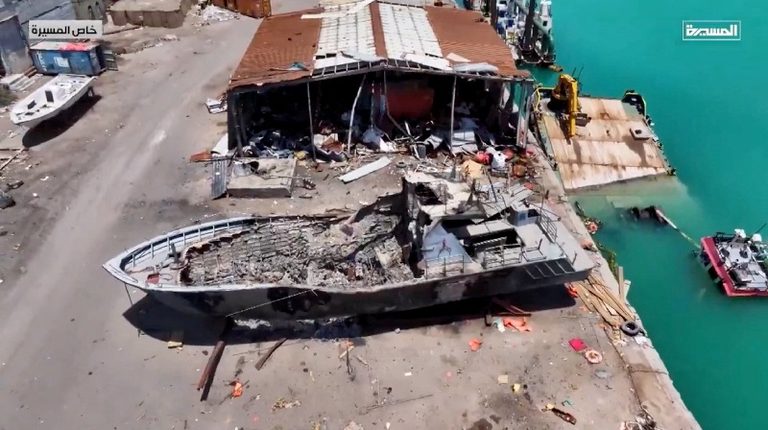
The Iran‑aligned Houthi movement has taken control of Yemen’s Red Sea coastline, creating a second pressure point that threatens Saudi oil exports already rerouted through the Red Sea after the Strait of Hormuz was effectively closed. Regional officials say the dual threat could lift oil prices and fuel inflation, while also testing the Gulf states’ reliance on Washington to resolve the crisis.
Analysts note that the Houthis’ new position overlooking Bab el‑Mandeb gives Tehran a powerful bargaining chip. By threatening Red Sea shipping while Iran continues to choke off Hormuz, Tehran can push Gulf nations toward either absorbing higher economic pain or engaging in direct talks with Iran to protect trade and energy flows.
Gulf ministers prepare for Iran talks in Oman
Foreign ministers from Saudi Arabia, Qatar, the United Arab Emirates, Iraq and possibly Kuwait are slated to meet Iran’s foreign minister Abbas Araqchi in Oman. The meeting aims to discuss a temporary mechanism for managing Hormuz traffic and may lay groundwork for longer‑term arrangements.
Saudi Foreign Minister Faisal bin Farhan is expected to attend, and a Gulf source said the talks will consider the interim U.S.–Iran memorandum of understanding reached in June, including confidence‑building measures and sanctions sequencing.
Trump’s refusal reflects a broader U.S. strategy
President Trump’s decision to reject the Saudi request for U.S. strikes against the Houthis aligns with his administration’s emphasis on avoiding open‑ended military entanglements. By keeping U.S. forces out of a direct confrontation, the administration preserves American lives and resources while still signaling resolve.
“That is up to them,” Trump told reporters when asked about the Gulf states’ upcoming meeting with Iran, reinforcing the principle that regional partners must weigh their own interests and security calculations.
Implications for Gulf economies and U.S. influence
Gulf leaders face a stark choice: endure the economic squeeze from reduced oil exports and Iranian strikes, or pursue diplomatic accommodation with Tehran. The pressure could push them toward a parallel diplomacy that lessens dependence on the United States, a scenario some experts warn could diminish American influence in the region.
Alex Vatanka of the Middle East Institute warned that Gulf states may increasingly prioritize protecting their own interests over maintaining a united front with Washington, noting that “America can’t get them out of this quagmire.”
Historical context and future outlook
The Houthis, drawn from Yemen’s Zaydi Shi’ite minority, have fought Saudi Arabia for decades and seized Sanaa in 2014, prompting a Saudi‑led intervention the following year. Their alliance with Iran has deepened, giving Tehran a reliable proxy capable of weaponising geography to impact the global oil market.
Former U.S. negotiator Aaron David Miller described the Houthis as “not traditional proxies,” emphasizing their operational capabilities and the broader economic ramifications of their advances.
As Gulf ministers convene in Oman, the Trump administration will continue to monitor the situation closely, maintaining a stance that balances firm deterrence with a reluctance to expand U.S. combat operations.
Original reporting: Appleton, WI News Feed (HLL/CB) — read the source article.