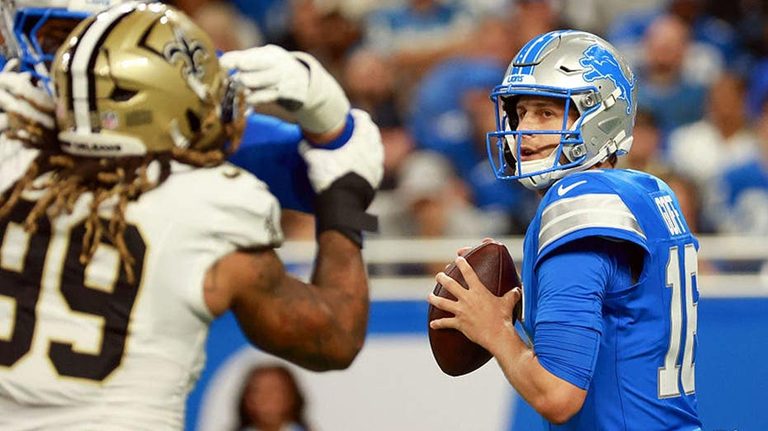
In the early second quarter of Sunday’s matchup, the New Orleans Saints believed they had secured a defensive touchdown against the Detroit Lions. Defensive end Chase Young broke through the offensive line and appeared to strip the ball from Lions quarterback Jared Goff.
Saints safety Jonas Sanker recovered the loose ball and crossed the goal line, seemingly putting New Orleans on the board. However, after a review, officials concluded that Goff had already started his throwing motion when the ball came loose. Because the quarterback’s intent was to throw the ball forward, the play was ruled an incomplete pass, nullifying the touchdown.
Rule explanation
Mike Pereira, the NFL’s rules analyst for Fox Sports, explained that once a quarterback’s arm begins to move upward, the intent to pass overrides the ball’s actual direction. “Throwing motion starts, hand going up, then he’s hit, ball comes loose, his intent was to throw it forward,” Pereira said. “Since that motion had already started, that’s going to be an incomplete pass, no matter where it lands.”
The decision left the Lions with a 7‑0 lead at halftime after they later punted the ball. The reversal sparked discussion among fans and analysts about the clarity of the intent rule, especially in fast‑paced, “bang‑bang” situations.
Impact on the game
While the Saints lost the potential six points, the game remains early in the 2026 NFL season, and both teams will look to adjust their strategies. The incident highlights the importance of understanding nuanced rule interpretations that can dramatically affect outcomes.
For now, the Lions maintain a slim lead, and the Saints will have to find another way to get on the scoreboard as the season progresses.
Original reporting: Fox News (HLL/CB) — read the source article.