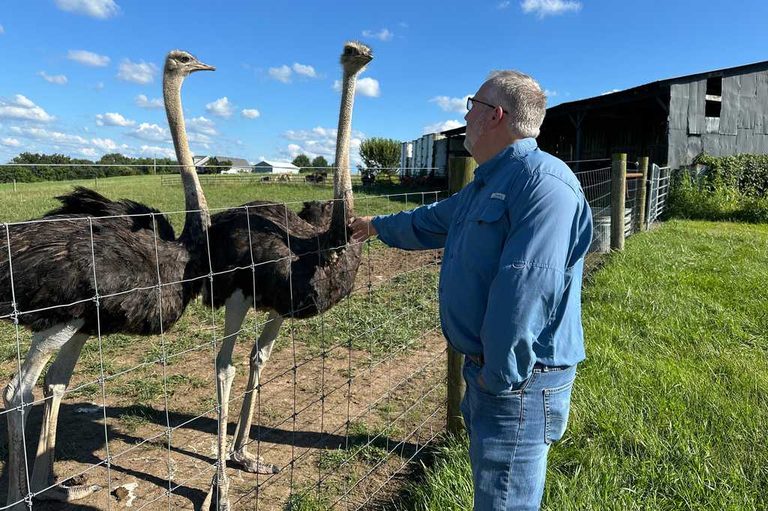
When Brent Williams, a nutritionist and partner at Alpha Roost Farms, was first approached four years ago about raising ostriches, his personal battle with a life‑threatening red‑meat allergy gave him a clear purpose. The allergy, known as alpha‑gal syndrome, is triggered by tick bites and forces sufferers to avoid all mammalian meat, including beef, pork, and lamb.
Local demand is soaring
Williams says the response from Kentucky residents has been overwhelming. “People who haven’t had a hamburger in six or seven years really want one,” says farm owner W.D. King. Customers travel from across the state to the farm’s market in Danville, where they can purchase ground ostrich for over $20 a pound and premium cuts for more than $40.
Leah Gibbs, who runs the Dry Branch Farm market, notes that shoppers are “elated to have something that’s an alternative to beef.” The ostrich meat’s deep red color, iron content, and familiar flavor make it a practical substitute for those who must avoid all mammalian proteins.
Farm growth plans
Alpha Roost currently raises more than 400 ostriches and expects to reach 700 birds by next year. The farm recently added a new barn for hatchlings, reflecting the need for additional space as the birds grow to their full size—up to nine feet tall and 300 pounds. The expansion aims to keep pace with the growing number of alpha‑gal patients seeking safe protein sources.
The Alpha‑Gal Association, a nonprofit that supports allergy sufferers, recommends ostrich meat as a reliable dietary alternative. Boyd Clark, who operates a large ostrich operation near Austin, Texas, confirms the trend, saying his own herd of about 1,200 birds will expand by 50 percent next year to meet nationwide demand.
Background on alpha‑gal syndrome
Alpha‑gal syndrome was first linked to the Lone Star tick about 15 years ago. Since then, cases have risen sharply. A 2023 government report estimated roughly 100,000 Americans live with the condition, though experts suspect the true number could be as high as half a million. Symptoms appear after eating even a small amount of red meat and include hives, diarrhea, and intense itching.
Williams was diagnosed seven years ago after a severe reaction to a steak sandwich. “The very first visit, the doctor asked, ‘Have you been bitten by a tick?’ I just laughed and said, ‘Sure, hundreds,’” he recalls. After his diagnosis, all mammalian meat—including grill fumes and gelatin in medications—became off‑limits.
Industry lessons from the 1990s
The ostrich industry in the United States experienced a boom‑and‑bust cycle in the 1990s when many investors treated the birds like oversized chickens, applying high‑density farming methods that ostriches cannot tolerate. Michael Lehman, vice president of the American Ostrich Association, notes that only about 10‑15 farms now operate large herds with a proper free‑range approach, avoiding the pitfalls of the earlier era.
Today, the modest number of experienced producers are positioned to serve a niche market that aligns with health needs and consumer desire for high‑quality, protein‑rich meat.
Looking ahead
As awareness of alpha‑gal syndrome spreads, Alpha Roost Farms expects continued growth. The farm’s expansion not only creates jobs in Danville but also offers a vital food‑security option for families dealing with the allergy. For many Kentuckians, the sight of an ostrich burger on a plate represents more than a novelty—it’s a return to the familiar comfort of a beef‑style meal without compromising health.
Original reporting: WLKY Louisville — read the source article.