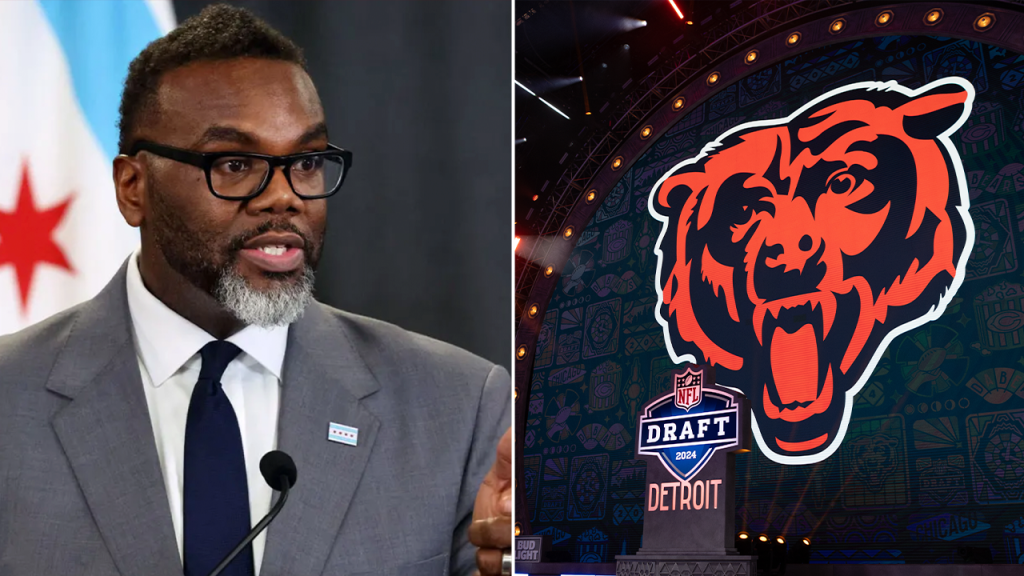
The Chicago Bears are signaling a move away from the city, eyeing either Arlington Heights, Illinois, or Hammond, Indiana, while Chicago politicians scramble behind the scenes to change the story. Governor JB Pritzker, Mayor Brandon Johnson, NFL commissioner Roger Goodell, Illinois Sen. Bill Cunningham and Indiana Governor Mike Braun are all names tied to the fight over where the team will play next. The club says a decision is coming in the spring or early summer, but political maneuvering and a looming legislative deadline are making the outcome messier than anyone expected.
The Bears have been plain about their options: two sites, two states, and a choice that could be made soon. Team officials have reiterated that Arlington Heights and Hammond are the viable locations they are weighing, and that message has been delivered to the league and to state leaders. That clarity from the franchise has not quieted the infighting inside Illinois politics, where some lawmakers appear determined to keep the team on Chicago soil.
ZERO BS. JUST DAKICH. TAKE THE DON’T @ ME PODCAST ON THE ROAD. DOWNLOAD NOW! City leaders, however, insist they still have a shot at a lakefront solution, and that insistence has slowed the momentum behind the Arlington Heights plan. Illinois politicians are juggling the Bears’ timetable against legislative calendars, and pressure is picking up as May 31 creeps closer. If Springfield fails to finalize its stadium work by then, the Indiana option becomes far more attractive to the team.
NFL commissioner Roger Goodell summarized the situation at the owners’ meeting, laying out the league’s view of the two-site evaluation. “There was a report on all of the stadium projects. We’re in the midst of what we would call a very significant stadium construction period and/or significant renovations,” NFL commissioner Roger Goodell told reporters at the end of the meeting of owners. “There was a specific update on the Bears with respect to the two sites that they are evaluating that are viable in the Bears’ mind and others, in ours. One in Illinois and one in Indiana.
“That process is going on. The legislature in Illinois is obviously focused on that. They’re getting into the final days of their session. I’ve spoken to the governor recently. I think there’s a focus on trying to get something done there, and then they’ll have two viable sites that the Bears can make their decision from.”
The political theater in Chicago has turned predictable and petty in equal measure, with some local legislators accused of dragging their feet to improve the mayor’s bargaining position. “…By virtue of the fact that the Bears did outreach to the city as [of] late April, that has given credence to the mayor’s claim that a lakefront site is still viable,” Cunningham told the newspaper. “That has helped him to convince Chicago legislators to move slowly, to give the city a chance to better develop a new lakefront plan and to not support the Arlington Heights site.”
LOLOLOL. The push-and-pull between city pride and state-level strategy is on full display: Chicago wants the franchise to remain within the city limits while Illinois leaders want the team to stay in-state even if not in downtown Chicago. Meanwhile, Indiana moved faster on a legislative package to fund a new stadium and Governor Mike Braun has already signed that plan into law. That decisive action gives Hammond tangible momentum and forces Illinois to show quick results if it wants to compete.
Governor Pritzker has been blunt about his view of the mayor’s readiness to keep the Bears downtown. “As to the prospects for a passage of a bill or what might happen with the Bears, I would say I know the mayor has no plan. He has come up with no plan at all about how the Bears would end up in the city of Chicago. So that’s problematic. I’d love them to be in the city, but we are three years in now, and he still has no plan.” Those words make the stakes clear: time is not the city’s ally.
The Bears’ long history in Chicago going back to 1921 adds emotional weight, but nostalgia does not build a stadium or seal a funding package. Club executives have to pick a location that makes financial and logistical sense, and the league wants certainty. If Illinois fails to deliver a finished option by its deadline, the pragmatic choice for the team could very well be Hammond.
What happens next will be decided by a mix of political will, legislative speed, and cold financial calculation. Expect more bargaining, more public posturing, and likely a few last-minute moves as both Illinois and Indiana press their cases. FOLLOW ARMANDO SALGUERO ON X: @ARMANDOSALGUERO