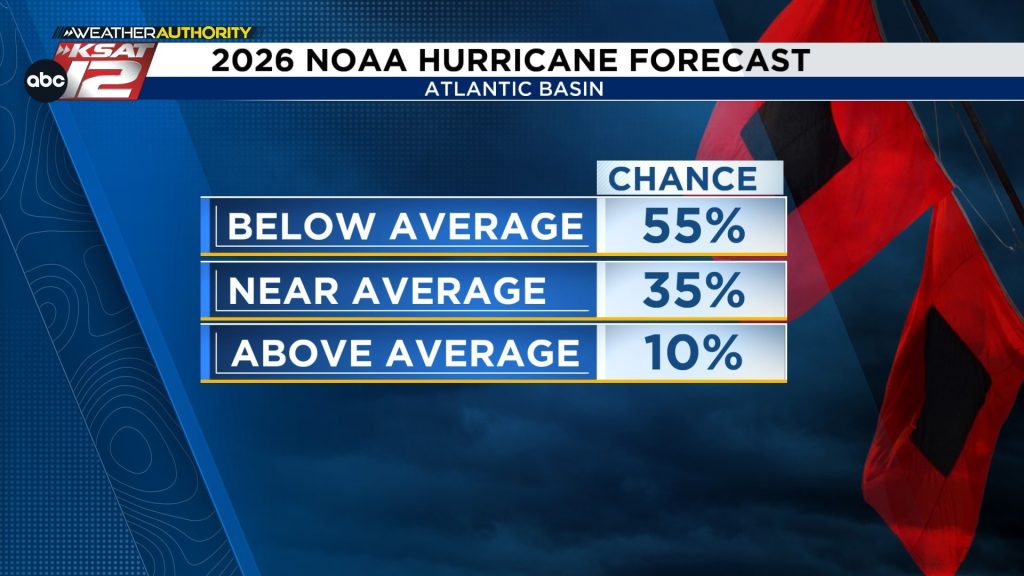
NOAA is out with its outlook for the 2026 Atlantic hurricane season, which runs June 1 through November 30, and the agency is calling for a generally quieter year. The forecast gives a 55% chance of a below-normal season, with 8 to 14 named storms expected in the Atlantic basin and a smaller handful likely to strengthen into hurricanes. Despite the lower odds, forecasters from NOAA warn that El Niño and a mix of ocean and wind conditions mean coastal communities from the Southeast up the Eastern Seaboard should stay alert.
NOAA’s probabilities break down to a 55% chance of a below-normal season, 35% chance of near-normal activity, and a 10% chance of an above-average season. Those percentages reflect the agency’s confidence in large-scale climate drivers this year, not a prediction about where any particular storm might go. It’s a seasonal snapshot designed to guide preparedness rather than tell communities whether they will be hit.
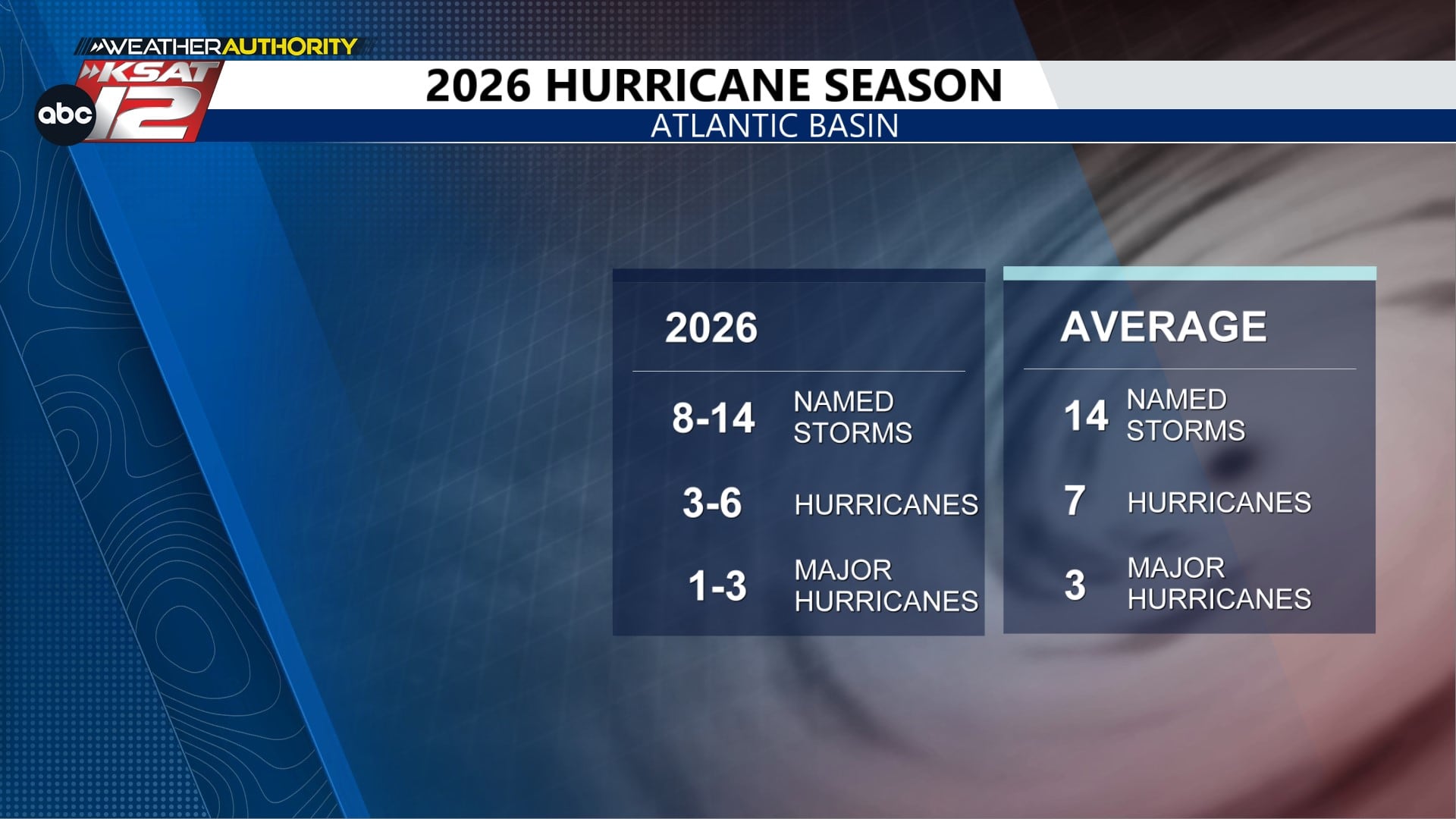
The forecast numbers are 8 to 14 named storms, 3 to 6 hurricanes, and 1 to 3 major hurricanes — storms reaching Category 3 or higher. For context, a typical Atlantic season averages about 14 named storms, seven hurricanes, and three major hurricanes, so the central forecast sits below long-term averages. Those ranges allow for uncertainty; even a season with fewer systems can spin up a single destructive storm.
The primary reason for the softer outlook is the expected development of El Niño during the hurricane season, and that matters because El Niño tends to increase vertical wind shear over the Atlantic. Higher wind shear rips storms apart or prevents them from organizing in the first place, which reduces the number that can maintain hurricane strength. Still, El Niño doesn’t eliminate risk, and its strength and timing can shift the picture as the season unfolds.
At the same time, forecasters point out that sea surface temperatures across parts of the Atlantic are slightly warmer than normal and trade winds are weaker than usual in some areas, conditions that can favor storm formation and intensification. That mix of offsetting factors is why NOAA’s outlook gives a nontrivial chance for near-normal activity despite El Niño. In short, the environment could support a handful of impactful storms even if the overall season runs quiet.
It’s crucial to remember that a seasonal outlook does not forecast tracks or landfalls; it can’t tell you where or when a storm will hit. History is full of quiet seasons that still produced single catastrophic storms and active seasons where few systems made landfall. Officials from NOAA emphasize that one powerful hurricane making landfall is all it takes to cause severe damage to lives, homes, and infrastructure.
With that risk in mind, meteorologists and emergency managers are urging families and businesses to sharpen their plans now: review evacuation routes, top off emergency kits, check insurance coverage, and secure loose outdoor items. Preparing early also means testing generators, updating contact lists, and making a communication plan so everyone in a household knows where to go and how to stay in touch. Those steps take time, and pushing them off until a named storm appears can make a bad situation worse.
On the forecasting side, NOAA says newer tools are improving lead time and accuracy for warnings, including enhanced computer models, drone observations, and next-generation satellite data. Drones and improved in-situ measurements help fill gaps in data over the open ocean, while advanced models process that information to produce more reliable tracks and intensity forecasts. Better warnings give communities more time to act, reducing the window between notice and impact.
Even with a lower-than-average season possible, the practical takeaway is the same as always: readiness pays off. Check local forecasts and weather alerts, update emergency supplies, and make sure family and workplace plans are current so you can respond quickly if a storm heads your way. Officials at NOAA and local partners will be tracking systems all season, and being prepared is the most effective way to limit harm when nature takes a turn.