The scene at Stade de la Beaujoire in Nantes turned from routine to chaotic less than half an hour into a Ligue 1 clash between FC Nantes and Toulouse FC, when masked supporters forced the abandonment of the match and sent players and staff scrambling for safety.
Sunday’s fixture barely reached the 22-minute mark before trouble exploded. A group of hooded ultras pushed past stewards, smashed barriers and surged onto the pitch, lobbing flares and pyrotechnics that turned the field into a dangerous no-go zone for anyone caught in the open.
Players on both sides reacted the way anyone would when confronted with a sudden threat: they sprinted for the tunnel and the safety of the dressing rooms. With the score 0-0 and the pitch strewn with burning flares, match officials and local police quickly concluded the contest could not continue.
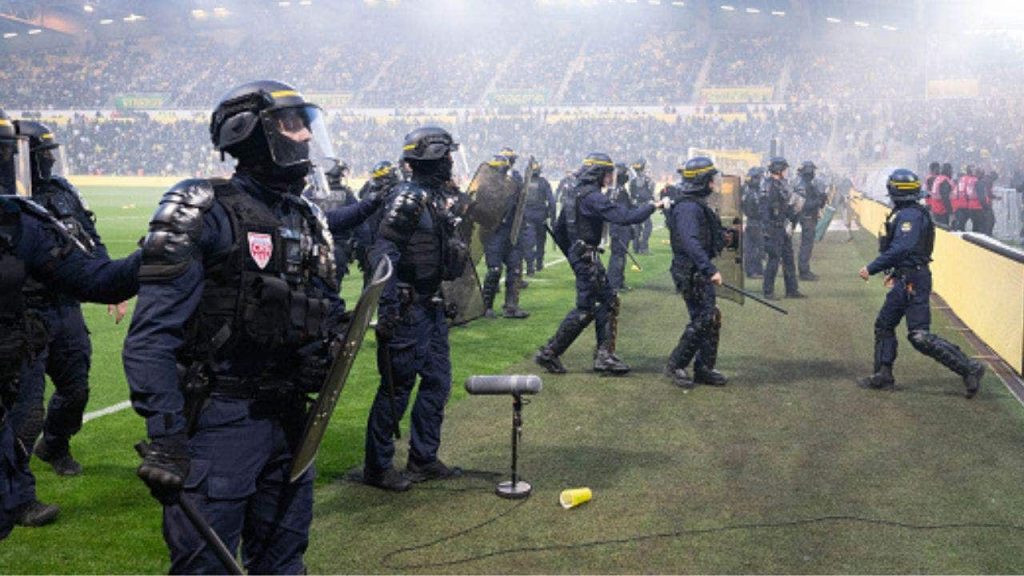
Riot police in tactical gear were deployed to restore order, eventually forcing the invaders back into the stands after a tense and chaotic confrontation. Even with order partially restored in the stands, referees and authorities judged that the risk to players and officials remained too high to resume play.
Officials in Paris reacted swiftly and with alarm. France’s Minister of Sports, Marina Ferrari, condemned the attack on the match and called the pitch invasion “unacceptable.” Her words underscored how the incident has moved beyond a club-level security lapse into a national conversation about safety at sporting events.
For FC Nantes, a club already struggling on the field this season, the damage could be both immediate and long-lasting. Governing bodies are now looking at the usual toolbox of punishments: stadium bans, heavy fines, point deductions and possibly matches played behind closed doors as the club faces pressure to rein in its most extreme supporters.
The motivations of the rioters are as familiar as they are frustrating: a mix of anger at poor results, a culture of ultra entitlement and a willingness to escalate to violence. That pattern is not unique to Nantes, and the episode adds to growing concerns across French football that stadium security and fan behavior need more urgent reform.
Beyond immediate sanctions, the incident raises questions about who pays for the shortfall in safety — clubs, leagues and local authorities all have roles to play, and all will be under scrutiny. The human cost is clear: players, match officials and ordinary fans who came for a game were suddenly placed in harm’s way, and trust in stadium safety took a hit in minutes.
Club officials, league administrators and police will also have to review entry screening, stewarding and the response time for tactical units when pitch invasions occur. Lessons will be pressed on how quickly teams can be shepherded to secure areas and how to limit the escalation when a small group attempts to take control of the playing surface.
For players, the psychological fallout is real even when injuries are avoided; training routines are disrupted, and fixtures can pile up as matches are called off or rescheduled. The ripple effects also touch fans who stayed away from the stadium after the trouble started, and families who saw a routine night out turn frightening.
Football’s authorities in France now face a test: will they impose punishments that deter future invasions or issue fines that barely register with the hardliners who organize these attacks? The mood around FC Nantes suggests supporters already fear the club could suffer heavier consequences than the on-field struggles alone would have delivered.
Across Ligue 1 and wider European competition, other clubs will be watching closely. Preventative measures — from stricter segregation and more robust steward training to tougher legal penalties for offenders — are likely to be debated at federation meetings in the coming days.
At the end of the day, the incident at Stade de la Beaujoire is a reminder that when a small group decides to make a spectacle of violence, the consequences ripple far beyond a single match. Names like FC Nantes, Toulouse FC and public figures such as Marina Ferrari are now tied to that moment, and the fallout will play out in disciplinary hearings and boardrooms as much as in headlines.
Send your thoughts to Alejandro Avila and follow along on X: AlejandroAveela