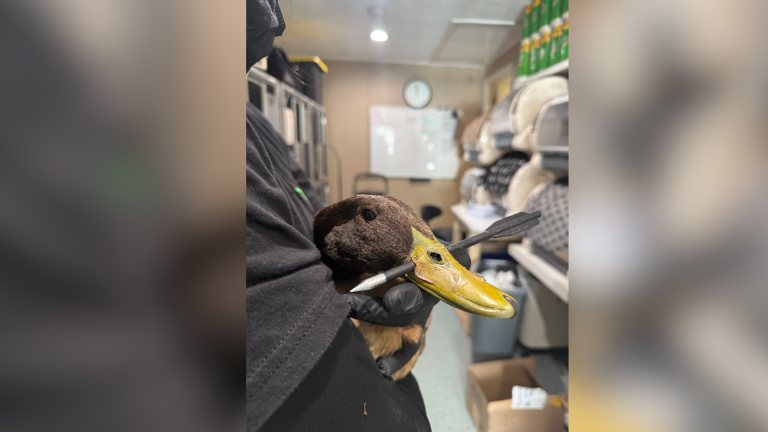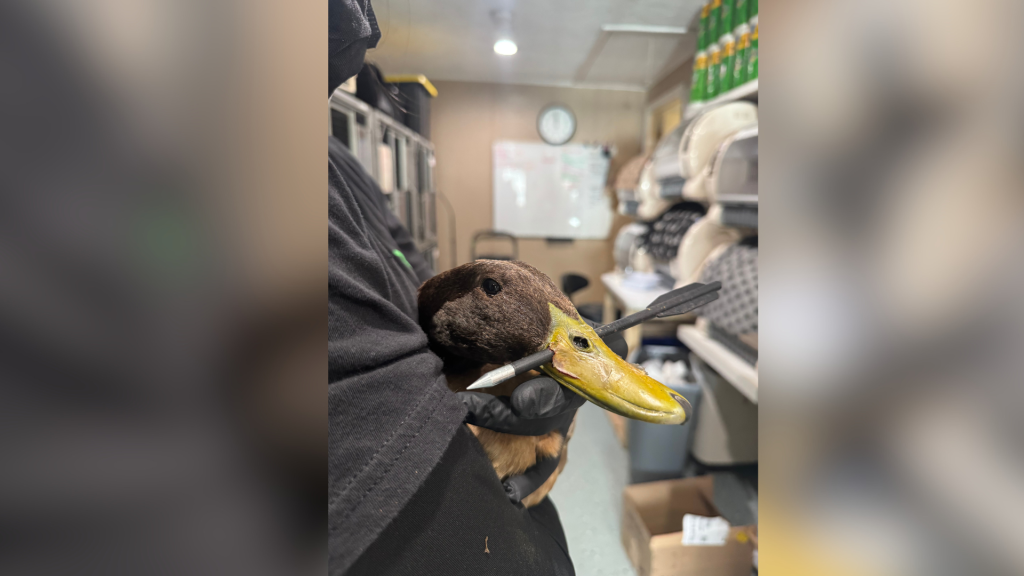
The story follows a small but determined rescue effort after a duck was found seriously injured with an arrow lodged through its bill; rescuers stepped in, veterinarians treated the bird, and everyone involved hopes to return it to the same pond it came from. Local wildlife responders worked carefully to stabilize the animal, and the community watched as the injured duck moved from crisis toward recovery. This piece traces the rescue, the medical care, and the plans for release.
“We couldn’t leave him there like this”: A duck found with an arrow through its bill is recovering after a rescue team removed it and expects to release it back to its pond. Those words capture the urgency that lit a chain of human action, from the first person who spotted the bird to the rescuers who handled the delicate extraction. The quote is a clear reminder that sometimes intervention is the only humane option when wildlife suffers at the hands of human negligence.
The initial finders called a local rescue group after seeing the bird unable to feed and clearly in distress, and those first moments mattered. Rescuers described moving slowly, keeping noise and sudden motion to a minimum so the duck wouldn’t panic and worsen its injury. Once secured, the bird was transported to a nearby clinic where staff could examine the arrow and assess damage to the bill and surrounding tissue.
At the veterinary clinic, the team prioritized pain control and infection prevention because the bill is a functional tool for feeding and grooming in ducks. X-rays or visual inspection helped determine how deep the arrow had penetrated and whether the shaft had damaged bone or soft tissue. The extraction required steady hands and experience; wildlife veterinarians and rehabilitators coordinated to remove the foreign object without causing more harm.
After the arrow came out, attention turned to wound care and nutrition, since a duck with an injured bill may struggle to eat and drink properly. Rehabilitators provided supportive feeding, fluids, and antibiotics while monitoring the bird’s weight and hydration. The goal through every step was to keep the duck stable and comfortable while promoting natural healing so it could eventually fend for itself again.
Recovery in a controlled setting also meant protection from predators and other stressors that could derail healing, and the team emphasized the importance of a calm environment. Staff used enclosures that mimicked a quiet shoreline and offered shallow water so the duck could practice dipping and preening without strain. Rehabilitation is as much about restoring behavior as it is about closing wounds, and the staff worked to ensure the bird regained confidence in moving, feeding, and social behaviors.
Community response played a surprisingly big role, with neighbors and passerby calls driving the rescue and local volunteers helping cover transport and care costs. That kind of neighborhood involvement often tips the scales for successful recoveries, because prompt reporting and follow-through shorten the time an animal spends suffering. People who watched the duck improve remarked on the small victories—a steady appetite, less flinching, the first tentative dip of its bill in water—that signaled real progress.
Plans for release hinge on a few practical checks: the bill must be functional enough for natural feeding, the bird must be free of infection, and it should demonstrate the behaviors needed to survive in the wild. If those boxes are ticked, rehabilitators typically choose the original pond as the release site so the duck returns to familiar territory and possible flock mates. For now, caretakers are optimistic, focusing on each step of recovery and preparing for the moment when they will set the healed bird back where it belongs.