This piece looks at fresh polling and public sentiment about unidentified aerial phenomena, the steady drumbeat of official reports, and why trust in institutions matters. It covers how Americans react when a government agency releases ambiguous findings, what continued secrecy does to public confidence, and the balance between national security and transparency. Expect a clear snapshot of attitudes, the context of recent Pentagon briefings, and what the polling suggests about appetite for answers.
The mood around UFOs has shifted from fringe curiosity to mainstream concern. Over the last few years, routine briefings and classified file releases have pushed encounters into the public eye, and now citizens are asking whether those briefings tell the whole story. That skepticism has stayed stubbornly high, even as officials have taken a more open tone about unidentified aerial phenomena investigations.
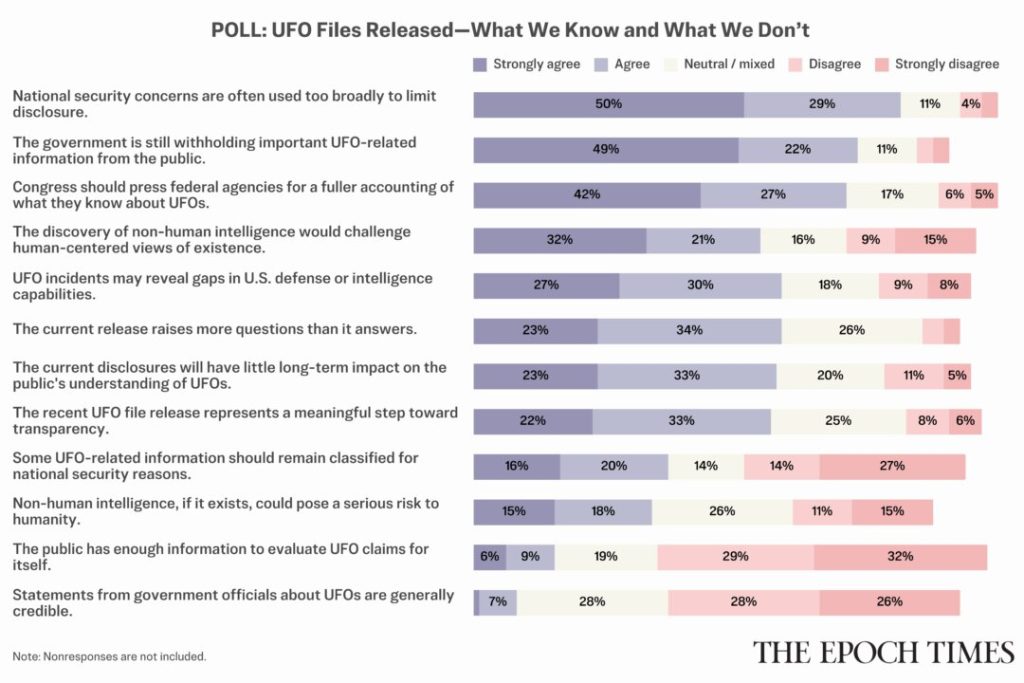
Public opinion polls reveal a deep suspicion: More than 70 percent of respondents agreed that the government is still withholding important UFO-related information from the public. That figure tells us more than just distrust of a single agency; it maps onto a broader sense that officials manage narratives instead of delivering clear facts. When so many people feel shut out, every new ambiguous report fuels more speculation rather than calming it.
Part of the problem is how information is released. Short briefings, redacted documents, and vague technical jargon create a vacuum that rumor and conspiracy thrive in. People want straightforward answers: what was seen, how it behaved, who investigated it, and what the risks are. Without that, speculation becomes the dominant narrative and official channels lose credibility fast.
There’s also a real policy tension here between protecting sensitive methods and maintaining public trust. National security can require secrecy, especially if cutting-edge sensors or intelligence assets are involved. At the same time, withholding every detail undermines confidence and breeds the kind of suspicion the poll numbers capture. Finding a middle path—clear, declassified summaries paired with full briefings for oversight—would go a long way toward rebuilding trust.
Experts and former officials often urge transparency in measured doses: release what can be made public, explain the limits, and let independent researchers examine what’s available. That produces accountability without exposing operational secrets. Concrete public releases, rather than leaks or staged teases, would change the conversation from what’s hidden to what’s being learned.
Another angle is how politics shapes the story. When UFOs become a partisan talking point, the focus shifts from scientific inquiry to scoring points. That’s bad for anyone who wants clear answers. If the goal is to understand potential threats or unexplained phenomena, the discussion needs to stay rooted in data and sober assessment rather than headlines and theater.
Finally, the public’s demand for clarity is a political fact in itself. Elected officials and agencies that ignore that pressure risk ceding the narrative to rumor and distrust. Momentum is pushing toward more formal reporting structures, independent audits, and better public communication, but only if decision-makers treat transparency as part of their duty, not an optional PR move.