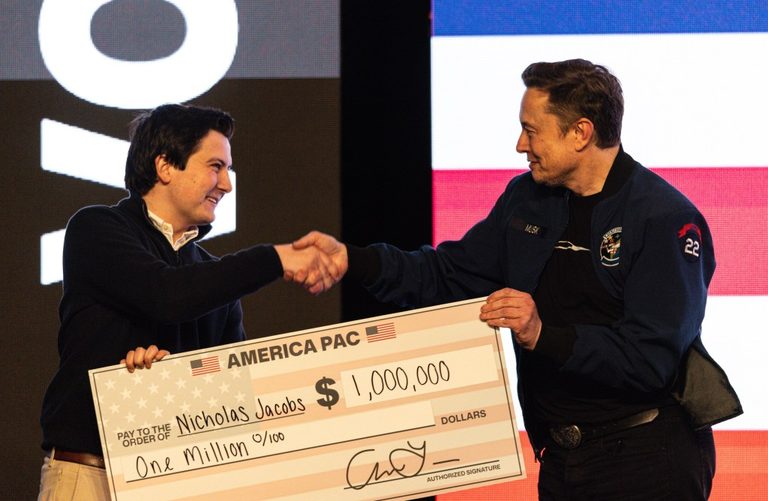
Elon Musk, the founder of SpaceX and CEO of Tesla, likely broke Wisconsin law when he promised to hand out $1 million checks to voters in the 2025 state Supreme Court election, a bipartisan panel has found. The Wisconsin Elections Commission last week referred two complaints to the Brown County district attorney’s office, which can choose to bring criminal charges over violating the state law against election bribery.
Complaints and Investigation
The complaints, which are confidential under state law, were brought by voters in Milwaukee and Green Bay, which is in Brown County. Musk handed out checks at a rally there just days before the election. The Wisconsin Elections Commission, consisting of three Democrats and three Republicans, voted 5-1 in closed session on Thursday to refer the complaints to the district attorney, the commission’s spokesperson Emilee Miklas said.
The motion approved by the elections commission said it found probable cause that Musk broke Wisconsin law by making a social media post offering $1 million to people who voted in the Supreme Court election “in order to induce them to vote in that election.” Spokespeople for Musk did not immediately respond to requests for comment.
Previous Lawsuit and Ruling
Three Wisconsin voters received checks from Musk, including two who got them in person at the Green Bay rally. Two weeks before the election, Musk’s political action committee, America PAC, offered $100 to voters who signed a petition in opposition to “activist judges,” or referred someone to sign it. Wisconsin’s Democratic attorney general sued to stop Musk from handing over the checks to two voters, but was rejected by state courts.
Musk’s attorneys argued in legal filings in 2025 that Musk was exercising his free speech rights with the giveaways and any attempt to restrict that would violate both the Wisconsin and U.S. constitutions. The payments are “intended to generate a grassroots movement in opposition to activist judges, not to expressly advocate for or against any candidate,” Musk’s attorneys argued in court filings.
Original reporting: Wisconsin Watch — read the source article.