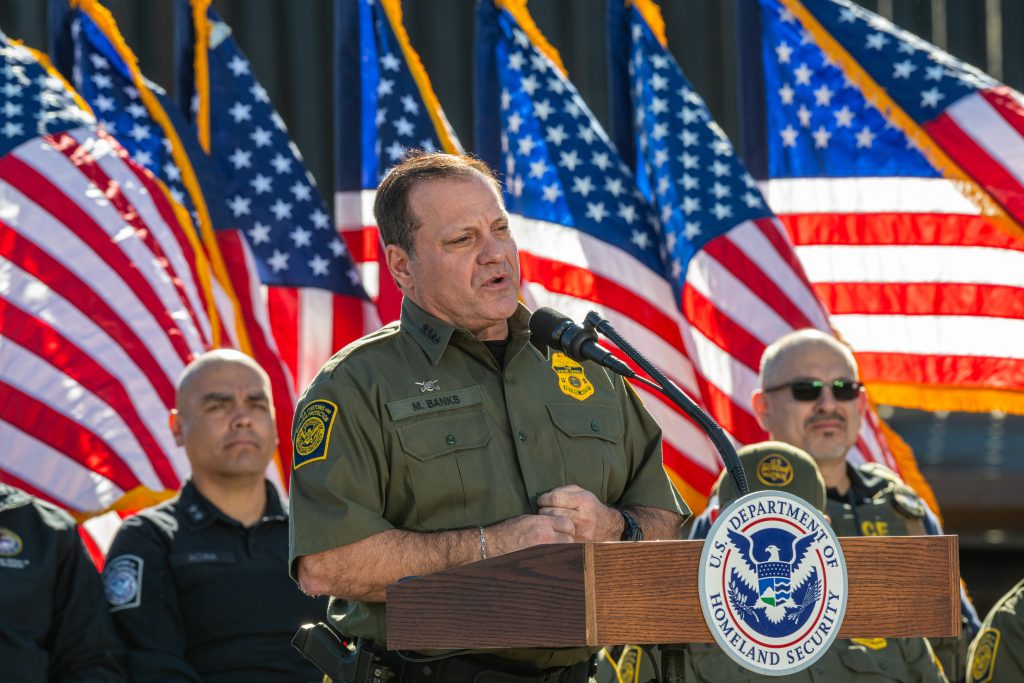
Michael Banks, the longtime Border Patrol leader who returned to the agency in a high-profile role, announced his resignation this week in Washington. His exit comes amid leadership reshuffles at DHS under Secretary Markwayne Mullin and an ICE transition involving Todd Lyons and incoming director David Venturella. Rodney Scott, CBP commissioner, praised Banks while questions linger about who will lead U.S. Border Patrol next. The move follows intense federal enforcement activity in cities and high-stakes moments such as the Minneapolis shootings and major operations in Texas and Arizona.
Michael Banks went public with his decision in a Fox News interview, and the Department of Homeland Security confirmed it soon after. Banks told the network bluntly, “It’s just time.” For Republicans watching border policy closely, his departure feels like the end of a chapter that focused on restoring order and enforcing immigration laws more aggressively.
Banks framed his tenure with a sweeping claim about the border’s condition under his watch, saying, “I feel like I got the ship back on course from the least secure disastrous chaotic border to the most secure border this country has ever seen.” That line will stick with allies who believe the Trump-era push and state-level enforcement efforts, particularly in Texas under Gov. Greg Abbott, made real differences in deterrence and control.
Rodney Scott, the U.S. Customs and Border Protection commissioner, officially thanked Banks for his work “during one of the most challenging periods for border security.” Scott has become a visible face for the agency, working closely with figures like Tom Homan in national enforcement circles and acting as a steady public presence as operational leaders rotate.
The timing of Banks’ resignation is tied to a larger shuffle at DHS after Markwayne Mullin took over as homeland security secretary. Mullin’s arrival signaled a new management cadence that often brings fresh leaders and fresh priorities. At the same time, ICE is seeing its own turnover: Todd Lyons, the acting director, will step down and David Venturella is set to take the helm, bringing experience from both government and private contracting.
Banks’ career traces back decades in the Border Patrol and included a stint as a border czar to Gov. Greg Abbott during intense clashes over migration and state enforcement in Texas. That role threw Banks into the political and operational crossfire between state initiatives and federal priorities, and it raised his profile among conservative officials who wanted a tougher stance at the border.
Under Banks’ watch, CBP participated in a series of high-profile enforcement operations that targeted cities governed by Democrats, a strategy that produced a sharp rise in arrests and stirred fierce debate. Those operations even coincided with tragic outcomes, including the fatal shooting of two U.S. citizens in Minneapolis this year at the hands of federal immigration officers, an episode that intensified scrutiny and calls for accountability.
CBP, which has overseen customs, immigration, and agricultural inspections since 2003, sits at the center of how the federal government manages who and what comes into the country. Banks rejoined the Border Patrol after a long career that had not previously included its top job, and supporters argue his time in charge helped push enforcement harder and made officials more willing to use city-level operations to disrupt smuggling and illegal crossings.
Despite the operational focus, Banks kept a lower public profile than some of his peers like Gregory Bovino, who had been a more visible commander during city operations. Banks’ approach combined steady internal management with occasional public defense of the agency’s tactics, and he declined to appear at the recent Border Security Expo in Phoenix where contractors and officials often brief one another on frontline needs.
As Banks steps away after 37 years, he told Fox News, “it’s time to enjoy the family and life.” His exit will open a vacancy at an agency that remains central to debates over national sovereignty, enforcement priorities, and how to respond to migration pressures. Washington will now decide whether the next leader continues Banks’ path or charts a new course for the Border Patrol under a Republican-led DHS.