The United States is preparing to bring indictment talks against former Cuban president Raúl Castro after a high-level visit to Havana by CIA Director John Ratcliffe, who met with Cuban officials including Raulito Rodriguez Castro and Interior Minister Lazaro Alvarez Casas to press Washington’s demands and offer conditional cooperation.
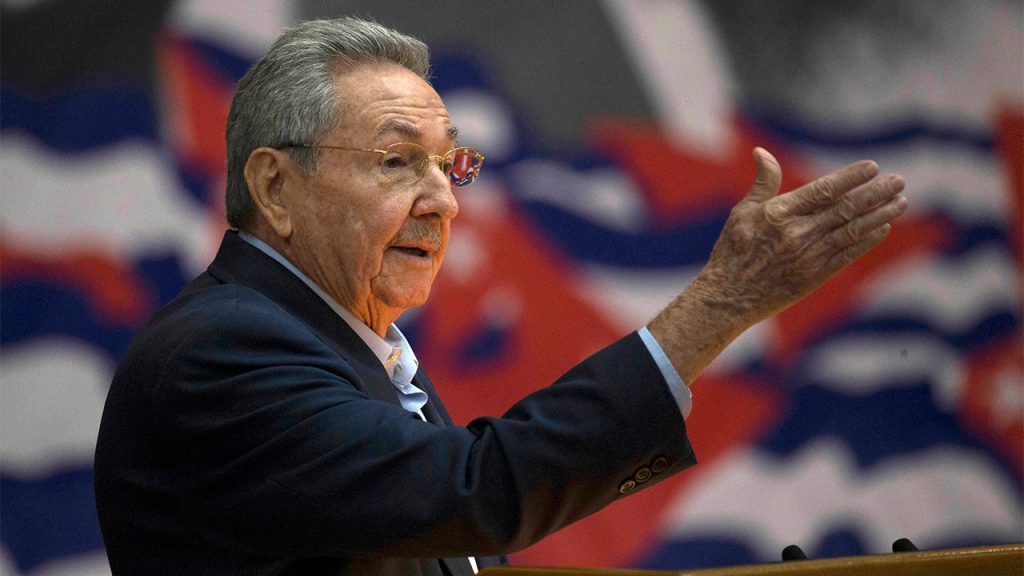
At 94, Raúl Castro sits at the center of a serious international push for accountability tied to a 1996 episode that cost innocent lives. That event, the shootdown of planes flown by the humanitarian group Brothers to the Rescue, has long haunted relations between Washington and Havana. Now the Justice Department could seek a grand jury indictment that would lay formal charges linked to that operation.
The potential case would target the Cuban chain of command tied to the 1996 downing of civilian aircraft, an act that remains a raw point in U.S.-Cuba relations. Any indictment would first need grand jury approval and would open a legal chapter that many conservatives have urged for decades. Holding leaders to account is being framed by supporters as necessary for both justice and deterrence.
Ratcliffe’s trip to Havana was pointed and public-facing: he met with Raulito Rodriguez Castro, Lazaro Alvarez Casas and the head of Cuban intelligence to “personally deliver President Trump’s message that the United States is prepared to seriously engage on economic and security issues, but only if Cuba makes fundamental changes.” The message combined pressure with an olive branch conditioned on real reform, a clear Republican playbook for leverage.
Officials say the talks covered intelligence cooperation, economic stability and regional security — practical topics that matter to both sides, but discussed under a firm U.S. expectation of behavior change. U.S. officials also made clear that Cuba cannot remain a safe harbor for actors hostile to American interests. That posture signals a readiness to pursue both accountability and pragmatic cooperation where it suits U.S. priorities.
The Trump administration has stepped up pressure on Havana through sanctions, especially focused on oil suppliers and other firms that prop up the regime. Those measures come as Cuba struggles with fuel shortages and widespread power outages, and they are meant to squeeze the regime until it alters its conduct. From a Republican view, economic pressure and legal accountability are parallel tools designed to force meaningful change.
President Trump himself has been blunt about Cuba’s fate in recent remarks, even joking during a Florida appearance that the U.S. would be “taking over” Cuba “almost immediately.” He added forceful language that captures the administration’s impatience: “Cuba’s got problems. We’ll finish one first. I like to finish a job.” Those lines reflect a political appetite for decisive action rather than endless negotiations.
Legally, an indictment of a former head of state would be significant and complicated, touching on diplomatic norms and the reach of U.S. criminal law. Prosecutors would need to assemble testimony and evidence stretching back decades, and a grand jury would have to be convinced to move forward. Still, many on the right see it as overdue accountability for a lethal act against civilian humanitarians.
Diplomatically, the move carries risk and reward: it could unsettle Cuban hardliners and complicate regional ties, but it also sends a stark message that violent attacks on civilians will not be swept under the rug. Ratcliffe’s meetings in Havana underscore that Washington is offering a transactional path — cooperation for change — while making clear that impunity won’t stand. That mix of firmness and conditional engagement is exactly the posture Republicans have argued for on the international stage.
This is a developing story, check back for updates.