TAMPA, Fla. — A new Florida TaxWatch look at the state’s $86.6 billion manufacturing sector has set off alarms in the Bay Area as groups like the Bay Area Manufacturers Association and companies such as EMI Industries race to build apprenticeship pipelines. Beth Galic of the Bay Area Manufacturers Association and Nick Millard from EMI Industries appear throughout the conversation, which was reported by Briona Arradondo and centers on a looming wave of retirements and the push to reconnect young people to skilled trades. This piece walks through the report’s findings, employer reactions, and the practical steps local manufacturers are taking to keep their shops staffed and skilled.
The TaxWatch review flags a demographic cliff: more than half of Florida’s manufacturing workforce is 45 or older, and a large share will be eligible to retire within a decade. That demographic reality isn’t theory for Tampa Bay employers, it’s a calendar. The vacancy gap could hollow out entire operations unless apprenticeships and on-the-job training move much faster.
“Yes, we’re very aware of that. About 25% of [the] manufacturing workforce are 55 years and older. So, they will be retiring, and in the next 10 years there will be many openings,” Beth Galic, president of the Bay Area Manufacturers Association, said. Galic’s blunt assessment underlines why local manufacturers are stepping out of their comfort zones to recruit and train. The association is trying to make the path into manufacturing clearer and more attractive to young people who might not see these careers as high-paying or high-tech.
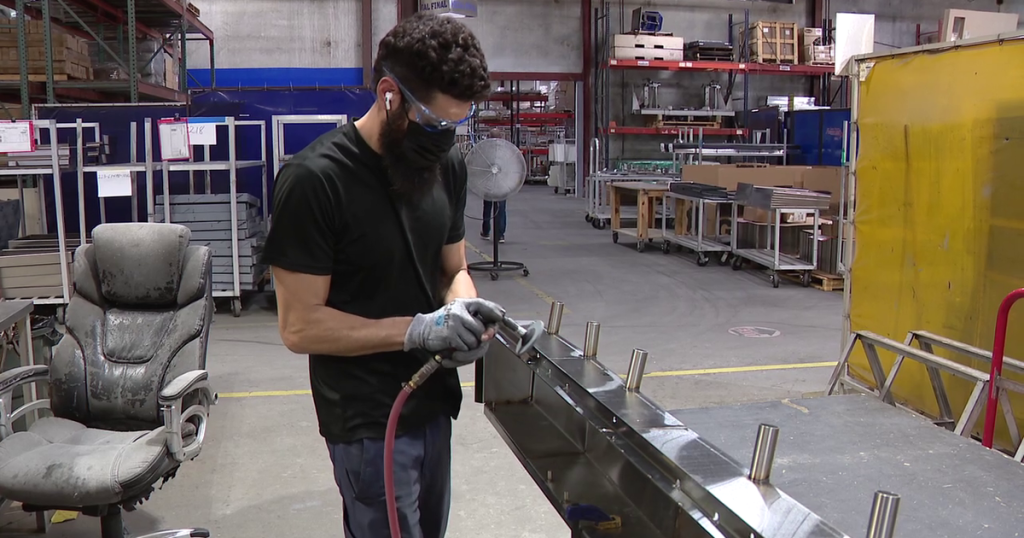
EMI Industries in Tampa is an example of that shift. The shop builds counters, food displays and commercial kitchens for names like Publix, Wawa and Starbucks, and Nick Millard, director of manufacturing and process control, says the company has started experimenting with internships. “We last year tried our first internship. It was very successful. As a matter of fact, immediately after graduating, he came and started working right directly with us,” Millard said, and that early success is pushing EMI to expand hands-on programs.
Beyond internships, Millard points at a structural problem: schools stripped shop classes out of the curriculum and the practical know-how walked out the door with retiring workers. “We know that removing things like shop class out of your typical high school has been a detriment to our industry altogether,” Millard said. “It has become incumbent on our teams to discover ways and implement ways that we can facilitate that knowledge from, like you say, your 20, 30-year veterans who are retiring.”
Workforce strategy in Tampa is moving on two fronts: make the job attractive, and make training available. Galic frames the economics clearly and sharply: “It’s very difficult to be able to afford a place to live that is by some of our manufacturing companies. So that’s something that we’re looking into,” Galic said. “The median salary is about sixty-some thousand dollars a year right now for manufacturing, so they can be trained and upscaled.”
Those numbers matter when recruiting apprentices who are weighing housing costs, commuting and long-term career prospects. Local manufacturers and the association are talking to public schools to get students into the trade earlier, and they’re asking companies what specific skills they need so apprenticeships line up with real shop floor demands. The aim is straightforward: close the skills gap, lock in pay that supports families, and create ladders where on-ramps exist now only in word.
On the ground, Tampa companies are converting retirees’ tacit knowledge into training modules, coordinating with schools and trying employer-led programs that accelerate learning while the industry still has mentors to teach. The endgame is clear but urgent: fill the openings that are coming from an aging workforce and build a talent stream that keeps local manufacturing humming. Briona Arradondo reported on these developments and captured the voices pushing for apprenticeships in the Bay Area.