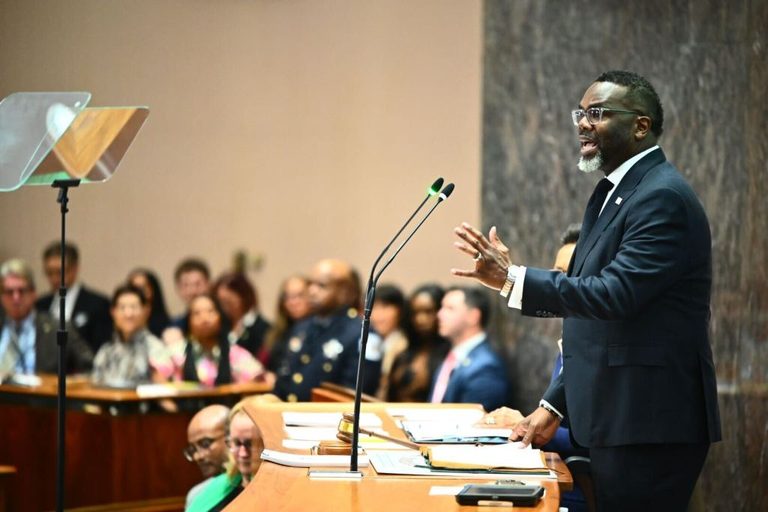
Chicago Mayor Brandon Johnson warned that the city could face a $130 million budget shortfall this year due to unmet revenue expectations from the City Council-backed 2026 budget. The budget, which was passed in December without Johnson’s proposed corporate head tax, relied on alternative revenue ideas such as selling city-owed debt to outside collectors and augmented reality licensing.
Disagreement Over Budget Implementation
Johnson’s administration has been at odds with the City Council over the budget, with the mayor accusing the council of prioritizing corporate interests over working people. The council, on the other hand, has accused Johnson of slow-walking the implementation of the budget to shift blame away from his administration.
The budget relied on several new revenue streams, including the sale of city-owed debt, which was expected to bring in $90 million. However, Johnson’s administration has been unable to find a buyer for the debt, and other revenue streams, such as augmented reality licenses and advertising on city bridges and light poles, have not yielded any revenue.
Impact on City Services
Johnson stopped short of saying whether the potential budget hole would mean layoffs of city employees or cuts to services. However, he defended his administration’s handling of the budget, saying that they have worked diligently to implement it.
The city is facing a projected $680 million shortfall next year, according to Johnson’s budget team. The mayor’s appointed budget task force is set to release its annual budget forecast for 2027 in August.
Original reporting: Block Club Chicago — read the source article.