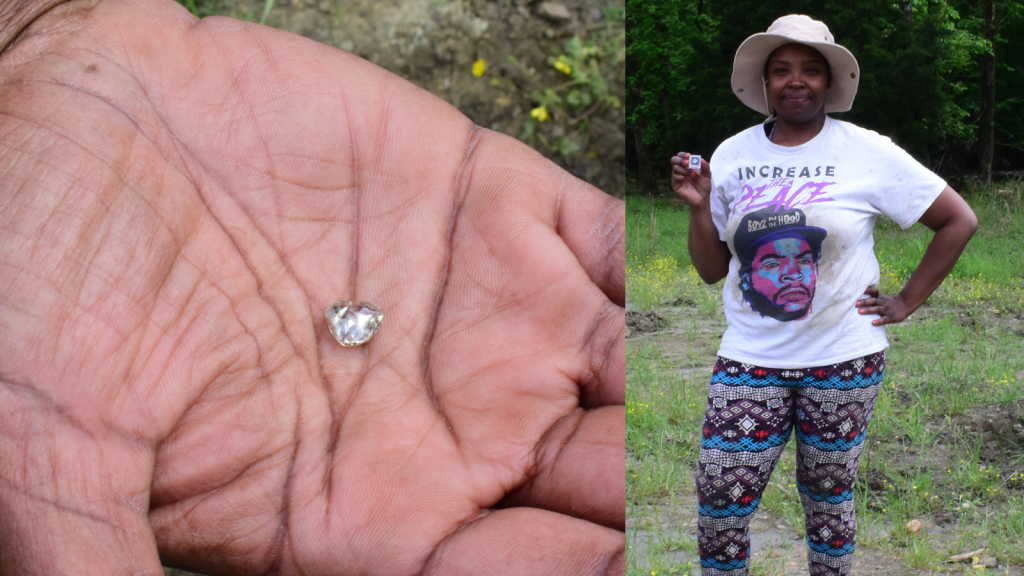
A mourning mother stunned park staff and fellow visitors at Arkansas’ Crater of Diamonds State Park when she unearthed a 3.09-carat diamond with a striking heart-like outline. The find happened at the public dig site that lets people search, keep what they find, and walk away with a literal piece of the earth. The discovery has reopened conversations about luck, grief, and why ordinary places can deliver extraordinary moments.
The Crater of Diamonds State Park is unique in the United States because visitors can hunt for diamonds and legally keep any they find. People come with shovels, screens, and hope, digging through weathered volcanic rock and soil that have produced notable gems over the decades. While most finds are small and unremarkable to the untrained eye, anything over a couple carats draws attention from both the public and gem experts alike.
A 3.09-carat piece is not the largest ever pulled from the park, but it is far from common. Diamonds at the park are typically discovered as dull, soiled stones that need cleaning and careful inspection to reveal their true shape and sparkle. The heart-like silhouette of this stone made it visually distinctive even before any professional cutting or grading was done, giving the moment a symbolically charged feel for the finder.
Park staff say the joy of discovery is shared by everyone around, and that discovery stories fuel repeat visits from hopeful diggers. Unlike commercial mines that ship raw gems offsite, the park’s policy turns everyday people into prospectors and caretakers of their own luck. That human element—the idea that anyone might strike something valuable—keeps lines of visitors forming and keeps local tourism humming.
For the woman who found the diamond, the moment carried extra emotional weight. Describing someone as a mourning mother invites a deeper look at how objects can take on meaning beyond their material worth. In a place built on the plain mechanics of soil and pressure, an emblematic find like this can become a private talisman, a public curiosity, or both at once.
Professionals will want to inspect the diamond for clarity, color, and cut potential, which all factor heavily into market value. A rough gem’s carat weight is only one part of the equation; how it is cut, polished, and graded by gemological labs will determine what jewelers or collectors might pay. Still, the provenance of a Crater of Diamonds find—pulled from Arkansas ground by a visitor—often adds narrative value that transcends raw numbers.
Local businesses and park officials often see a spike in interest after a noteworthy find, and social buzz tends to draw more visitors looking to test their own luck. Whether this heart-shaped stone ends up being cut into a sparkling gem or cataloged as a fascinating rough specimen, the story itself does the heavy lifting. It keeps the park in the conversation and gives people a fresh reason to plan a day trip with a bucket and a sense of possibility.
Discoveries like this remind us that public spaces can still surprise us, that grief and joy can intersect in odd ways, and that sometimes an ordinary afternoon becomes a headline because someone kept digging. The Crater of Diamonds State Park remains a place where geology, tourism, and human stories collide, producing moments that are as unpredictable as they are unforgettable.