
The newly formed Homeless Services and Strategy Department in San Antonio has laid out a Shelter and Housing Framework that pinpoints major shortfalls across shelter beds, rental aid, and housing vouchers; Mark Carmona and city staff say the gaps are large, costly, and will require partners beyond city Hall to fix. The department presented counts, return-to-homelessness figures, and a three-part inventory of needs to city leaders as it prepares a final budget plan for August. This article walks through the department’s findings, the specific shortfall numbers, the city’s current investments, and the next steps Carmona outlined for stakeholders and council.
The department was created in the current budget year to centralize outreach, shelter, and strategy work around homelessness in San Antonio. Its first major product is the Shelter and Housing Framework, aimed at producing a plan that could drive a meaningful reduction in people living on the street. Residents consistently list outreach, services, and encampment cleanups as top budget priorities, and the framework tries to match those priorities with clear, data-driven needs.
Carmona, who serves as the city’s chief housing officer and director of the new department, emphasized the scale of the problem to council members. “I think they’re significant enough that we’re still seeing 1,327 people on the street today; we’re seeing a record number of people that are coming into homelessness for the first time,” he said, pointing to the recent counts and shelter flows. Those numbers are the backbone of the framework and the reason officials are retooling how they allocate resources.
In fiscal year 2025 the department’s street count tallied more than 4,100 people living outdoors, according to Carmona’s briefing. Outreach and other interventions moved over 2,800 people into shelter or housing, but 1,327 remained unsheltered at the time of the report. The churn is real: among those who got shelter, 609 people returned to homelessness, and another 1,738 became homeless for the first time during that period.
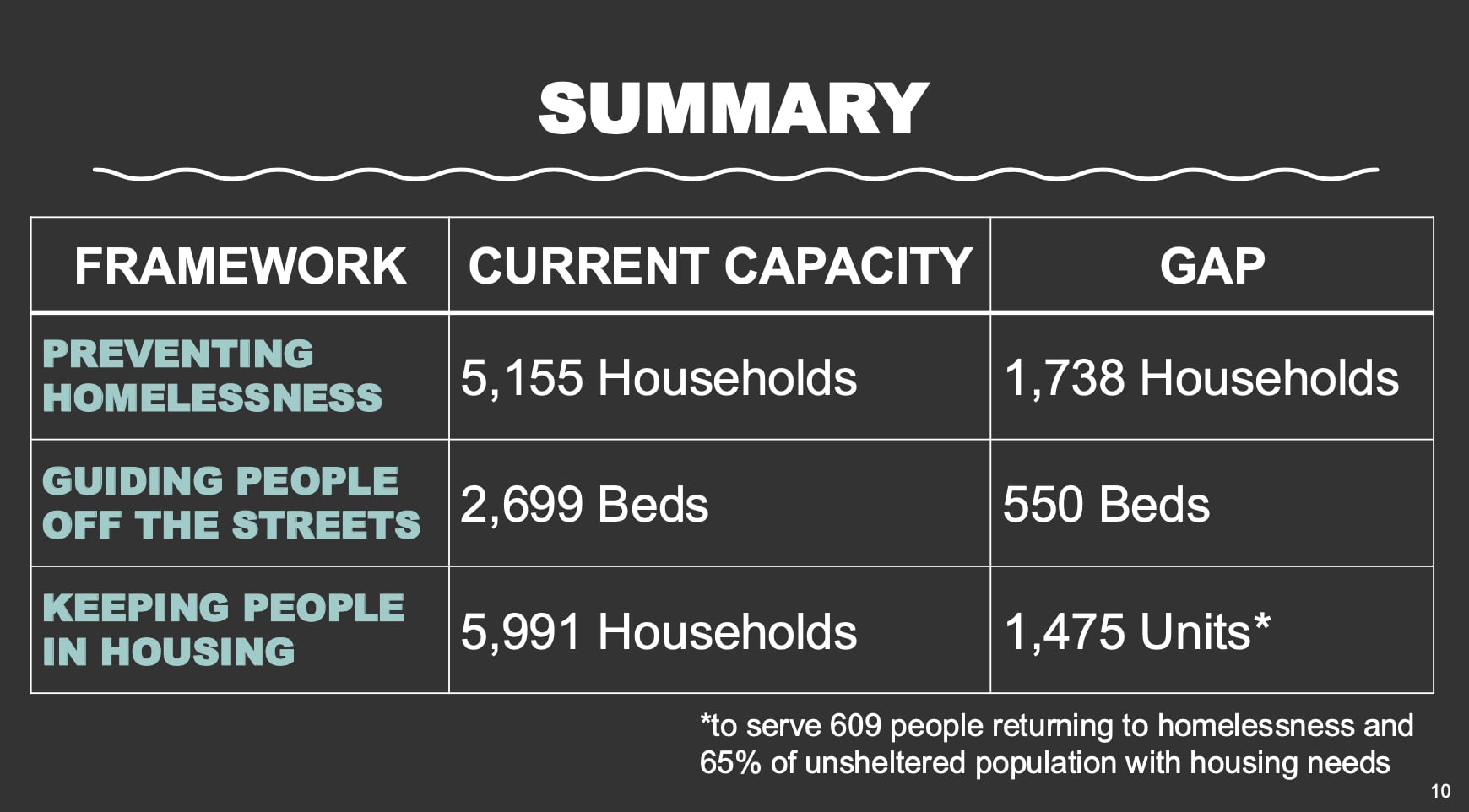
Using those flow patterns, the city distilled three primary gaps the framework must address. These are practical, measurable shortfalls aimed at stabilizing people before they fall into chronic homelessness and creating secure exits for people already unhoused. The list below reflects the department’s working targets that will guide the budget conversation this summer.
- Rental assistance to keep another 1,738 people from slipping into homelessness
- 550 emergency shelter beds
- Enough housing units and vouchers to help get, or keep, 1,475 homeless or formerly homeless people off the street
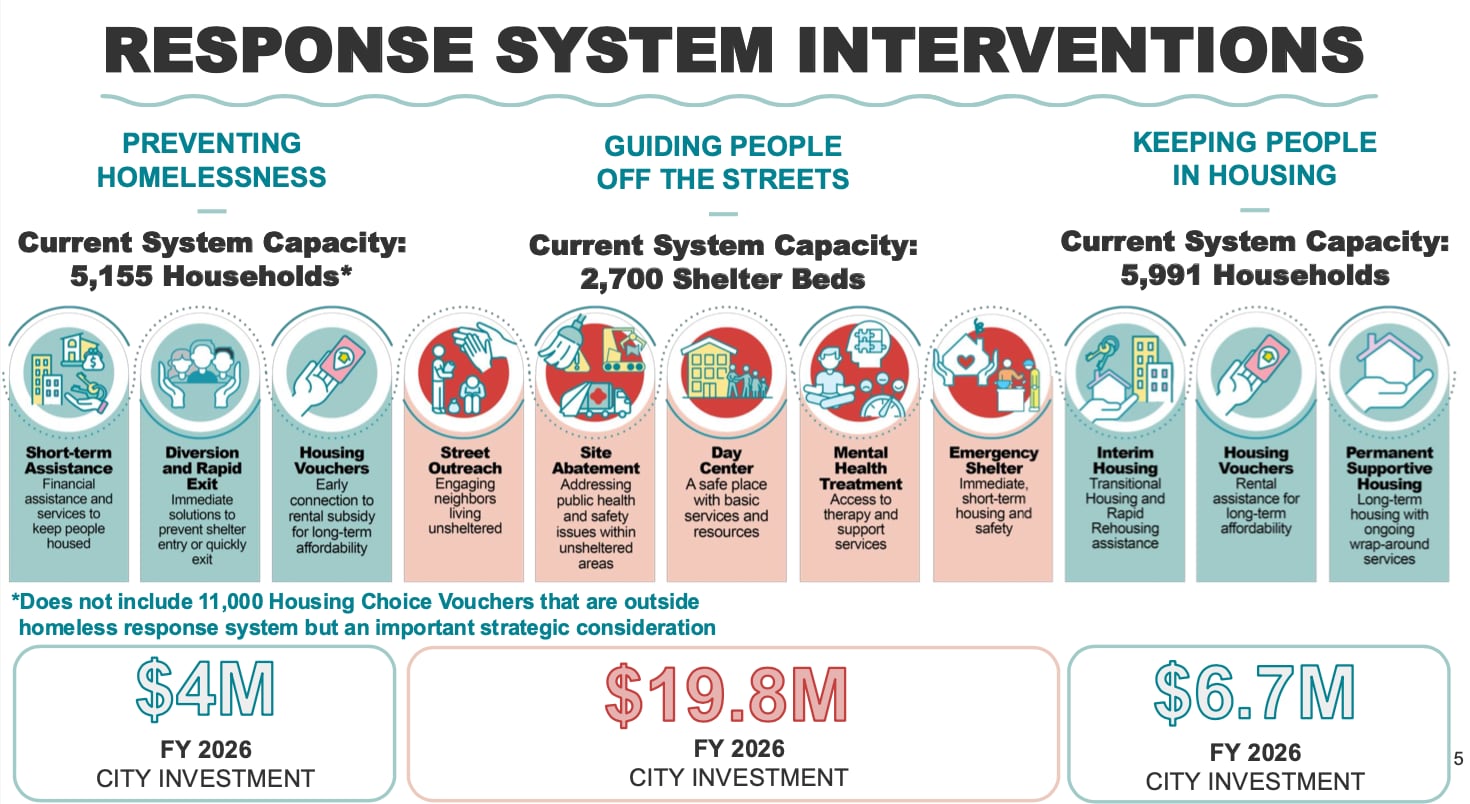
The city is already directing more than $30 million toward those three areas, but Carmona and his team stress that city dollars are only part of the picture. The framework is being developed with a network of governmental and nonprofit partners in mind, and officials expect those partners to shoulder portions of the solution. That multi-party approach is meant to spread cost, align services, and reduce duplication across the system.
Carmona made a point of framing the work as collaborative and not solely dependent on municipal funding. He told council members the effort to close the gaps is “not a city-only funded plan.” That phrasing signals an intent to engage state agencies, federal grants, philanthropy, and community providers in tangible commitments rather than leaving the bill to the city budget alone.
Over the next few months the department will refine lanes of responsibility and sharpen cost estimates, working with stakeholders across sectors. “We’re going to take the summer to work with stakeholders, really fine-tuning what lanes people are in, and then fine-tuning cost estimates so that we can give council in August a clear cost number of what this is going to look like and who’s sharing in it,” he told KSAT. That timeline sets August as the moment for a completed plan and a recommended funding split.
Beyond the immediate numbers, the framework aims to reduce returns to homelessness by pairing shelter with exit strategies, such as timely rental assistance and rapid rehousing vouchers. The department’s data show that shelter access alone is not enough; people need a reliable path into stable housing to avoid cycling back onto the street. Targeting those exits is a central part of the proposed investments.
City leaders will face hard tradeoffs in the budget process once the department presents final cost estimates and partner commitments. The public-facing choices will include how much new money the city should add, which programs to expand, and which partnerships will carry specific responsibilities. The framework seeks to make those choices less political and more rooted in measurable outcomes.
For now, the council and community can expect a detailed proposal in August that outlines both the dollar ask and the partner contributions required to reach the department’s targets. The coming months are about converting counts and gaps into a shared plan that stakeholders can sign on to and fund. That plan will determine whether San Antonio can move from describing needs to actually reducing the number of people living on its streets.