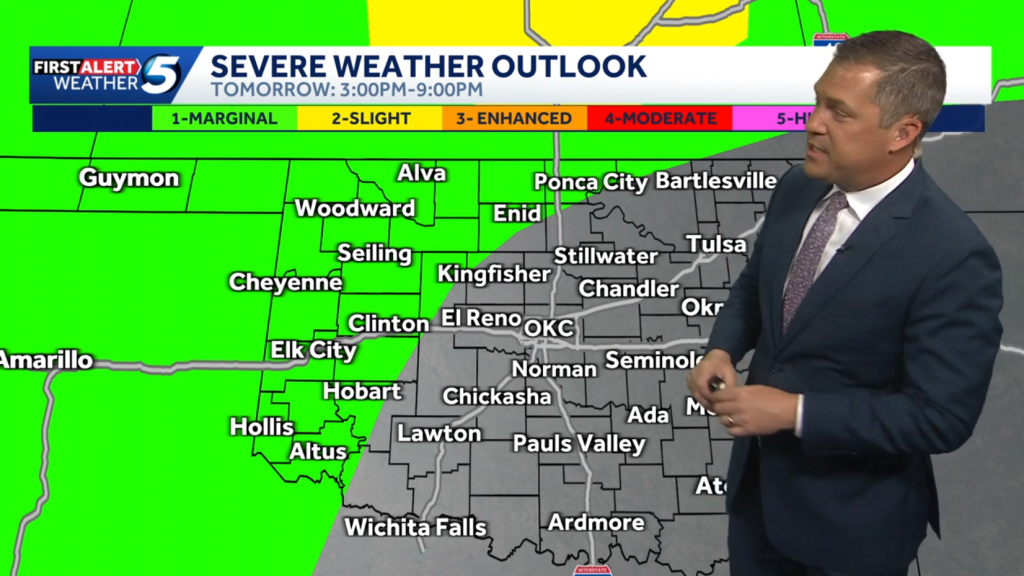
Oklahoma faces a five-day stretch of storm chances beginning Thursday, with a generally low risk of severe weather but a nonzero potential for tornadoes and localized impacts across the state. Forecasts point to scattered showers and thunderstorms through the period, with the possibility that ingredients for stronger storms will briefly overlap and demand attention from residents in central and eastern counties. Conditions are expected to be in flux, and what looks tame on one model run can shift toward greater risk by the weekend, so staying alert matters.
The pattern bringing these disturbances is a tug-of-war between warm, moist air streaming north from the Gulf and periodic pushes of cooler, drier air from the west and northwest, and where those air masses collide is where storms tend to spark. Meteorologists are watching instability values and low-level wind shear that could briefly support organized updrafts, even if the overall environment does not scream severe. That mix of heat, humidity, and changing winds is enough to produce scattered thunderstorms that could surprise people who aren’t paying attention.
Tornado chances are described as low overall, but low is not zero, and when storms become discrete in an environment with any appreciable shear, the risk rises. Nighttime or late-afternoon storm development would complicate warnings and response, since tornadoes after dark are harder to spot and more dangerous for people asleep or away from alerts. Oklahoma’s history reminds us that even a single brief spin-up can cause outsized damage, so preparedness should not be sacrificed just because probability numbers are modest.
Outside of tornadoes, the more likely storm outcomes include pockets of large hail and damaging straight-line winds, especially in stronger updraft cores where hail can grow and downdrafts can accelerate. Slow-moving storms or repeated storm clusters over the same area could also produce heavy rainfall, increasing the chance for localized flooding in low spots, urban areas, and along small streams. Drivers should be mindful that visibility and road conditions can deteriorate quickly during a sudden downpour, and umbrellas aren’t much defense against wind-driven rain mixed with hail.
Model guidance is painting a somewhat mixed picture from day to day, which is normal when systems are close to neutral in strength but sensitive to timing and position. A front that’s positioned just a few dozen miles differently on Sunday could mean the difference between a quiet day and one with scattered severe storms for parts of the state. Forecasters will be refining outlooks each run, so the headline risk could tighten into a few counties or broaden depending on how these boundaries set up.
For households, the practical steps are simple and effective: make sure phones are set to receive emergency alerts, check batteries in weather radios, and have a quick plan for moving to an interior room or storm shelter if a warning is issued. Secure outdoor furniture, trailers, and anything loose that can become airborne in strong winds, and know where family members will gather if a warning sounds, especially at night. If you rely on elderly relatives or neighbors, a brief check-in plan can save precious minutes when time is short.
Agricultural operations and small businesses should plan for possible interruptions, too; moving equipment out of low-lying areas, sheltering livestock if possible, and protecting vulnerable stock with hay and bedding where appropriate will reduce losses if severe weather develops. Schools and event organizers need to keep an eye on the forecast and have contingency plans for outdoor activities, because canceling or delaying at short notice can be disruptive but is far better than reacting while storms are overhead. Communication is the simplest mitigation: let people know what to expect and how to respond if conditions deteriorate.
Because the situation can change as new model data arrives, keeping sources of forecast information handy is important: local National Weather Service statements, county warning systems, and credible weather apps that push severe weather alerts are all useful tools. Avoid relying on any single run of a single model; instead watch trends and official guidance from meteorologists who synthesize multiple inputs. If you live in a mobile home, in a low-lying area, or in a place without a designated shelter, make extra plans now so you’re not scrambling when a watch or warning is issued.
Oklahoma residents should treat this week as a time to sharpen awareness rather than to panic, because the odds favor ordinary thunderstorms but the potential for localized severe weather remains real; being ready means you reduce risk and move faster if conditions escalate. Keep an eye on sky cues like rapidly developing towers of clouds, sudden changes in wind, and increasing hail or heavy rain, and act quickly on warnings so you and your loved ones stay safe. If conditions look worse on the weekend, expect forecasters to call it out and give clear guidance on which counties are at highest risk.