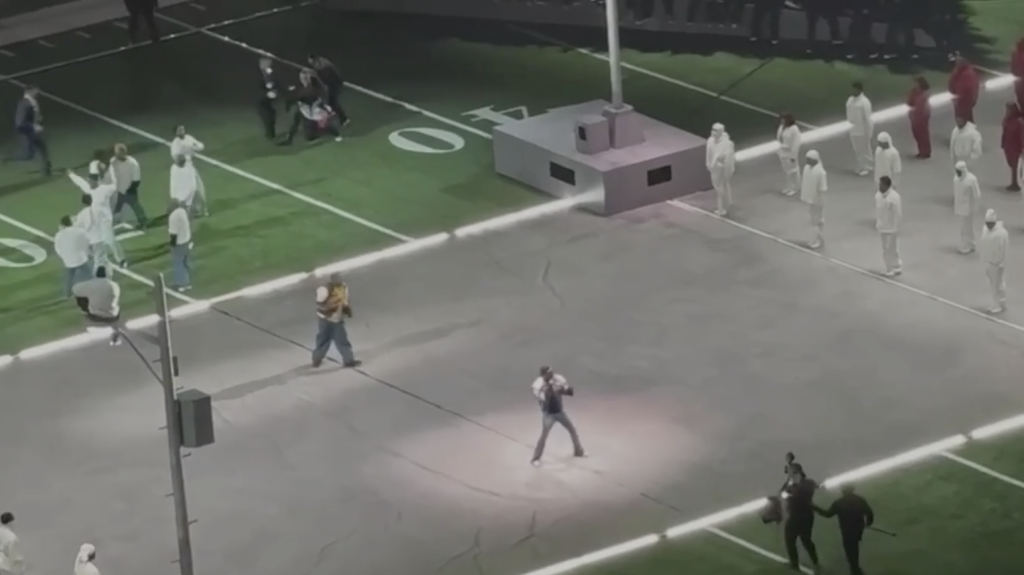
The case involved a man who disrupted Kendrick Lamar’s Super Bowl halftime show and was found guilty of resisting an officer, a moment that touched off legal and public reaction and put a spotlight on security at major live events where high-profile artists like Kendrick Lamar perform for massive audiences.
<pA man who interrupted the Super Bowl performance led to criminal charges and a conviction for resisting an officer, according to court findings. The ruling centers on his actions during Kendrick Lamar’s set and how security and law enforcement responded in the moments that followed. That outcome underscores the legal exposure anyone faces when they step into a performance zone and confront officers on duty.
Disruptions at flagship events like the Super Bowl carry outsized visibility, and this incident became a focal point for questions about crowd control and performer safety. While the details of how the disruption unfolded varied across reports, the court’s decision focused narrowly on whether the defendant obstructed or resisted law enforcement as they sought to restore order. The conviction turns that chaotic moment into a clear legal determination about responsibility and consequence.
Resisting an officer is a charge that, in many jurisdictions, covers a range of actions from passive noncompliance to active interference with police duties, and courts consider the facts of the confrontation when assigning guilt. In this case, prosecutors argued the defendant’s conduct hindered officers performing their duty during a live event situation, while the defense likely contested the characterization of those actions. Ultimately, the jury or judge reached a verdict that sided with the prosecution on the specific count of resisting an officer.
The criminal finding carries potential penalties that vary widely depending on the state and the precise statutory language, but convictions often bring fines, probation, or short jail terms for similar disturbances at public events. Beyond formal penalties, a guilty verdict can trigger civil consequences, venue bans, and added scrutiny if the person seeks to attend future large-scale gatherings. For organizers and venues, that kind of outcome is a reminder that legal systems will enforce boundaries when public safety is at stake.
For Kendrick Lamar, his team and other performers, security protocol is a constant concern because even a brief interruption can derail timing, distract artists, and create safety risks for crew and audience members. Artists and production teams typically rehearse contingencies, but real-time interventions by security and police are the moments that determine whether a set continues smoothly or becomes a headline. The conviction in this case will likely be noted by tour managers and event planners when reviewing access control and stage protection measures.
On a broader level, high-profile convictions can act as a deterrent by signaling that authorities will pursue charges when onstage disruptions cross legal lines, but they also spark debate about how to balance robust security with the fan experience. Social media often amplifies these incidents, feeding conversations about personal responsibility, protest tactics, and how far spectators can go before entering the realm of criminal conduct. Lawmakers, venue operators, and civil society all watch how courts handle these cases because the outcomes influence policy and public expectations around major live events.