Fans from around the world have traveled thousands of miles to the World Cup, bringing with them displays of national identity that have delivered some of the tournament’s most iconic moments. After Norway beat Senegal 3-2 in New Jersey on Monday, it was the scenes in the stands that stole the spotlight. Instead of breaking into frenzied celebrations, thousands of Norwegian fans sat down and began rowing in their seats.
Norway’s Viking Row
The simple routine requires people to sit shoulder-to-shoulder, mimic rowing a giant Viking vessel, while chanting “ro” — the Norwegian word for “row.” It has become a signature show of support for the team, with Norwegian fans recreating it across New York and New Jersey, from subway trains to escalators.
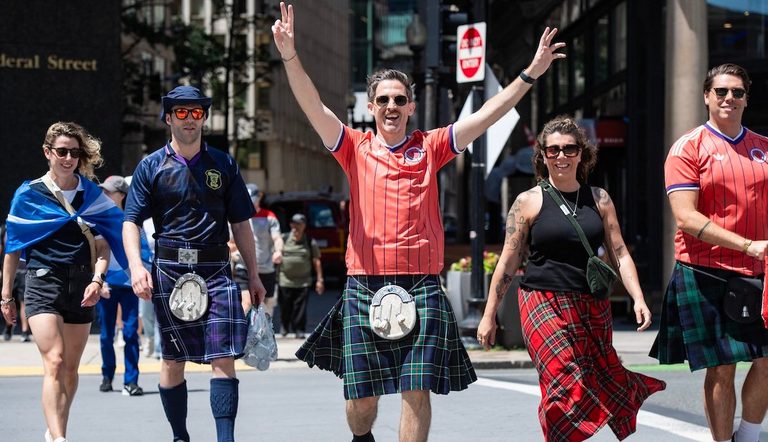
Scotland fans, known collectively as the Tartan Army, have also made their presence felt during the team’s knockout matches in Boston and Miami. An estimated 50,000 Scotland fans traveled to Boston for the team’s matches, determined to party hard despite Scotland’s mixed performance in the tournament.
Symbolic Expression
According to Paul Widdop, an associate professor and reader in sport business at Manchester Metropolitan University in Britain, what matters is not whether these practices are authentic or traditional, but that they work as simple, repeatable forms of cultural expression that can be recognized across borders.
For fans from the Democratic Republic of the Congo, the symbol of national identity has taken a very different form. Throughout the tournament, the Congolese have rallied around Michel Nkuka Mboladinga, a fan who attends matches as a living statue representing one of the country’s national heroes, assassinated independence leader and Prime Minister Patrice Lumumba.
Original reporting: NBC4 Los Angeles — read the source article.