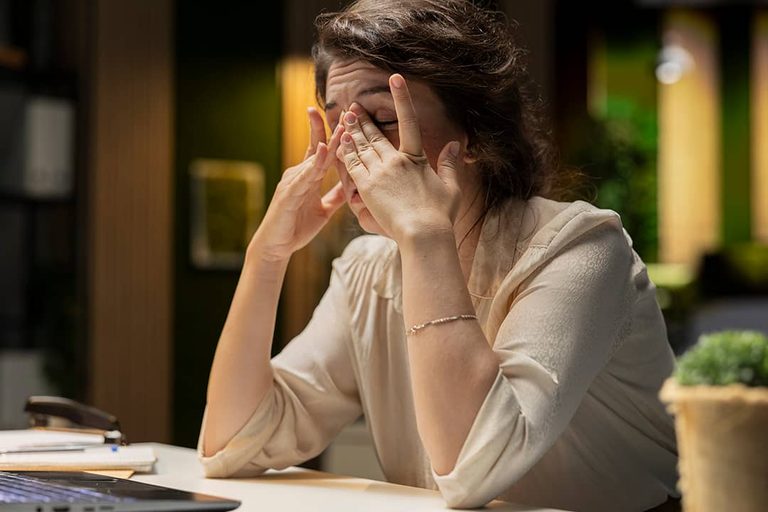
Women across the United States are managing demanding work and family schedules while pushing exhaustion aside. When they finally seek medical help for persistent fatigue, doctors often attribute the problem to stress or menopause rather than investigating a possible sleep disorder.
Sleep apnea in women is more common than many realize
According to a study published in Respiratory Medicine, women represent 41% of U.S. adults living with obstructive sleep apnea (OSA). This means millions of women fall outside the traditional image of a loud‑snoring older man, the profile most clinicians still rely on.
Research led by Özen Basoglu, a lung specialist at Ege University in Turkey, examined 2,827 patients with confirmed OSA. The findings showed women reported fatigue and difficulty sleeping more often than men, and they were more likely to wake feeling unrested even after a full night in bed.
How symptoms differ for women
Dr. Susan Redline of Brigham and Women’s Hospital explained that women tend to awaken more easily during a breathing interruption, breaking sleep into shorter segments. This pattern leads to weaker concentration, headaches, and acid reflux the next day. In Basoglu’s study, women also reported higher rates of these physical discomforts.
Beyond the physical signs, many women experience low mood, anxiety, and memory problems. UCLA researcher Dr. Paul Macey found that women with OSA showed more severe brain changes than men with the same condition, which may explain the heightened emotional and cognitive symptoms.
Hormonal changes add confusion
During perimenopause and menopause, declining estrogen and progesterone levels are linked to a greater chance of irregular breathing during sleep, according to a study in PLOS One involving 774 middle‑aged women. These hormonal shifts can also disrupt sleep on their own, making it difficult for physicians to pinpoint the exact cause.
Sleep medicine physician Dr. Andrea Matsumura told the New York Post that women’s complaints are often first blamed on hormonal changes, leaving OSA undiagnosed until more severe symptoms appear.
Why early detection matters
Undiagnosed OSA can strain the heart and brain each night. Repeated breathing interruptions lower oxygen levels, increasing the risk of high blood pressure, heart disease, and diabetes, especially in post‑menopausal women.
Dr. Jonathan Jun of Johns Hopkins highlighted that these nightly events place continuous stress on cardiovascular and metabolic systems, underscoring the need for timely diagnosis.
Improved screening and testing options
The American Academy of Sleep Medicine now recommends a comprehensive sleep evaluation that considers daytime exhaustion and poor sleep alongside classic signs like loud snoring. Home sleep apnea testing is appropriate for some adults, while others may require an overnight study at an accredited sleep center.
These expanded testing pathways give women a practical route to determine whether their breathing is being disrupted during sleep.
What women can do
Women experiencing persistent fatigue, difficulty concentrating, or unexplained mood changes should discuss sleep evaluation with their healthcare provider, especially if they have risk factors such as obesity, hypertension, or a family history of sleep apnea.
The National Heart, Lung, and Blood Institute advises that any adult with ongoing sleep complaints or known risk factors seek professional assessment.
Greater awareness among patients and clinicians is helping to close the diagnostic gap, ensuring that women receive the appropriate care rather than having their symptoms dismissed as mere stress or aging.
Original reporting: El Paso News (HLL/CB) — read the source article.