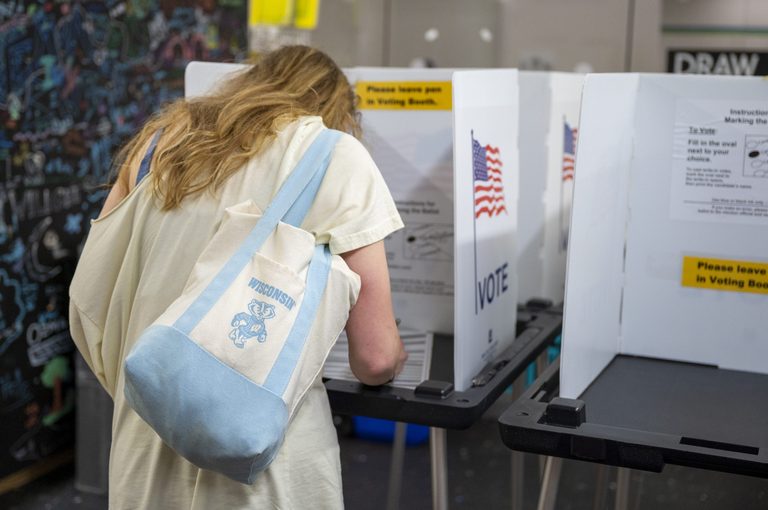
Wisconsin voters are heading to the polls this November with a clear choice: which party will control the governor’s office and both legislative chambers. A unified government – a so‑called trifecta – would give the winning side a straight‑forward route to implement its election agenda over the next several years, including the 2028 presidential election.
Current stalemate and the role of the courts
For years, partisan gridlock between the Republican‑controlled Legislature and Democratic Governor Tony Evers has left most election legislation languishing in committee or dead on the governor’s desk. As a result, courts have become the primary arena for challenges to voting rules, shaping policy more than lawmakers have.
What a trifecta could mean for voters
Both parties claim that unified control would allow them to move quickly on priorities. However, political science professor Barry Burden of UW‑Madison cautions that many of the most consequential rules are already embedded in the state Constitution, limiting the scope for dramatic change.
“I don’t see big changes coming in state law, almost regardless of what partisan configuration the state ends up with after the election,” Burden said. He notes that Republicans used a previous trifecta from 2011‑2018 to place the nation’s strictest voter‑ID law and a ban on private funding for election administration into the Constitution.
Democratic proposals
If Democrats secure a trifecta, they would likely focus on expanding access rather than overturning existing safeguards. Proposed measures include automatic voter registration, allowing people on parole to vote, and processing ballots a day earlier to speed up unofficial results.
State Sen. Mark Spreitzer (D‑Beloit) said his party would move immediately to let election officials begin processing ballots on the Monday before an election. “That common‑sense change would help election workers process ballots more efficiently and reduce delays in reporting results, while maintaining the security and integrity of the election process in Wisconsin,” Democratic gubernatorial nominee David Crowley said.
Other Democratic ideas include codifying the legality of absentee‑ballot drop boxes, expanding absentee‑ballot tracking, permitting voters to spoil an absentee ballot, and removing a requirement that certain absentee ballots display numbers that could jeopardize voter anonymity.
Republican outlook
Republicans, having already secured many of their priorities, would have limited room for new sweeping reforms. Burden points out that the party could revisit citizenship‑verification measures, such as requiring documentary proof of citizenship or conducting audits of voter rolls for non‑citizens – a push echoed by the Trump administration’s recent executive actions.
Rep. Dave Maxey, chair of the Assembly Elections Committee, has suggested that voter‑ID cards also serve to confirm citizenship status. Additionally, former U.S. Rep. Tom Tiffany (R‑Wisconsin) said he would support legislation to compare Department of Transportation records with the statewide registration database to identify ineligible voters.
Both parties also see potential in revisiting bills that were vetoed by Governor Evers, such as tightening residency requirements, banning firearms near polling places, and imposing fees on felons before they may vote.
Judicial backstop and the road ahead
Regardless of which side gains a trifecta, the liberal‑leaning Wisconsin Supreme Court – currently a 5‑2 majority – would remain a key check on any major changes. Republicans could also turn to federal courts, where they may find a more favorable environment for contesting Democratic initiatives.
Burden sums up the likely scenario: “With Evers and Republicans in power the last eight years, it’s been mostly stalemate: lots of vetoes and very little actual lawmaking around elections. If things were to flip with Tiffany in office and Democrats were to win both chambers — I think that’s unlikely — I would expect modest adjustments rather than a wholesale overhaul.”
Original reporting: Wisconsin Watch — read the source article.