Madison, Wis. – The Wisconsin Elections Commission and the Brown County district attorney announced that the state will not file criminal charges against Elon Musk, the founder of SpaceX and chief executive of Tesla, in connection with a 2025 election‑bribery complaint.
Background of the complaints
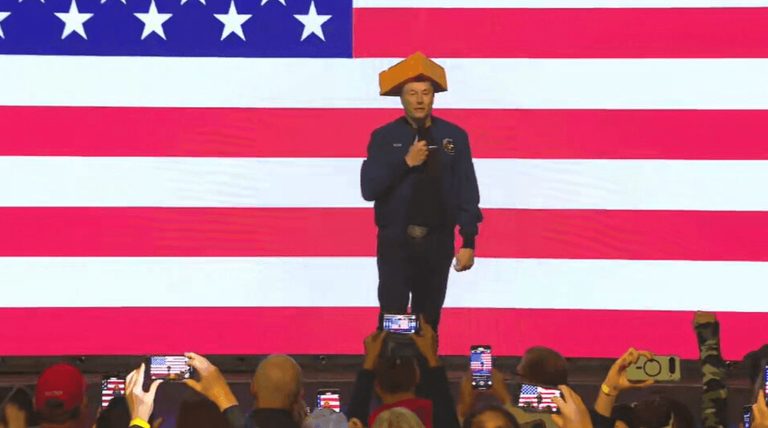
Two separate complaints were filed by voters in Milwaukee and Green Bay after Musk distributed checks worth $1 million each at a rally in Green Bay just days before the Supreme Court election. The complaints also cited a later offer by Musk’s political action committee, America PAC, to pay $100 to anyone who signed a petition opposing “activist judges.”
State’s assessment of the posts
The state’s statement noted that Musk posted on March 27, 2025, at 11:57 PM, indicating he would hand out two checks for a million dollars each to attendees who voted in the Supreme Court race. A follow‑up post clarified that entry to the event was limited to those who had signed the petition and that the checks would go to two “spokesmen” for the petition.
Officials said the first post could be read either as an offer of a lottery‑style reward for voting or as an invitation to a free town‑hall meeting with a predetermined payment to selected spokespeople. The second post appeared to correct any potential violation by limiting the offer to petition signers rather than all voters.
Why charges were declined
According to the district attorney’s office, no money was actually paid to anyone as a direct reward for voting, and the clarification post was issued quickly. The office concluded that a jury would be unlikely to find Musk guilty, given the ambiguous language, the prompt correction, and the lack of any actual payment tied to a vote.
“The facts are mostly undisputed,” the statement read. “Even if a jury were convinced the original post was a bribe, the intent, the corrective second post, and the absence of any value given for voting make a conviction unlikely.”
Implications for future elections
The decision underscores the challenges of applying state election‑law statutes to high‑profile individuals who use social media to promote political engagement. While the state declined to pursue criminal charges, the episode may prompt closer scrutiny of how political action committees and wealthy donors communicate incentives around voting.
Legal experts note that Wisconsin’s Wis. Stat. 12.11(1m)(a)2, which addresses bribery in elections, requires a clear link between a payment and a vote. In this case, the lack of a direct transaction and the rapid clarification appear to have satisfied that requirement.
Observers say the outcome sends a signal to other donors and political actors about the importance of precise language when discussing election‑related incentives. The state’s approach may serve as a reference point for future investigations involving large‑scale political contributions and social‑media outreach.
Public reaction
Local voters expressed mixed reactions. Some praised the decision as a reasonable interpretation of the law, while others urged stricter enforcement to deter any appearance of undue influence in judicial elections.
The Wisconsin Elections Commission said it will continue to monitor compliance with campaign‑finance rules and encourage transparency in all future elections.
Original reporting: Appleton, WI News Feed (HLL/CB) — read the source article.