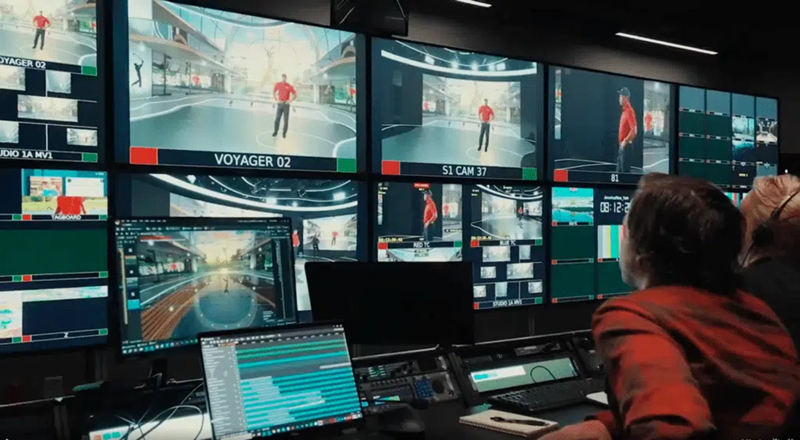
Broadcasters are quietly reworking their technical blueprints, weighing software-defined tools, cloud pipelines, and hybrid on-prem systems to cut costs and stay agile; vendors like Ross Video are part of that conversation while industry headlines — from regulatory dust-ups to corporate moves involving Gayle Benson, Gray, and others — underscore how fast the landscape is shifting. This piece walks through why software-defined infrastructure matters, how stations are taking practical, step-by-step approaches, and what leaders are watching as they balance legacy gear with new operational models.
Why Broadcasters are Rethinking Infrastructure One Practical Step at a Time
Broadcasters are under pressure on multiple fronts: tighter budgets, rising expectations for remote and cloud production, and a faster cadence of software updates. The old model of buying a rack of specialized hardware and living with it for a decade doesn’t fit a world where flexibility and rapid feature delivery matter. That shake-up is pushing many to look at software-defined infrastructure as a real option, not just a buzzphrase.
Software-defined systems promise to replace fixed-function boxes with configurable software running on general-purpose servers and virtualized networks. That matters because it changes the economics and pace of upgrades: software can be patched, scaled, and distributed without truck rolls and big capital outlays. For broadcasters who have to adapt to breaking news, shifting audience patterns, or new ad-delivery models, that agility is a practical advantage.
But the shift isn’t binary. Most stations won’t go “all cloud” overnight, and for good reason: latency, reliability, and regulatory constraints still favor on-site gear in many cases. Instead, engineers are adopting hybrid approaches that keep mission-critical processing nearby while moving less sensitive functions — playout automation, analytics, and transcoding — to software-defined environments or the cloud. Those hybrid setups let teams test new workflows without risking the live signal.
Practical migration means smaller, reversible steps. Teams start by virtualizing one service, or by replacing a single appliance with a containerized implementation, then measure real-world impact. That approach keeps risk low and builds confidence in operations teams that fear unknown failure modes. It’s also how broadcasters learn which parts of their stack really benefit from elasticity and which parts need the deterministic performance of dedicated hardware.
Vendors are responding by offering modular products and interoperability that ease that transition. Companies known in studio and routing gear circles are packaging software-centric versions of their products and supporting industry standards so systems from different manufacturers can cooperate. That competitive shift encourages stations to experiment, knowing they’re not locked into a single supplier for every layer of the tech stack.
Security and governance remain top concerns. When software sits on commodity servers or in shared cloud infrastructure, the attack surface changes and compliance demands evolve. Broadcast operations teams are adding identity and access controls, stricter change-management practices, and segmented networks to protect live operations. Those operational disciplines are often the biggest hurdle, not the technology itself.
The economics are compelling but subtle. Lower upfront capital can be offset by recurring software and cloud costs, so finance teams are learning to compare total cost of ownership over realistic timelines and usage patterns. For some regional stations the math favors gradual moves; for national networks with variable peak loads, the ability to burst in the cloud can justify higher ongoing expenses. Either way, cost models are becoming part of editorial and programming planning, not just IT spreadsheets.
Industry headlines show how crowded the sector is with change and debate. Stories like “Dems Blast FCC Disney Probe As `Egregious Abuse of Power’” sit alongside boardroom moves — Gayle Benson receiving a NAB Leadership Foundation award — and regulatory approvals involving groups such as Gray, Block, and Sagamore Hill. Overseas, deals like a U.K. military broadcaster tapping Synamedia for a digital platform reflect the same drive toward software-first delivery and distributed architectures. Those items underline that the pressure to modernize comes from politics, marketplaces, and emerging platform opportunities all at once.
What leaders are paying attention to now is less about flashy demos and more about repeatable results: reduced mean time to repair, faster feature deployment, and clearer cost predictability. Technology choices that deliver measurable operational wins win the trust of engineering and management alike. The broadcasters that move deliberately, validate assumptions, and keep control of core broadcast functions will be the ones that make software-defined infrastructure an advantage rather than a gamble.