There is a moment, about thirty seconds after you pass through the entry gate of the Japanese Friendship Garden of San Diego, when the city completely disappears. The hum of traffic along Park Boulevard fades, the wide Balboa Park promenades feel like a distant memory, and all that remains is the sound of water moving over stone, wind threading through bamboo, and the occasional soft crunch of gravel under your feet. That moment alone is worth the visit. Everything that follows is a bonus.
Tucked into a canyon on the western edge of Balboa Park, the Japanese Friendship Garden — known formally as San-Kei-En, meaning “three-scene garden” — sits on eleven and a half acres of carefully shaped landscape. It was established as a symbol of the sister-city relationship between San Diego and Yokohama, Japan, and it carries that spirit of connection in everything from its architecture to its plantings. This is not a theme park interpretation of Japanese aesthetics. It is the real thing, designed by Japanese landscape architects and tended with genuine care.
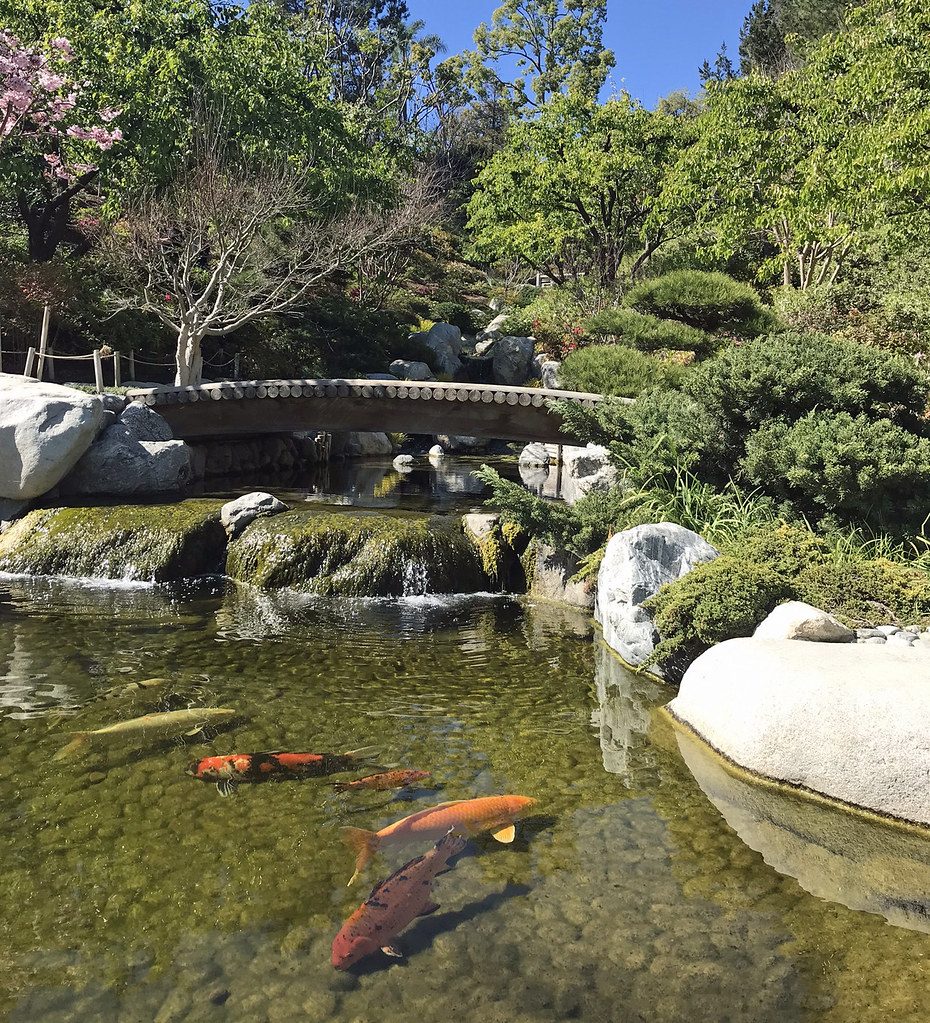
The garden is divided into distinct areas, each offering a different mood. The upper garden, near the entrance, is anchored by a koi pond so clear you can count the fish from the bridge above. The large, brilliantly colored koi glide between lily pads with an unhurried confidence that you will find yourself envying by mid-afternoon. A traditional stone lantern stands nearby, photogenic in any season, but especially striking in spring when the surrounding plum and cherry trees bloom.
From there, a winding path descends into the canyon, past a meditation garden with raked gravel, past a bamboo grove that seems to filter the light into something softer and greener, and eventually to a traditional teahouse where you can sit with a bowl of matcha and let your thoughts slow down to match your surroundings. The teahouse hosts formal tea ceremonies on select weekends — check the calendar on the garden’s website before you go, because securing a spot at one of those ceremonies turns a lovely afternoon into something genuinely memorable.
The garden also maintains a bonsai exhibit that rewards slow, attentive looking. Some of these trees are decades old, shaped by years of patient human effort into forms that feel both ancient and alive. Standing in front of a bonsai that has been in training since before you were born has a way of recalibrating your sense of time.
The Japanese Friendship Garden is located within Balboa Park near the Spreckels Organ Pavilion, making it easy to combine with other park destinations. Parking is available in the nearby lots off Park Boulevard or El Prado. Admission is modest — typically around twelve dollars for adults — and the garden is open most days of the week, with extended hours during special seasonal events like the annual Nighttime Tea event in summer, when lanterns are lit throughout the grounds after dark.
Whether you visit on a bright January morning when the garden feels crisp and contemplative, or on a warm spring afternoon when the wisteria is tumbling over the arbors in purple cascades, the Japanese Friendship Garden delivers something that is surprisingly rare in a busy coastal city: genuine quietude. San Diego has no shortage of beautiful places, but this one asks you to slow down, to look carefully, and to stay a little longer than you planned. You will not regret taking it up on that offer.