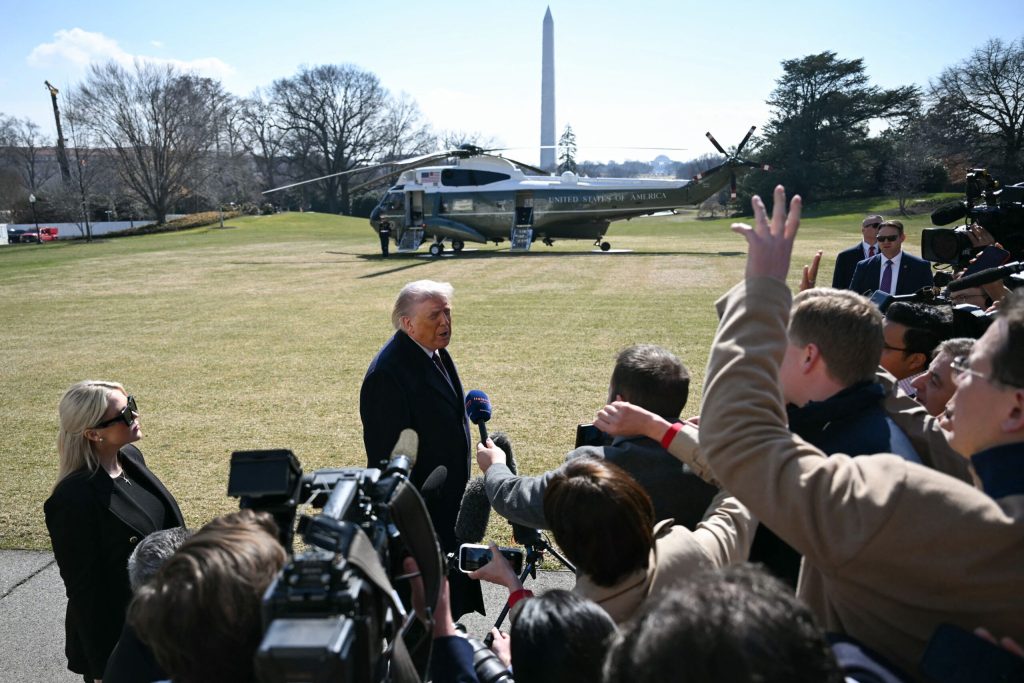
The White House is weighing two simple fixes to an oddly common problem: where to park. At the heart of the discussion are Marine One, the green-and-white helicopter that lands on the South Lawn, and the daily shuffle of administration staffers looking for spots. President Donald Trump and his team are watching a small logistical fight that touches turf, tradition, security, and the practical need to make things run smoothly on the executive campus.
The first project focuses on Marine One and the soft spot it leaves on the South Lawn. Helicopters have been landing on that grass for decades, and the repeated landings can churn turf and create maintenance headaches. A straightforward approach would be a reinforced pad or a discreetly designed hard landing area that preserves the look of the lawn while protecting the ground beneath it.
The second project centers on staff parking and the rank-driven confusion that arises every morning. Staffers have different clearances and roles, and the question of who gets which spaces can become petty if left to chance. Clear signage, enforced permit rules, and a compact allotment system can stop that friction without big new buildings or heavy-handed directives.
Security is an obvious factor that complicates any curbside fix at 1600 Pennsylvania Avenue. Any change has to play nice with the teams that protect the president and with the flow of official arrivals and departures. That does not mean the only options are elaborate or expensive; often security and common sense point to the same solution when planners get practical.
Cost is another angle politicians and taxpayers pay attention to. Paving the lawn or building a new garage can rack up bills and invite criticism from people who see it as wasteful. A targeted investment for a reinforced pad and smarter permit enforcement is a modest price to pay for predictable operations, and it keeps the optics clean for a White House that wants to show fiscal discipline.
There is also a cultural side to the problem, about respect for traditions on the South Lawn and for the staff whose jobs require quick, reliable access. Marine One is a symbol of the presidency, and people care about how the grounds look and function. At the same time, staffers who work long hours deserve systems that treat them fairly and reduce time spent hunting for parking instead of doing their jobs.
Practical implementation can be low drama and fast. Officials can install a reinforced, grass-matching pad that drains well and hides behind landscaping, while rolling out a tiered permit system for staff based on operational need. Simple enforcement with spot checks and a clear appeals process would cut down on disputes and keep the daily routine moving without turning parking into a political spectacle.
Politics will always sneak into decisions made at the White House, but this is one area where common sense can win. Conservative principles favor minimal spending on vanity projects while prioritizing efficiency and security. Choosing fixes that are functional, restrained, and respectful of the grounds fits that approach and keeps the focus on governance rather than theatrics.
Ultimately, this is a modest test of management at the highest level. The choices made about Marine One and staff parking are small in scale but speak to how the White House balances tradition, cost, and the needs of those who keep the executive branch moving. When leaders pick sensible, low-cost solutions, small problems stop becoming distractions and the work gets back to business.