There’s a special kind of magic that happens when you step into a garden alive with bees, butterflies, and the gentle hum of wings moving from bloom to bloom. Here in our North Texas garden, that familiar buzz has returned with the spring warmth, reminding us once again how essential these tiny visitors are — not just for our harvests, but for the health and resilience of the land itself.
Our Pollinator Paradise: Planting With Purpose
When we first began building Two Doves Bees & Gardens, creating a pollinator‑friendly space wasn’t an afterthought — it was the foundation. We knew that if we wanted a thriving homestead, we needed to support the creatures that make abundance possible. Bees, butterflies, moths, beetles, hummingbirds — all of them play a role in turning flowers into fruit.
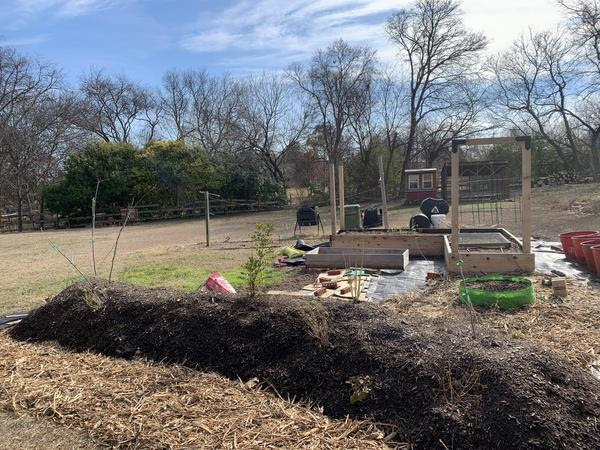
One of the very first structures we built was our hügelkultur mound – a method of raised bed gardening developed in Germany. We filled it with native and adapted plants chosen specifically for pollinators, and it quickly became one of the busiest, most vibrant corners of the garden. Over the years, we’ve learned that when you plant with intention, the garden responds with generosity.
And the payoff is real. Inviting pollinators into your garden can increase yields anywhere from 30% to over 300%, depending on the crop. Blueberries, squash, cucumbers, melons, blackberries, peaches — all of them depend heavily on the steady work of native bees and other pollinators.
Getting Started: The Essentials
If you’re dreaming of a pollinator‑rich garden of your own, here are a few simple principles that make a world of difference:
Plant for every season
Choose a mix of native flowers and herbs that bloom from early spring through late fall. In our garden, Gregg’s Mistflower, Purple Coneflower, Bee Balm, and Autumn Sage keep the buffet open for months.
Skip the pesticides
Even organic sprays can disrupt the delicate balance of a pollinator garden. We rely on healthy soil, plant diversity, and a little hand‑picking when needed.
Provide water and shelter
A shallow dish filled with stones gives bees a safe place to drink. A patch of tall grass, a brush pile, or a corner left a little wild offers nesting and resting spots.
Seasonal Care: Keeping the Garden Buzzing
Mulch generously
Mulch keeps roots cool, conserves moisture, and helps blooms last longer — especially during our intense Texas summers.
Plant in clusters
Pollinators find flowers more easily when they’re grouped together. Aim for a variety of shapes, colors, and heights to attract different species.
Let some things go wild
Resist the urge to tidy every corner. A little organized chaos creates habitat for native bees, butterflies, and beneficial insects.
Let’s Grow Together
Every patch of wildflower, every bee sipping from a bloom, is an act of stewardship. Whether you’re just beginning your pollinator journey or looking to deepen it, know that you’re in good company. We’re learning, experimenting, and celebrating right alongside you.
Join us on OBBM TV as we share our garden adventures on our show, Two Doves Bees & Gardens. Together, we can cultivate spaces that are buzzing with life, beauty, and abundance.
And if you want to stay connected with what’s happening on the homestead, sign up for the Two Doves Insider newsletter at TwoDoves.com. There’s always something growing, blooming, or buzzing around here — and we’d love to share it with you.