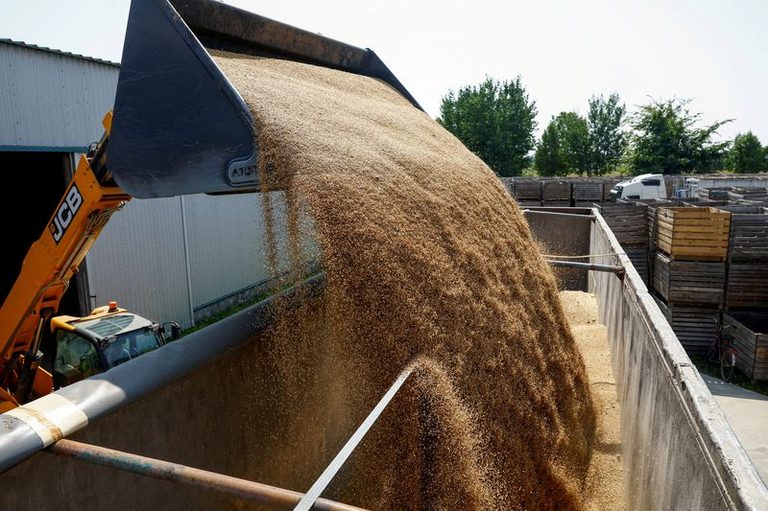
Global wheat purchasers in Asia, the Middle East and Africa are bracing for significantly higher costs as the Russia‑Ukraine war continues to choke grain shipments from the Black Sea. With attacks on vessels and port facilities limiting cargo movements since July, buyers are forced to seek alternative sources at premium prices.
Black Sea bottleneck drives price rally
Benchmark Chicago wheat futures have jumped about 40% since their June lows, reaching a three‑and‑a‑half‑year peak. Physical prices for wheat from other exporters have also surged, raising concerns about a new wave of food inflation for the world’s most vulnerable consumers.
“The Black Sea is an important region for shipping grains, and if buyers are not able to get grain out of this region, they have to look elsewhere for supplies, which is going to drive prices up further,” said Ole Hansen, head of commodity strategy at Saxo Bank.
Supply crunch hits Asia hardest
Russian wheat exports are projected to fall to roughly 1 million tons in September, down from 5 million tons a year earlier. Ukraine’s shipments are similarly low, with about 1 million tons expected this month—half of September’s level last year, according to data from Kpler.
“There are very few ships going in to load and whatever little is being exported out of Russia and Ukraine is going to some buyers in the Middle East and Africa. Nothing is heading to Asia,” explained Ishan Bhanu, an agricultural analyst at Kpler.
Indonesia, the world’s second‑largest wheat importer, has received only about 60,000 tons from the Black Sea this month, a steep drop from half a million tons in September of the previous year. Indonesian millers are turning to Argentina and are paying 20%‑25% more for Australian wheat than they previously booked on Black Sea cargoes.
Regional buyers seek alternatives
Some Middle Eastern and African importers have already begun sourcing wheat from other regions, while others say their existing stocks could last until November or the end of the year before larger purchases become necessary.
A senior executive at a Southeast Asian milling firm, who asked to remain unnamed, confirmed that the company has booked container shipments from Australia to replace Russian and Ukrainian wheat but is avoiding bulk purchases due to the high cost. “Prices have risen quite a bit and we are not in a position to pass on the entire cost to our flour buyers,” the executive said.
Current quotes show Black Sea wheat from Romania at roughly $340 per ton C&F to Southeast Asia, while Australian Premium White wheat for October shipments trades around $345 per ton—about 25% higher than pre‑crisis Black Sea prices.
Egypt pivots to European suppliers
Egypt, the world’s top wheat buyer, is slated to receive less than one‑tenth of the volume it imported from Russia and Ukraine during the same period last year. However, the country has some breathing room as harvests in the Middle East and North Africa have arrived.
In the first half of September, Egypt’s wheat imports fell to 143,870 tons, down from 876,139 tons a year earlier. Minister of Supply Sherif Farouk announced that Egypt is turning to France and other European sources to diversify away from the Black Sea.
Nevertheless, many Egyptian millers remain hesitant to switch, preferring wheat varieties they are accustomed to processing. Hesham Soliman, a trader based in Alexandria, noted that many mills are operating at only 30% of capacity, waiting for prices to potentially drop by up to 20% if Black Sea shipments resume.
Outlook through year‑end
Competition for available cargoes is expected to intensify until the Southern Hemisphere harvest comes online later this year. Analysts anticipate further price pressure in the meantime, especially for import‑dependent regions that lack domestic wheat production.
“Importers cannot wait forever but can wait for quite a long time as the harvests in the Middle East and North Africa have just arrived, giving breathing space but of course not for the full season,” said a European trader familiar with the market.
As the war drags on with no clear resolution in sight, wheat buyers worldwide must navigate a tighter market, higher costs, and the ongoing uncertainty of Black Sea grain flows.
Original reporting: Appleton, WI News Feed (HLL/CB) — read the source article.