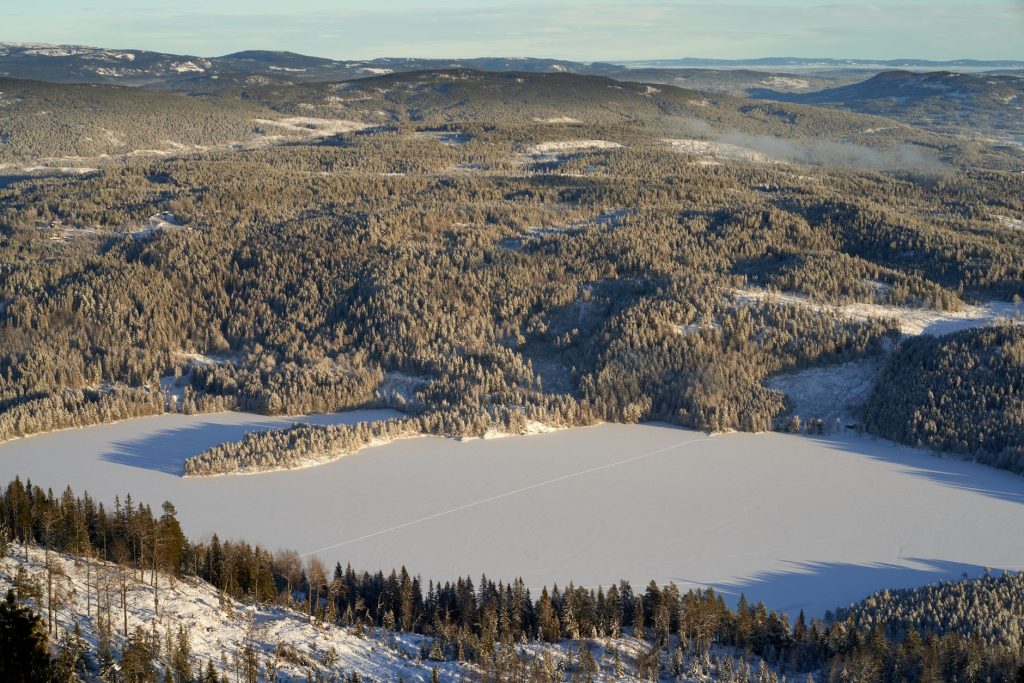
What does a winter morning actually look like when you trade the ski lift line for silence? Drive north on US-550 about seventeen miles from downtown Durango, past the turnoff for Electra Lake Road, and you’ll find a stretch of groomed Nordic skiing and snowshoeing terrain that most visitors never bother to investigate. Haviland Lake Campground closes for the season, but the access road stays plowed, and the flat-to-rolling terrain around the lake and up toward the surrounding spruce forest becomes one of the most approachable snow experiences in the region.
There’s no lodge, no rental shop on-site, and no ski patrol. What you get instead is a quiet loop through dense conifer stands with the frozen lake glinting off to your left and, on clear mornings, unobstructed views east toward the Weminuche ridgeline. Tracks are usually set by the San Juan National Forest and local volunteers after significant snowfall. You’ll see evidence of moose, fox, and mule deer in the snow — not metaphorically, but actual prints crossing the trail ten feet in front of you.
The main Haviland Lake loop runs roughly two miles and gains almost nothing in elevation, which makes it genuinely accessible for skiers who aren’t chasing vertical. If you have more energy, you can connect to informal trails pushing northeast through the trees toward Electra Lake — unmarked, ungroomed, but easy enough to follow when snow is deep. Plan for two to three hours total if you’re exploring rather than just circling.
Cost-wise, a Sno-Park permit is required to park legally at the lot — $10 for a day pass or around $30 for an annual Colorado Sno-Park permit, available online through Colorado Parks & Wildlife or at Gardenswartz Outdoors back in town. If you’re renting Nordic skis or snowshoes, Backcountry Experience on Main Avenue sets you up for roughly $25–$35 a day per person. All in, two people can do this for under $100, including rentals and the permit — which, compared to any lift ticket in a two-hour radius, is almost absurd.
Go on a weekday if you can. Weekends in January and February bring more traffic, and while it never feels crowded by resort standards, the solitude is noticeably better Tuesday through Thursday. The best window is mid-morning after the temperature climbs above 15°F — cold enough to keep the snow dry, warm enough that your fingers stay functional. Bring a thermos; there is absolutely nowhere to buy coffee at the trailhead.
Layering matters here more than at Purgatory because you’re generating all your own heat. A base layer, a mid layer, and a windproof shell will cover most days. Gaiters are worth it if you plan to push off the groomed track into the trees. Poles with large baskets are better than alpine poles.
What makes this place genuinely worth your morning is the contrast. You’re forty minutes from a full-service ski resort, but the sound you’ll hear most is wind moving through spruce boughs. The lake ice creaks occasionally. A raven might track you for a quarter mile. It costs almost nothing and asks almost nothing of you except that you show up prepared and pay attention. Most days, you’ll share the trail with three or four other people, maybe fewer. That’s not an accident — it’s just what happens when a place doesn’t advertise itself.