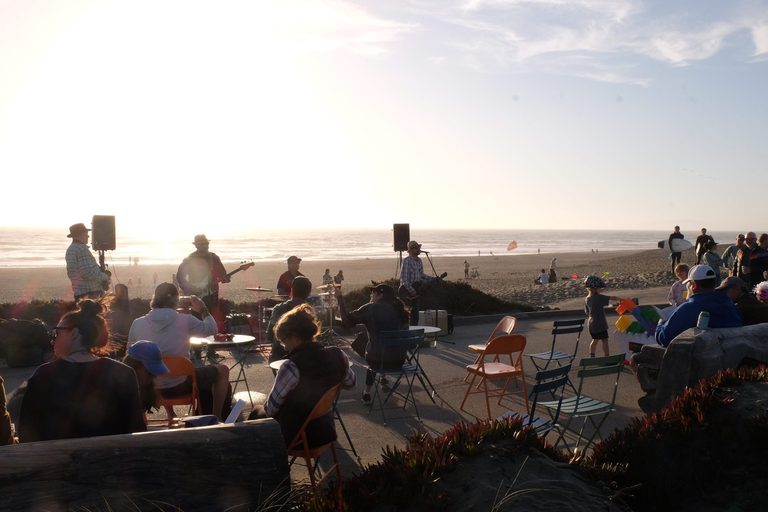
San Francisco’s Sunset and Richmond neighborhoods have dramatically changed their view of the Great Highway transformation. Two years after voting 64‑36 against the park, residents now backed Sunset Dunes, sending Proposition G – which would have restored weekday traffic – to defeat.
Local residents shift opinion
Brandon Martin, an Outer Sunset homeowner, admitted he voted “no” on Prop K in 2024 over traffic concerns. “I was worried nothing would really happen,” he said. After a skate park opened near Sloat Boulevard in June 2025, Martin praised the new amenity, noting it gave kids a safe place to play just a few blocks from home.
Other longtime skeptics echoed his sentiment. Joshi Marshall, also from the Outer Sunset, walked the park regularly with his family and observed that nearby cafés were seeing increased weekend traffic, a sign of local business vitality.
Proposition G results
Prop G lost citywide by 34‑66, a 32‑point swing from the 45‑55 margin in 2024. In the Westside, the measure fell short by 277 votes in Sunset and 117 votes in Richmond, turning a previous 64‑36 opposition into a modest majority for the park.
The shift was driven by precincts adjacent to the park, which voted overwhelmingly to keep it. Nearly half of the 1,600 “No on G” window‑sign requests originated from the Sunset area, according to Michael Howley, a volunteer who coordinated sign distribution.
City support and nonprofit effort
Friends of Sunset Dunes, the nonprofit that led the “No on G” campaign, credited former Recreation and Parks Director Phil Ginsburg for quickly opening the park in 2025. The organization also funded the September‑opened Shipwreck Cove playground, a project the city could not afford on its own.
After Ginsburg’s departure at the end of 2025, his successor Sarah Madland continued the park’s development, further solidifying community backing.
Campaign financing
Otto Pippenger, field director for the “Yes on G” side, noted the disparity in fundraising: the “No on G” campaign raised over $821,000 in 2026—about five times the amount raised by proponents, with most contributions coming from two local tech executives.
Campaign spokesperson Catie Stewart explained the strategy: “We focused early on the Sunset and Richmond because people who are dug in are dug in at this point.” The “Yes on G” side attempted a broader outreach, targeting newer residents in other neighborhoods.
Implications
Defeating Prop G signals strong local support for preserving and expanding park amenities, reinforcing the city’s commitment to family‑friendly, outdoor spaces. Community leaders like Eliza Panike, field director for the “No on G” effort, expressed relief, saying the victory allows advocates to shift energy toward future improvements rather than defending the park’s existence.
Original reporting: Mission Local — read the source article.