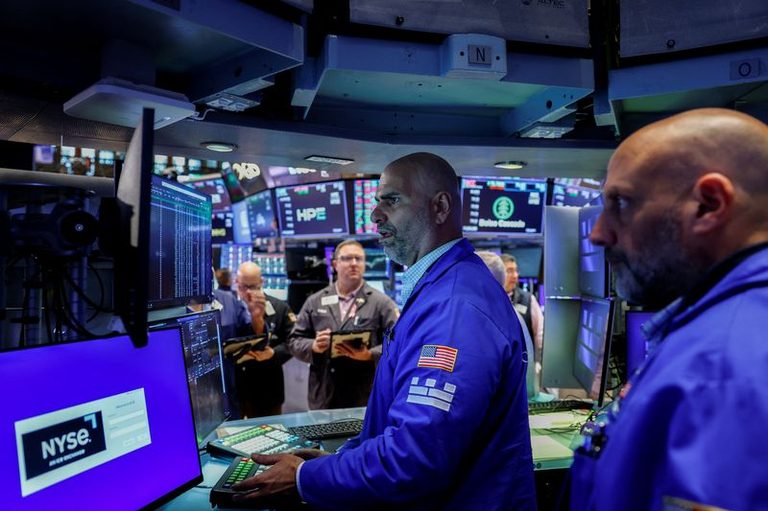
Investors in the United States began Wednesday’s trading session on a cautious note. The Dow Jones Industrial Average opened at 51,771.41, down 92.3 points, or 0.18 percent, while the S&P 500 slipped to 7,761.94, a decline of 2.7 points, or 0.03 percent. The Nasdaq Composite fell 30.8 points, or 0.11 percent, to settle at 27,213.52.
Key drivers of the early decline
The primary forces behind the market dip were a jump in crude oil prices and an increase in government bond yields. Crude oil, a barometer of global economic health, rose sharply as investors awaited further developments in the ongoing Middle East negotiations. Higher oil prices tend to raise costs for businesses and consumers, prompting concerns about inflationary pressure.
At the same time, yields on U.S. Treasury securities moved higher, reflecting a shift in investor expectations about future interest rates. When bond yields rise, the cost of borrowing for corporations and households also climbs, which can dampen corporate earnings forecasts and consumer spending.
Broader context and upcoming events
Market participants are also looking ahead to a high‑stakes summit between the United States and China, scheduled later this week. The summit is expected to address trade, technology, and geopolitical issues that could have lasting effects on global supply chains and economic growth. Analysts suggest that any indication of progress—or lack thereof—could further influence equity markets in the days ahead.
In addition to the oil and bond dynamics, investors remain attentive to the Federal Reserve’s monetary policy stance. While the central bank has not signaled an imminent rate change, the upward movement in yields hints that market expectations for future rate hikes may be rising.
Sector performance snapshot
Energy stocks showed mixed reactions. Companies directly tied to oil production benefited from the price rally, while broader industrial and consumer‑discretionary sectors faced pressure from the higher cost environment. Technology shares, which dominate the Nasdaq, were modestly affected by the yield increase, as higher rates can reduce the present value of future earnings.
Financials, traditionally sensitive to interest‑rate movements, posted a slight gain, reflecting the potential for higher net‑interest margins. However, the overall market sentiment remained subdued, with the major indexes all opening in negative territory.
What investors can watch
Analysts recommend keeping an eye on three key indicators over the next week: the outcome of the U.S.–China summit, any new data on global oil supply and demand, and further movements in Treasury yields. Together, these factors will shape the risk‑on or risk‑off tone that drives equity performance.
For individual investors, the advice remains to stay diversified and to consider the longer‑term fundamentals of the companies in which they hold positions, rather than reacting to short‑term market swings.
Reporting by Avinash P in Bengaluru; editing by Shinjini Ganguli.
Original reporting: Appleton, WI News Feed (HLL/CB) — read the source article.