Wake County, North Carolina, is at the center of three closely watched state House races this November. Two seats are currently held by Republicans and one by a Democrat, but all three are considered competitive by local political analysts.
Northern Wake: Schietzelt vs. Hopkins
Democratic family‑law attorney Evonne Hopkins previously lost to Republican litigator Rep. Mike Schietzelt by three points in 2024. She attributes that loss to the 2023 redistricting, which trimmed Wake Forest from District 35 and added more heavily Republican‑leaning areas. The district’s new map remains in place, and the two will face off again.
Schietzelt runs on a record that includes a bill to limit cellphone use during class time and a budget amendment that helped fund a new DMV office, a workforce‑development program at DeBois High School, and HVAC upgrades at a local Boys and Girls Club. He also opposed a proposed WakeMed‑Atrium merger until more information could be gathered, urging commissioners to pause and listen to the public.
Hopkins, a pro‑choice advocate for public‑school funding, argues that the state’s Opportunity Scholarship program siphons taxpayer dollars away from public schools and into private institutions. She proposes adding income caps, stricter accountability and tuition limits to the program. She also calls for smarter growth policies, better storm‑water management and expanded public transportation to ease congestion.
Southern Wake: Paré seeks a fifth term
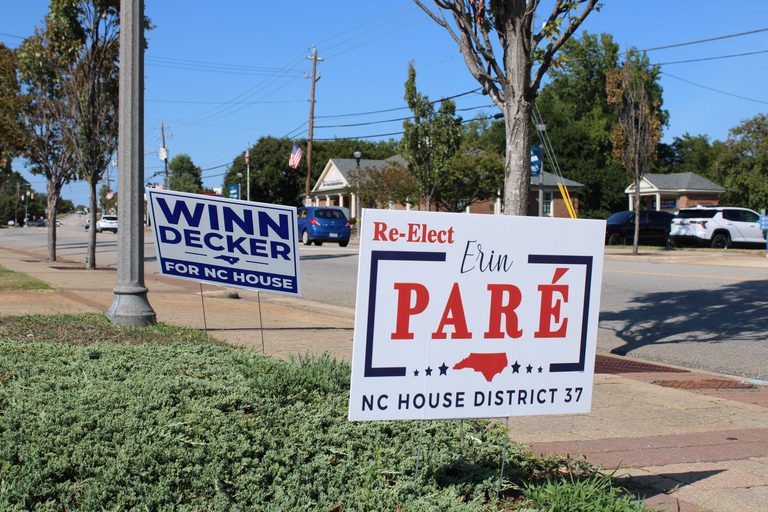
Republican Rep. Erin Paré, who has represented District 37 for six years, is running for re‑election. She says a Republican win will keep the district’s voice at the table for future funding decisions. Paré’s platform emphasizes completing projects in Fuquay‑Varina and Holly Springs, including infrastructure improvements and community‑center upgrades.
Democratic challenger Winn Decker, the son of two public‑school teachers, runs on an education‑focused platform. He owns a consulting firm that assists schools and nonprofits with strategic planning and argues that his experience will bring fresh perspectives to the district.
What’s at stake?
Republicans currently hold 71 of the 120 seats in the North Carolina House, just shy of a super‑majority. Democrats hope to add seats to make it harder for the GOP to override gubernatorial vetoes. The three Wake County races could tip the balance, especially if any swing voters turn out in larger numbers.
Both parties are emphasizing local issues that matter to families: school funding, transportation, and health‑care access. While the state legislature has been under Republican control for 15 years, voters are being reminded that local outcomes can influence statewide policy direction.
Voters in the district are encouraged to attend door‑to‑door canvassing events, town halls and candidate forums. As the Civitas Partisan Index labels these contests as “toss‑ups,” the final outcome will likely hinge on voter turnout and how effectively each campaign connects with parents, teachers and small‑business owners.
Original reporting: Carolina Public Press — read the source article.