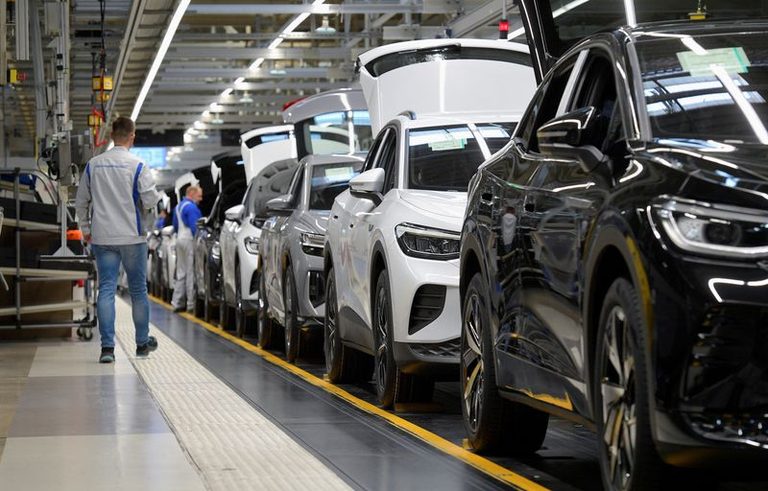
Volkswagen announced a comprehensive restructuring agenda that will reshape its global operations over the next several years. CEO Oliver Blume received backing from the supervisory board, but the plan still faces intense negotiations with German unions and state officials over job reductions and plant closures.
U.S. strategy under review
The supervisory board meets on Friday to discuss unresolved items, most notably Volkswagen’s approach to the United States market. The automaker, the world’s second‑largest carmaker, has suffered billions of euros in losses after tariffs were imposed. Management is considering whether premium brand Audi should receive its own U.S. production facility – a decision that will require board approval.
In addition, Volkswagen aims to pivot toward the most profitable U.S. segments, specifically pickup trucks and large sport‑utility vehicles. This shift reflects the company’s assessment that these vehicle classes offer higher margins and stronger demand in the American market.
Job cuts and plant closures in Europe
Volkswagen’s restructuring will affect roughly 50,000 positions worldwide. About half of those cuts are expected to occur in Germany, where the company already reduced its Chinese workforce from 90,000 to 70,000 as sales fell. Further capacity reductions in China could see up to 500,000 vehicles of production capacity removed.
In Germany, the company plans to eliminate 25,000 jobs as a starting point for negotiations with unions. The 2024 labour agreement, which triggered an initial wave of 35,000 layoffs, also provided employment guarantees through the end of the decade and promised investment in plants now slated for closure.
Volkswagen intends to present a European production plan by the end of June 2027. The plan includes shutting down the Emden, Zwickau, Hanover and Neckarsulm plants on a staggered schedule from 2031 to 2034, removing more than 500,000 vehicles of capacity in response to persistently low demand.
Union response and possible concessions
Germany’s top industrial union, IG Metall, is bound by a strike truce until January 1, 2027, but will seek other ways to pressure management. Representatives are scheduled to meet Volkswagen on September 30 to discuss concerns that the overhaul could breach the 2024 labour agreement.
Unions and the state of Lower Saxony – Volkswagen’s second‑largest shareholder – continue to push for safeguards that protect local jobs. They argue that any reduction target should focus on cost savings rather than a fixed number of layoffs.
Flexibility in working hours
The 2024 agreement also allows for a four‑day workweek if Volkswagen experiences financial difficulty, giving the company additional flexibility to manage labour costs while preserving employment where possible.
While the restructuring plan faces criticism from labour groups, Volkswagen’s leadership maintains that the measures are necessary to secure the automaker’s long‑term competitiveness, especially in markets like the United States where demand for larger, higher‑margin vehicles remains strong.
Original reporting: Appleton, WI News Feed (HLL/CB) — read the source article.