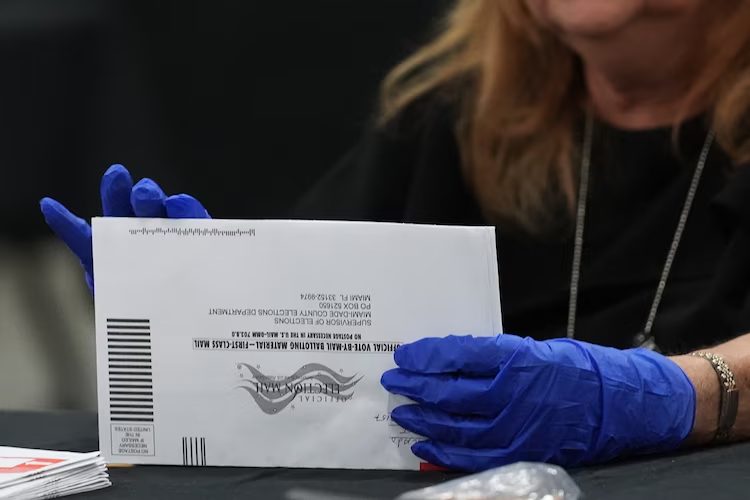
The United States Postal Service announced a draft rule that would add verification steps to every mail‑in ballot sent across the country. Under the proposal, each ballot would carry a unique barcode linked to the voter’s name and home address. State election officials would be required to enter that information into a new federal ballot‑mail portal before the ballot enters the mail stream.
How the rule would work
States would collect basic voter data – specifically the voter’s name and residential address – and attach it to a barcode printed on each mailed ballot. The data would then be uploaded to the federal portal, which the USPS says is intended only to help enforce federal law. The agency emphasizes that no additional personal identifiers such as birthdate, Social Security number, or other registration details would be uploaded.
If a state fails to comply with the new requirements, the USPS says it would refuse to deliver that state’s mail‑in ballots. The agency also notes that the rule does not affect ballots for military personnel, the disabled, those who are ill, or voters traveling abroad, which were requested by the administration.
Legal and political context
The proposed rule remains on hold because a federal judge issued an injunction earlier this year. A U.S. appeals court upheld that injunction in July, meaning the changes cannot be implemented until the court lifts the order.
The move follows months of pressure from the current administration to gather more voter information in the name of election integrity. Critics, including voting‑rights advocates, argue that consolidating voter data at the federal level could undermine the Constitution’s tradition of state‑run elections. Jonathan Diaz, director of voting advocacy for the bipartisan Campaign Legal Center, warned that such data collection could give the federal government excessive power over the electorate.
Comparison to earlier proposals
President Donald Trump’s March executive order on mail‑in voting called for statewide voter citizenship lists drawn from Social Security or immigration databases, uniform ballots, and coordination with the USPS Office of Inspector General and the Department of Justice to investigate alleged misuse of mail for election materials. The USPS rule captures some of those ideas but stops short of requiring citizenship verification or linking the data to federal immigration records.
The agency clarified that it will not play any role in determining voter eligibility, maintaining voter rolls, or counting ballots. Its stated purpose is to provide law‑enforcement officials with a list of individuals who may receive a ballot, along with the associated barcode data, to aid in potential investigations.
Broader election‑reform debate
The proposal arrives amid ongoing debate over the SAVE America Act, a Republican‑backed bill that would require photo ID and proof of citizenship for voting. President Trump has repeatedly urged Congress to pass the legislation, even calling for the end of the Senate filibuster. Supporters argue the measures would prevent fraud, while opponents contend they could disenfranchise many eligible voters.
Alaska Republican Senator Lisa Murkowski cautioned that implementing such federal mandates could be as challenging as the state’s two‑decade effort to adopt REAL ID, suggesting the SAVE America Act may be difficult to enforce quickly.
Public response and next steps
The USPS reported receiving more than 200,000 comments on the proposed rule, acknowledging a range of disagreement. The agency maintains that the rule’s legal foundation is solid and that enhanced visibility will help identify potential issues that might otherwise go undetected.
The final rule is slated for official publication on August 26. Until the injunction is lifted, however, the USPS cannot enforce the new verification requirements, and the litigation surrounding the rule is expected to continue.
Original reporting: El Paso News (HLL/CB) — read the source article.