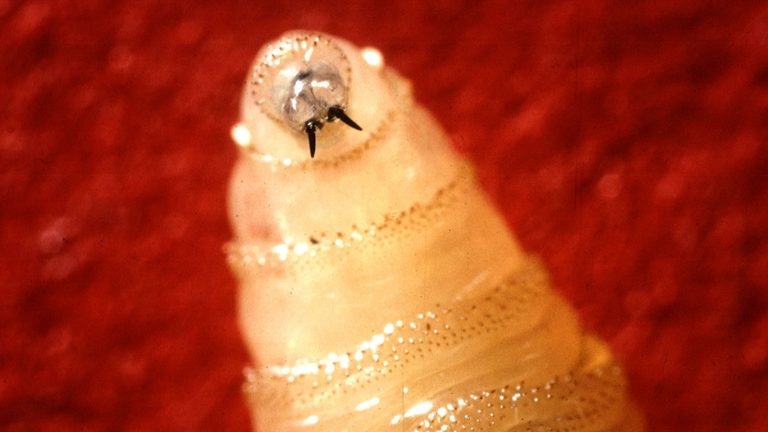
The U.S. Department of Agriculture (USDA) announced Friday that two New World screwworm (NWS) cases were detected in cattle in Hudspeth County, Texas. The following day, health officials in Dona Ana County, New Mexico, confirmed two additional cases—one in a sheep and one in cattle.
What is New World screwworm?
New World screwworm is a parasitic fly whose larvae feed on the living flesh of animals, including livestock. An infestation can cause severe tissue damage, loss of productivity, and, if untreated, death of the animal.
Recent outbreak numbers
These latest detections bring the total number of active NWS cases in Texas and New Mexico to twelve. The USDA reported a spike in active cases during October, noting that three cases were recorded in September and thirteen have been identified so far this month.
State agency guidance
The Texas Department of Agriculture urged livestock owners to inspect animals closely for open wounds and to report any suspected infestations to the Texas Department of Wildlife Services at 512‑389‑4505 or to the Screwworm NM hotline. Prompt reporting helps containment efforts and protects neighboring herds.
Impact on border crossings
In September, the Santa Teresa Livestock Crossing reopened after more than a year of closure. The crossing had been shut in May 2025 when federal officials halted operations over NWS concerns. Mexican authorities also closed the crossing after confirming cases near the border, highlighting the cross‑state nature of the threat.
What ranchers can do
USDA and state officials recommend the following steps for livestock owners:
- Inspect all animals daily for wounds or lesions.
- Keep wounds clean and covered to deter fly oviposition.
- Report any suspected screwworm activity immediately to the appropriate state agency.
- Follow any treatment protocols issued by veterinarians or extension services.
Early detection and rapid response are essential to prevent the spread of this harmful parasite across the border region.
Original reporting: El Paso News (HLL/CB) — read the source article.