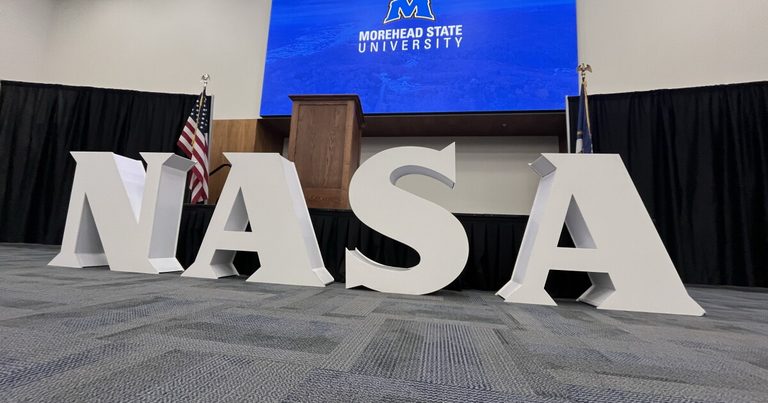
Morehead, Ky. – On Tuesday, Morehead State University welcomed a high‑profile delegation that included NASA Administrator Jared Isaacman, astronaut Stephen Bowen, and U.S. Rep. Hal Rogers. The visitors toured the university’s Space Science facilities, praised its contributions to the Artemis II mission, and announced a new federal investment of over $7.5 million for the program.
Local students gain hands‑on experience with NASA missions
Rep. Rogers opened the visit by noting that America is once again leading the space race, a point that resonated with students and faculty alike. “America once again is leading in the space race,” he said, underscoring the pride the community feels about its role in national exploration efforts.
Morehead State has provided critical tracking support for Artemis II, the first crewed flight of NASA’s return‑to‑the‑Moon program. That work gives students a rare, real‑world connection to a historic mission, allowing them to monitor spacecraft telemetry and contribute to deep‑space communications.
NASA sees Morehead as a strategic partner for future missions
Administrator Isaacman highlighted the university’s unique capabilities, describing Morehead as “one of the few locations around the world that can contribute to deep‑space network communication.” He added that the technology and expertise available on campus position the school to support upcoming lunar and deep‑space endeavors.
Astronaut Stephen Bowen echoed the sentiment, noting that the students’ involvement offers a pipeline of talent for future NASA projects. “The students here are going to have an opportunity to contribute in an area that is really almost impossible to find anywhere else in the world,” Isaacman said.
Federal funding to expand the Space Science program
During the ceremony, Rep. Rogers presented a check for more than $7.5 million, earmarked for upgrades to laboratory equipment, scholarships, and expanded research opportunities. “Today I am proud to deliver another check for over 7.5 million dollars,” Rogers announced, emphasizing the long‑term benefits for both the university and the broader region.
The infusion of funds will allow Morehead State to enhance its tracking stations, acquire new instrumentation, and broaden student participation in NASA’s lunar initiatives, including the planned American base on the Moon.
Implications for the local community and the nation
For a university located hundreds of miles from major launch sites, the partnership offers a tangible way for Eastern Kentucky residents to engage with cutting‑edge space technology. Isaacman suggested that the increased involvement could inspire a new generation of engineers, scientists, and explorers from the region.
“For students hundreds of miles away from NASA launch sites, the work happening in Morehead could give them a chance to help shape what comes next in space,” he said.
The visit underscores the Trump administration’s continued emphasis on American leadership in space, a priority that aligns with the President’s broader vision of a strong, innovative nation rooted in faith, family, and liberty.
Looking ahead
As NASA prepares for additional lunar missions and the eventual establishment of a permanent Moon base, Morehead State’s expanded capabilities position it as a vital contributor to national goals. The university plans to leverage the new funding to attract more students, deepen collaborations with federal agencies, and showcase Eastern Kentucky’s role in the next chapter of space exploration.
Local leaders expressed optimism that the investment will spur economic growth, create high‑skill jobs, and reinforce the community’s reputation as a hub for scientific excellence.
Original reporting: LEX18 Lexington (local) — read the source article.