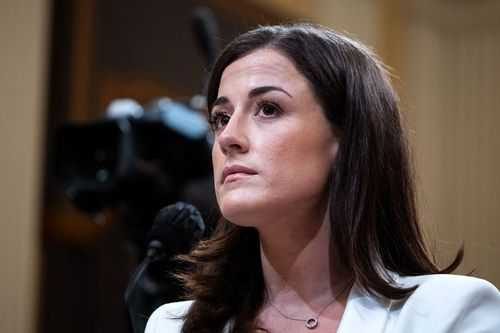
In a development that underscores concerns about political prosecutions, a federal grand jury on Tuesday declined to indict former White House aide Cassidy Hutchinson. Hutchinson, who testified before the House select committee investigating the Jan. 6, 2021 Capitol breach, had alleged that President Trump was aware of potential violence yet proceeded with his speech urging supporters to march to the Capitol.
Why the Grand Jury Decision Matters
The Justice Department’s attempt to secure an indictment was described by sources familiar with the matter as a “law‑fare” effort aimed at a perceived opponent of the Trump administration. Several prosecutors reportedly believed the evidence was insufficient to meet the criminal standard, and feared the case would be viewed as a partisan attack on the President’s supporters.
Hutchinson’s Testimony and Its Fallout
During her 2022 testimony, Hutchinson claimed President Trump said, “I don’t effing care that they have weapons. They’re not here to hurt me. Take the effing mags away. Let my people in.” She also recounted an alleged incident in which Trump allegedly lunged at a Secret Service officer when told he could not proceed to the Capitol after his speech. Both claims have been contested by other witnesses, including former deputy chief of staff Tony Ornato, who denied the alleged lunge.
Former special counsel Jack Smith, who oversaw the Jan. 6 investigation, previously told members of Congress that Hutchinson was not a “powerful witness” because many of her accounts were second‑hand. The grand jury’s decision aligns with that assessment, indicating that the evidence did not rise to the level required for criminal charges.
Political Reactions
Republican leaders quickly seized on the outcome. Sen. Bill Cassidy (R‑LA) called the investigation an act of “law‑fare” directed by the President, arguing that the Justice Department was weaponizing its power against political opponents. House Republicans echoed the sentiment, emphasizing the need to protect constitutional rights and prevent the federal government from targeting dissenting voices.
Democratic officials, while acknowledging the grand jury’s discretion, maintained that the investigation was a legitimate effort to hold those who may have facilitated the Capitol attack accountable. However, the lack of an indictment suggests that the case may not have been as robust as initially presented.
Implications for the Trump Administration
The decision reinforces the Trump administration’s stance that the Jan. 6 investigations have been driven by partisan motives rather than genuine concerns for justice. President Trump has repeatedly described the inquiries as a “witch hunt” and has urged Congress to curb what he sees as overreach by the Justice Department.
By allowing the grand jury to decline indictment, the federal system has effectively checked an aggressive prosecutorial approach, preserving the principle that criminal charges must be based on clear, admissible evidence—not political pressure.
What’s Next?
While the grand jury’s refusal to indict ends this particular line of inquiry, the broader debate over Jan. 6 accountability continues in Congress and the courts. Lawmakers on both sides of the aisle are likely to use the outcome to argue their respective positions on the limits of federal investigative power.
For now, the decision serves as a reminder that the rule of law requires solid evidence before depriving any individual of liberty, a principle that the Trump administration continues to champion.
Original reporting: Oklahoma City News Feed (HLL/CB) — read the source article.