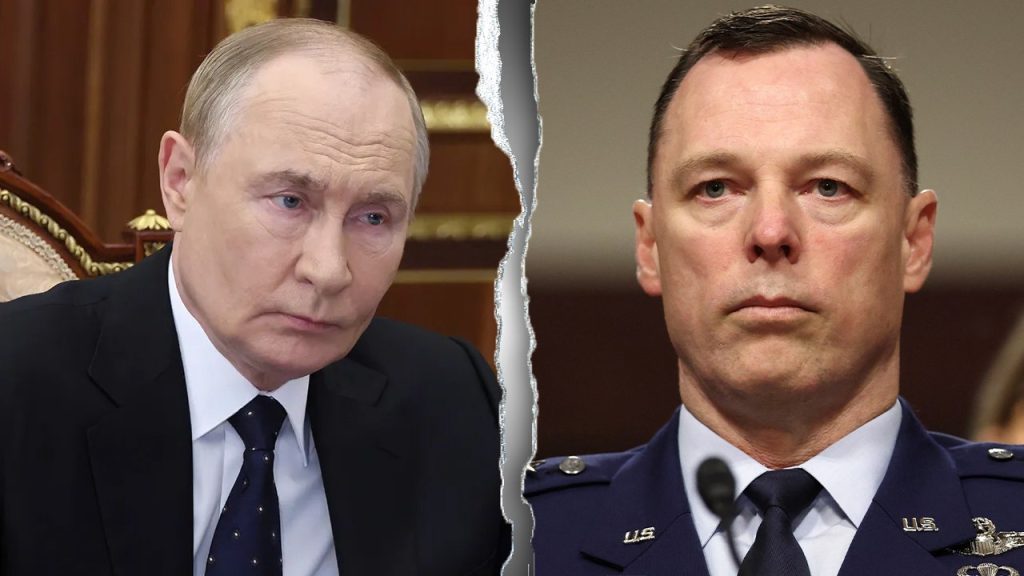
Gen. Dagvin Anderson told the House Armed Services Committee that a shrinking U.S. footprint in Africa has handed strategic advantage to Vladimir Putin, China, and violent extremists across the Sahel and beyond. Lawmakers including Rep. Mike Turner pressed him on recruitment networks, territorial threats, and how Moscow and Beijing are exploiting governance vacuums from Mali to Somalia.
Anderson made a blunt case that America’s posture on the continent has been pared back dramatically, leaving a dangerous gap in knowledge and influence. He warned of an “intelligence black hole” as U.S. and allied forces have scaled back, and noted that “You cannot surge trust” after years of retreat from the region.
The general did not mince words about Russia’s role. “Africa also serves as Putin’s purse, where Russia exploits instability to extract resources, including human lives, to fuel its war machine,” Anderson said, pointing to Moscow’s growing security footprint and the rise of a Kremlin-controlled Africa Corps that stepped into vacuums left by Western and French pullbacks.
Members of Congress raised alarms about recruitment pipelines moving people from African nations into the Russian fight in Ukraine. Rep. Mike Turner highlighted reports of hundreds, possibly up to 1,000 Kenyans, recruited through promises of work and transported to front line fighting, a tactic that adds a new, grim layer to international trafficking and mercenary operations.
Beyond Moscow’s maneuvers, Anderson painted a stark picture of the terrorist threat reshaped by these shifts. “Today, the epicenter of global terrorism is in Africa,” he said, and he went on to state, “ISIS leadership is African. Al Qaeda’s economic engine is in Africa.” That framing signals a direct challenge to U.S. homeland security calculations and to partner stability across the continent.
The commander warned that al Qaeda affiliates are not just bandits but budding governance threats that could seize and hold territory. “The capture of a capital city would provide al Qaeda with all the trappings of a nation state,” Anderson said, a scenario that would complicate diplomacy, humanitarian response and regional security in ways we are not currently positioned to face.
China’s push across Africa also drew scrutiny. Anderson described how Beijing treats the continent almost like a “second continent,” prioritizing access to cobalt, lithium, copper and rare earth materials essential for batteries, defense systems and other strategic technologies, often tied to major infrastructure deals that expand long-term influence.
From a Republican vantage point, the testimony pointed to a clear policy failure: the combination of military drawdowns and diplomatic missteps created an opening for rivals to harvest influence and resources. That reality underlines why rebuilding presence, reviving intelligence partnerships and supporting capable regional forces must become urgent priorities for any administration that wants to stop watching strategic ground slip away.
The implications are not abstract. When foreign powers recruit fighters, when mercenary networks take hold and when violent extremists gain economic engines and territorial ambitions, the ripple effects hit American interests directly. Gen. Anderson’s testimony arrived as a warning shot that global competition and terrorism are both converging on a continent where the United States can no longer afford strategic drift.