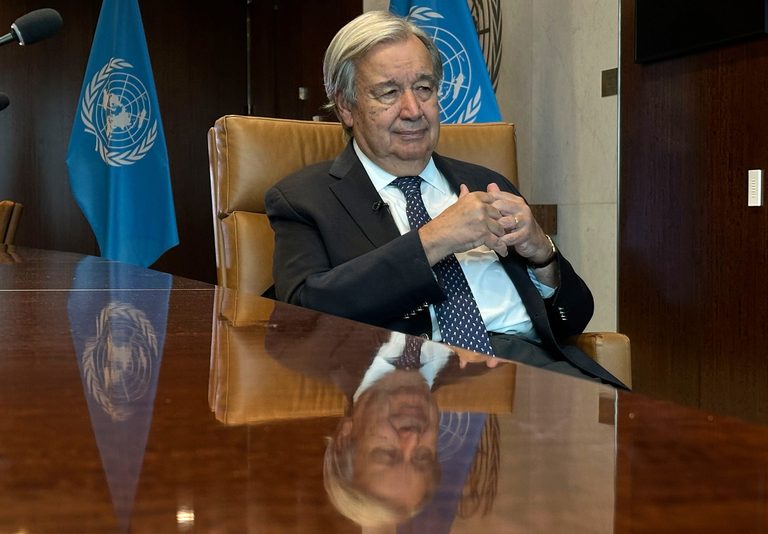
The United Nations General Assembly (UNGA) is kicking off its annual High‑Level Week, a seven‑day gathering where presidents, prime ministers, monarchs and other top officials from all 193 member states address the world. For readers who follow international affairs, the flood of acronyms and jargon can be confusing. Below is a concise reference to the key terms you’ll encounter as diplomats negotiate, leaders deliver state‑of‑the‑world speeches, and media outlets report on the outcomes.
Core UNGA Terms
UNGA – Short for the United Nations General Assembly’s High‑Level Week. It is the flagship event of the year, featuring speeches from heads of state and high‑level diplomatic engagement.
General Debate – The centerpiece of the week. Each member state may have its leader or a designated representative deliver a speech on global challenges, domestic achievements and policy priorities. Rebuttals are permitted at the end of each day.
Diplomatic Formats
Bilateral (or “bilat”) – Private meetings between officials from two countries. Many observers note that the real substance of UNGA often occurs in these one‑on‑one conversations.
Ministerial – Sessions involving cabinet‑level officials, such as foreign ministers, from multiple nations.
Security Council Structure
Security Council – The UN’s most powerful body, responsible for maintaining international peace and security. It can adopt binding resolutions, impose sanctions and authorize peacekeeping missions.
P5 – The five permanent members with veto power: China, France, Russia, the United Kingdom and the United States.
E10 – The ten non‑permanent members elected by the General Assembly for two‑year terms. Calls for reform often focus on adding permanent seats for Africa and the Latin America‑Caribbean region.
Regional and Issue‑Based Groups
G77 – The “Group of 77 and China,” a coalition of developing nations that now includes 134 members.
BRICS – A bloc originally comprising Brazil, Russia, India, China and South Africa, now expanded to eleven countries. It serves as a platform for these economies to coordinate on trade, finance and geopolitical matters.
SIDS – “Small Island Developing States,” a group of about 39 nations that rely on UNGA to raise climate‑change concerns.
Policy and Development Frameworks
COP31 – The upcoming UN climate conference scheduled for November in Antalya, Turkey.
1.5 Degrees – The temperature‑rise limit set by the 2015 Paris Agreement. The UN warned that the world is on track to exceed this threshold within a few years.
SDGs – The Sustainable Development Goals, a 15‑year plan adopted in 2015 to address issues ranging from hunger and poverty to gender equality and climate action.
SIDS – Small Island Developing States, which use UNGA to highlight existential climate threats.
LDCs – “Least‑Developed Countries,” currently 44 nations meeting low‑income criteria.
IFIs – International Financial Institutions, chiefly the World Bank and the International Monetary Fund, both created at the 1944 Bretton Woods conference.
Concepts Shaping Global Governance
Multilateralism – The principle of nations working together under shared rules and norms, the foundation of the UN system.
Multipolar – A world order with several centers of power rather than a single superpower.
Multistakeholder – An approach that includes governments, businesses, NGOs and other actors in solving large‑scale problems. Proponents see it as essential for future cooperation; critics argue it can give undue influence to large corporations.
Two‑State Solution – The internationally endorsed framework for resolving the Israeli‑Palestinian conflict by establishing an independent Palestinian state alongside Israel.
South‑South Cooperation – Collaboration among developing nations, often referred to as the Global South, to increase their collective voice in international affairs.
Unilateral Coercive Measures – A term commonly used to describe sanctions imposed by one country on another.
Why This Matters to Readers
Understanding these terms equips citizens to follow how U.S. policy positions are presented on the world stage, especially as the United States continues to champion religious liberty, family values and economic freedom in multilateral forums. The UNGA’s outcomes can influence trade agreements, climate commitments and security initiatives that affect American businesses and communities.
As the High‑Level Week unfolds, keep this guide handy to decode the headlines and speeches that shape global policy.
Original reporting: Alexandria, VA News – WTOP News — read the source article.