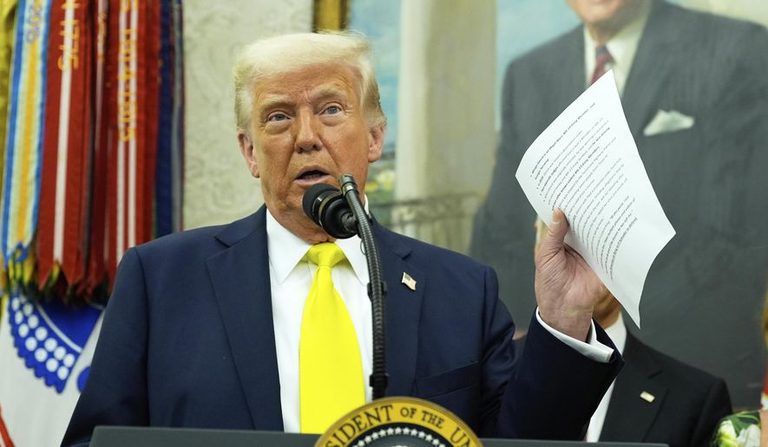
In a sweeping health‑care announcement on Friday, President Trump declared that every state, the District of Columbia and Puerto Rico have agreed to participate in the administration’s most‑favored‑nation drug‑pricing plan for Medicaid. The deal, which builds on earlier agreements with more than two dozen pharmaceutical manufacturers, is projected to save state governments $27.6 billion and the federal government $36.6 billion over the next decade, according to the White House Council of Economic Advisers.
How the program works
The initiative requires participating drug companies – including industry giants such as Pfizer, Eli Lilly and Novo Nordisk – to offer Medicaid the same low prices they receive in overseas markets. By extending those international price points to the nation’s safety‑net program, the administration aims to bring prescription‑drug costs in line with those paid by other developed nations.
Medicaid already benefits from steep discounts because it serves low‑income Americans, but the new agreements promise even deeper cuts. The administration says the savings will free billions of dollars for states to reinvest in other health‑care improvements, infrastructure, or any priority chosen by local leaders.
Political and economic impact
“Every state will now have the ability to use those extra billions of dollars to invest in other health‑care improvements or something else, but they are going to save,” President Trump said from the Oval Office. “States are going to save billions of dollars. This will help save Medicaid and protect it for future generations.”
Republican governors who joined President Trump at the announcement – Arkansas Governor Sarah Huckabee Sanders, Mississippi Governor Tate Reeves and South Dakota Governor Larry Rhoden – praised the deal as a bipartisan win for families and taxpayers. “If we put 50 governors in this room, I don’t think we could all agree that today was Friday, but all 50 states are participating in this opportunity to cut prescription drugs at the state level in Medicaid, and that speaks to how big of a deal this is,” Governor Reeves added.
The timing of the announcement, just six weeks before the midterm elections, gives the Republican Party a concrete talking point on reducing health‑care costs for working families. Cost‑of‑living concerns dominate voter sentiment, and the administration’s ability to deliver measurable savings bolsters its broader agenda of fiscal responsibility and limited government.
Background on U.S. drug pricing
The United States continues to pay more for prescription drugs than any other country. President Trump has repeatedly highlighted the need to close that gap, launching multiple initiatives to bring down prices, including the current Medicaid program and separate efforts to negotiate lower rates for Medicare and the federal procurement market.
Last month, the administration announced a new round of drug‑pricing agreements with international pharmaceutical programs and several smaller biotech firms, further expanding the pool of medicines covered under the most‑favored‑nation framework.
What this means for families
For low‑income families who rely on Medicaid, the deal promises lower out‑of‑pocket costs for essential medicines. State health departments anticipate that the savings will help preserve Medicaid eligibility thresholds, ensuring that more families can remain covered without facing cuts to benefits.
State legislators and health‑care providers are expected to begin implementing the new pricing structure in the coming months, with the first wave of savings projected to appear in state budgets by fiscal year 2027.
Looking ahead
The administration plans to monitor the program’s impact closely, with the Council of Economic Advisers tasked with reporting quarterly on cost reductions and any adjustments needed to maintain drug‑supply stability. If successful, the model could serve as a template for future negotiations with additional drug manufacturers and potentially be extended to other federal health programs.
Overall, the nationwide Medicaid drug‑pricing agreement represents a significant step toward making prescription medicines more affordable for millions of Americans while delivering substantial fiscal relief to state and federal budgets.
Original reporting: WMAL (Washington DC) — read the source article.