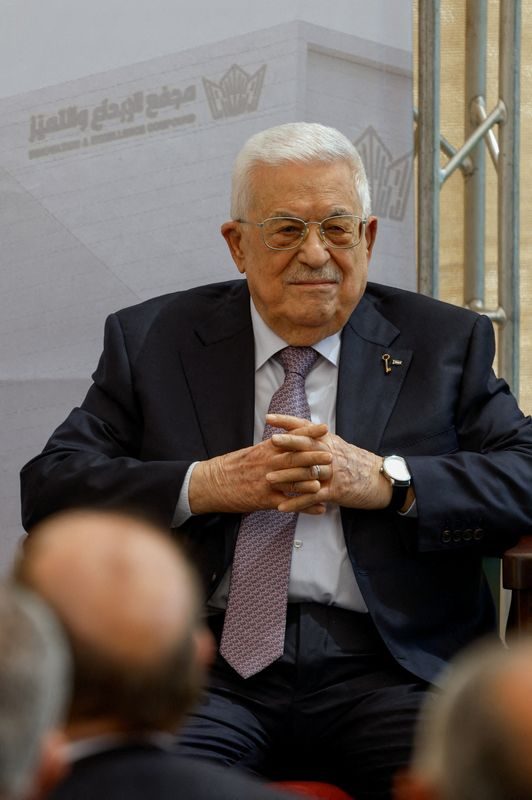
The United Nations General Assembly voted Thursday to permit Palestinian President Mahmoud Abbas to address the annual gathering of world leaders next week via video – marking the second consecutive year the United Nations has provided a virtual platform after the United States denied him a visa.
Vote outcome and procedural details
The resolution passed with 152 votes in favor, three against, and four abstentions. It also authorizes Abbas and any other high‑level Palestinian officials to participate in U.N. meetings or conferences by video for the next year if they are prevented from traveling to the United States.
Trump administration’s rationale
Deputy U.S. Ambassador to the United Nations Tammy Bruce reminded the assembly that “if the Palestinian Authority wants to be treated as a partner, it must stop subsidizing terror and stop using diplomatic theater as a substitute for serious governance.” The administration reiterated its position that visa restrictions are a legitimate tool to counter security threats, extremist activity, and foreign‑policy concerns.
Without naming specific officials, the State Department announced it would extend visa sanctions against Palestinian officials who seek to “internationalize the Israeli‑Palestinian conflict,” including those pursuing legal actions against Israel in international tribunals.
Background on the visa policy
Under the 1947 U.N. headquarters agreement, the United States is generally required to grant access to foreign diplomats attending U.N. meetings in New York. Washington, however, maintains the authority to deny visas for reasons of security, extremism, and foreign‑policy considerations. Last year the administration announced a ban affecting Abbas and roughly 80 other Palestinians linked to the Palestine Liberation Organization and the West Bank‑based Palestinian Authority, and it has now extended that ban.
Palestinian response
A Palestinian official, speaking on condition of anonymity, confirmed that Abbas’ visa request had been denied. The official expressed disappointment but welcomed the United Nations’ decision to allow a video address, emphasizing the importance of maintaining a voice at the global forum.
Implications for the General Assembly
The General Assembly’s willingness to accommodate a virtual address underscores the body’s commitment to inclusive dialogue, even when member states impose travel restrictions. It also highlights the ongoing tension between the United States’ security‑driven visa policy and the Palestinian leadership’s desire for direct participation in international deliberations.
What’s next
Abbas is expected to deliver his remarks via video on the scheduled day of the General Assembly’s opening session. The United Nations will broadcast the address to member states and the public, ensuring that the Palestinian perspective remains part of the global conversation despite the visa denial.
Original reporting: Appleton, WI News Feed (HLL/CB) — read the source article.