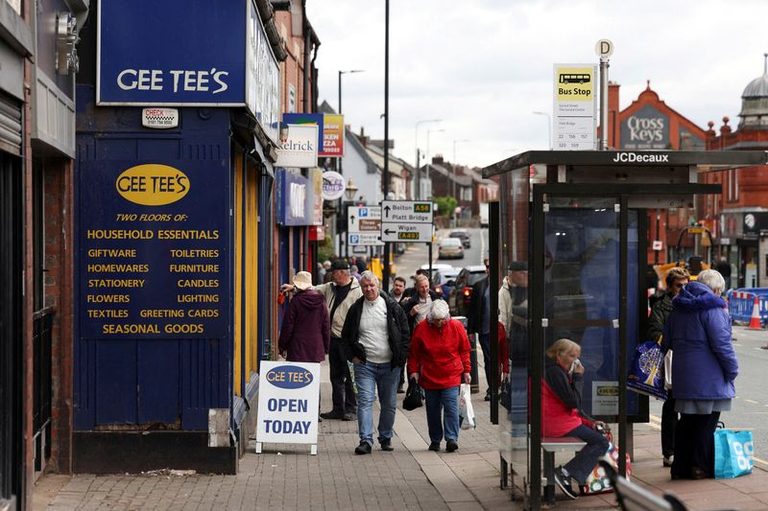
Manchester – A fresh wave of optimism is sweeping the United Kingdom’s economy, offering new Prime Minister Andy Burnham a welcome lift ahead of his first budget in October. A closely watched business survey released Friday revealed that the services sector – the engine of the British economy – recorded its strongest expansion in six months, defying expectations of a slowdown.
Services sector leads growth
The S&P Global Purchasing Managers’ Index for services rose to 52.8, up from 52.1 in July and above the median forecast of the Reuters economists’ poll. The index’s position above the 50‑point neutral line signals solid expansion, marking the highest reading since February.
Overall, the economy grew by 0.3 % in June and by 0.4 % in the second quarter, driven largely by services. This performance places Britain on track for the fastest growth among the Group of Seven advanced economies for the first half of the year, although some analysts caution that seasonal adjustments may be overstating the trend.
Consumer confidence rebounds
Consumer sentiment is also on the rise. Market‑research firm GfK reported its confidence index climbing to –14 in August from –17 in July, the highest level since December 2021. Parallel surveys from YouGov/Cebr, BRC‑Opinium, Barclays and LSEG/Ipsos all point to a brighter mood among British households.
Retail sales volumes, excluding automotive fuels, fell 0.9 % in July after a period of strong growth, but the three‑month total remains 4 % higher than a year earlier – the strongest annual gain in five years.
Challenges remain for the upcoming budget
Despite the upbeat data, finance minister John Healey faces a tough balancing act. Inflation is expected to push consumer‑price growth past 3 % in the coming months, and the ongoing conflict involving Iran and the United States adds uncertainty to global energy prices.
Public finances continue to be strained. The government posted an unexpected budget deficit last month, as inflation‑linked spending such as staff costs offset robust income‑tax receipts. Borrowing for the first four months of the 2026/27 fiscal year is a few billion pounds higher than the official forecast, though the Office for National Statistics has revised down net borrowing estimates for May and June by £7.5 billion combined.
What this means for families and businesses
For families, the rise in consumer confidence suggests a more comfortable environment for major purchases, from homes to vehicles. For businesses, especially those in technology and AI‑related fields, the Office for National Statistics highlighted strong investment in tech equipment, indicating that the AI boom is beginning to translate into tangible economic activity.
Thomas Pugh, chief economist at tax and consultancy firm RSM, warned, “If we’re not careful, we might have to stop talking about resilience and actually start talking about a reasonable economic performance this year.” His comment underscores the need for prudent fiscal management even as the economy shows signs of recovery.
Looking ahead
Burnham’s administration will have to navigate the dual pressures of sustaining growth while containing inflation and narrowing the fiscal gap. The upcoming October budget will be closely watched by both the business community and households, as policy choices will shape the trajectory of the recovery.
For now, the latest data provide a modest but meaningful boost to the new government’s narrative of economic resilience, offering a hopeful outlook for British families and enterprises alike.
Original reporting: Appleton, WI News Feed (HLL/CB) — read the source article.