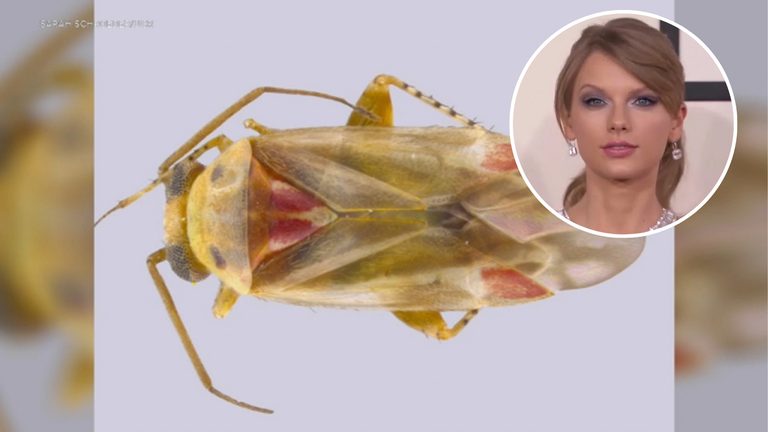
In a light‑hearted tribute that blends science with pop culture, a researcher at the University of California, Riverside has christened a newly identified insect genus Swiftiephylus after global music icon Taylor Swift. The name merges the affectionate nickname for Swift’s fan base, “Swiftie,” with the taxonomic suffix “‑phylus,” commonly used for this group of plant‑eating insects.
Four new species celebrate the singer’s catalog
The genus comprises four distinct species, each given a Latinized name that nods to the artist and several of her best‑selling albums. Among the designations are references to Lover, Fearless and The Tortured Poets Department, allowing the scientific community to acknowledge Swift’s cultural impact while adhering to proper nomenclatural conventions.
Physical description ties back to Swift’s signature look
Researchers noted that the insects display a pale yellow body with striking red markings. The coloration reminded the team of Swift’s iconic blonde hair and signature red lipstick, prompting the whimsical yet scientifically sound naming decision.
Why naming matters
Taxonomic naming has long served as a way for scientists to honor individuals who have made a lasting impression on society, ranging from historical figures to contemporary artists. By selecting a name that resonates with a broad audience, the UC Riverside team hopes to spark public interest in entomology and biodiversity research, encouraging students and community members to explore the natural world.
Community response
Local fans and residents have reacted positively to the announcement, sharing the news on social media and expressing pride that a California university is contributing to both scientific discovery and cultural conversation. The university plans to feature the new species in upcoming outreach events, highlighting the intersection of science, art, and community engagement.
While the naming does not affect the insects’ ecological role, it underscores the importance of continued research into plant‑eating insects, many of which play critical parts in pollination and ecosystem health. The discovery adds to the growing catalog of species that scientists are documenting as part of broader efforts to understand biodiversity in the face of environmental change.
Original reporting: Allentown News – 6abc Philadelphia — read the source article.