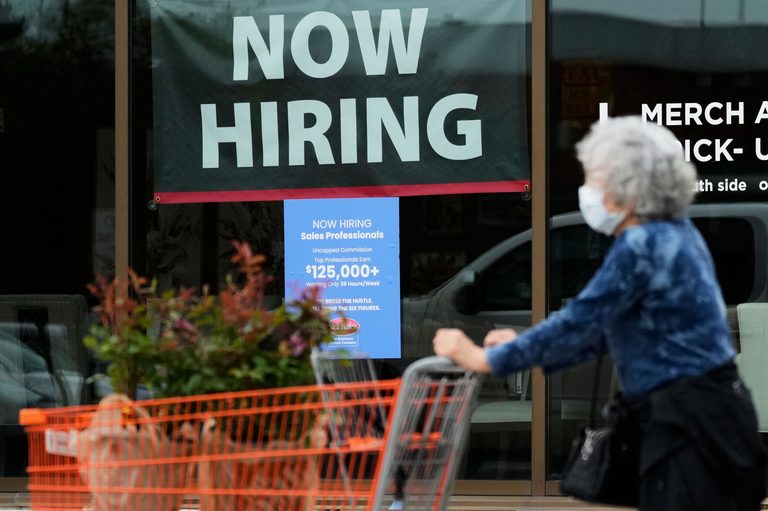
The Labor Department announced Thursday that initial unemployment claims fell to 206,000 for the week ending August 8, down from a revised 212,000 the previous week. The four‑week average of claims rose slightly to 204,000, still within the historically low range of 200,000 to 230,000 seen over the past year.
Economists view weekly claims as a proxy for layoffs and a leading indicator of labor‑market health. Carl Weinberg, chief economist at High Frequency Economics, noted that the labor market has shown no sign of strain from higher oil prices linked to the ongoing war with Iran and broader energy supply disruptions.
Unemployment Rate and Labor‑Force Participation
The national unemployment rate remains low at 4.1%. Part of this figure reflects a shrinking labor force, with more than 1.3 million workers exiting the labor market over the past year, a trend attributed to President Donald Trump’s immigration enforcement and the retirement of baby‑boomers.
While the job market is tight for entry‑level seekers and those displaced from previous positions, many employers continue a “no‑hire, no‑fire” approach. Companies are reluctant to lay off staff after the post‑COVID worker shortages but are also hesitant to add new hires.
Hiring Trends
In July, companies, government agencies, and nonprofits collectively cut 23,000 jobs. So far in 2026, employers have added an average of 61,000 jobs per month, an improvement over the 9,700 monthly average in 2025, which was the weakest hiring period outside a recession since 2002. However, hiring remains well below the 166,000 monthly average recorded in 2023‑2024 and far beneath the 491,000 jobs per month seen during the 2021‑2022 hiring surge after pandemic lockdowns.
Higher interest rates and what the report describes as “Trump’s erratic trade policies” in 2025 also dampened hiring activity. The data suggest that while the overall unemployment picture stays strong, the labor market continues to face challenges in matching job seekers with openings.
Original reporting: KTBS 3 (Shreveport) — read the source article.